Why Google Leads in AI Technology
TL;DR
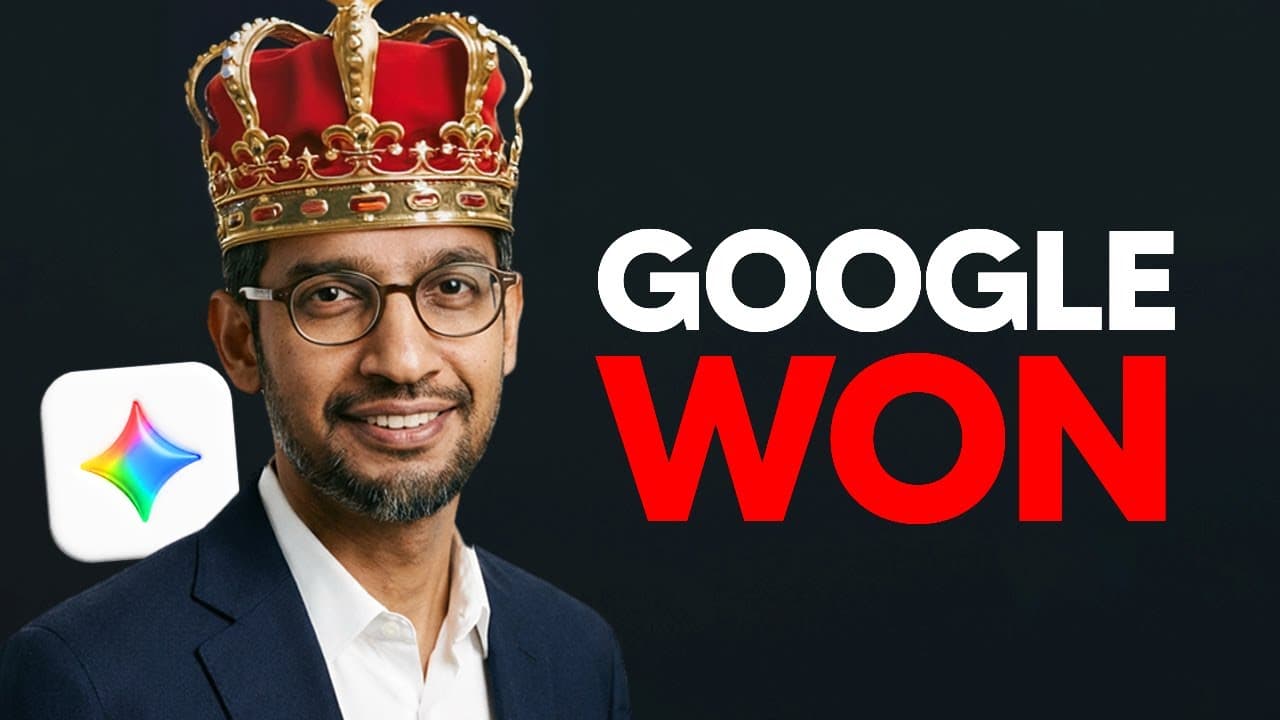
Google is leading the AI race due to its comprehensive and cost-effective offerings like Google AI Ultra. Its products like Gemini 3 and VO 3.1 outperform competitors in performance and integration. With massive distribution channels such as Google Search and Android, Google ensures widespread AI adoption, making it a formidable player against competitors like OpenAI.
Transcript
So, the AI race is pretty crazy. You've got so many different companies competing, but I'm pretty sure that Google has won the AI race. So, let's talk about it. So, one of the first things I want to talk about, which is why I believe Google has completely won over the consumer side, is just purely based on value and pricing. Right now on screen, yo... Read More
Key Insights
- Google AI Ultra offers more features at a lower cost compared to competitors.
- Gemini 3 performs on par with or better than GPT-5 in many benchmarks.
- Google's AI products are integrated into widely used platforms like Search, Gmail, and YouTube.
- OpenAI is facing financial challenges, with significant losses projected in upcoming years.
- Google's extensive distribution channels give it a massive advantage in AI adoption.
- Anthropic's focus on reliability and coding makes it a niche leader, indirectly benefiting Google.
- Google's financial strength allows it to invest heavily in AI and cloud infrastructure.
- Google's strategic investments in companies like Anthropic bolster its position in the AI market.
Install to Summarize YouTube Videos and Get Transcripts
Explore YouTube Video Summarizer or Get YouTube Transcript Extractor
Questions & Answers
Q: How does Google AI Ultra compare to other AI subscriptions?
Google AI Ultra is more cost-effective and offers more features compared to other AI subscriptions. It provides extensive credits, high limits for various tools, and additional services like YouTube Premium and large storage space, making it a superior choice for both casual and power users.
Q: What makes Gemini 3 a strong competitor to GPT-5?
Gemini 3 matches or exceeds GPT-5 in many benchmarks, particularly in coding tasks. It offers a long context window and generates clean code, making it a preferred choice for developers. Its performance parity with GPT-5 highlights its competitive strength in the AI model landscape.
Q: Why is Google's AI distribution strategy effective?
Google's AI products are integrated into widely used platforms like Google Search, Gmail, and Android, ensuring they are accessible to billions of users daily. This integration provides a seamless user experience, making AI tools readily available without needing separate applications or websites.
Q: What financial challenges does OpenAI face?
OpenAI is projected to lose significant amounts, with losses expected to reach $17 billion by 2026. The high operational costs of AI models and underpriced subscription tiers contribute to these financial difficulties, putting pressure on OpenAI to become profitable amid investor expectations.
Q: How does Google's financial strength support its AI initiatives?
Google's substantial revenue and profits enable it to invest heavily in AI and cloud infrastructure. With $70 billion in profit and plans to invest $85 billion in AI, Google can afford to subsidize AI products, maintain competitive pricing, and sustain long-term growth in the AI market.
Q: What role does Anthropic play in Google's AI strategy?
Anthropic, backed by Google, focuses on reliability and coding, carving out a niche in the AI market. Its success indirectly benefits Google, as Google holds investments in Anthropic, ensuring that advancements in Anthropic's offerings contribute to Google's overall AI ecosystem.
Q: How does Google's integration of AI into its platforms enhance user experience?
By integrating AI into platforms like Google Search, Gmail, and YouTube, Google provides users with seamless access to AI tools. This integration eliminates the need for separate applications, making AI functions part of everyday user interactions, thus enhancing convenience and usability.
Q: What impact does Google's AI strategy have on its market position?
Google's AI strategy, supported by its financial resources and extensive distribution channels, solidifies its leadership in the AI market. By offering superior products and ensuring widespread adoption through integration, Google maintains a competitive edge against rivals like OpenAI.
Summary & Key Takeaways
-
Google's AI offerings, such as Google AI Ultra, provide more value at a lower cost than competitors, making them appealing to a broad user base. Products like Gemini 3 match or exceed the performance of rival models, enhancing Google's competitive edge.
-
With its AI products integrated into platforms like Google Search, Gmail, and Android, Google ensures widespread adoption and use. This integration provides a seamless experience for users, making Google's AI tools more accessible and convenient.
-
OpenAI faces financial difficulties, with substantial losses expected in the coming years. Meanwhile, Google's financial robustness allows it to invest significantly in AI and cloud infrastructure, securing its leadership in the AI industry.
Read in Other Languages (beta)
Share This Summary 📚
Summarize YouTube Videos and Get Video Transcripts with 1-Click
Try YouTube Summary with ChatGPT & Claude or YouTube Transcript Generator
Explore More Summaries from TheAIGRID 📚


Summarize YouTube Videos and Get Video Transcripts with 1-Click
Try YouTube Summary with ChatGPT & Claude or YouTube Transcript Generator