How to End Your Inner Civil War According to Jung
TL;DR
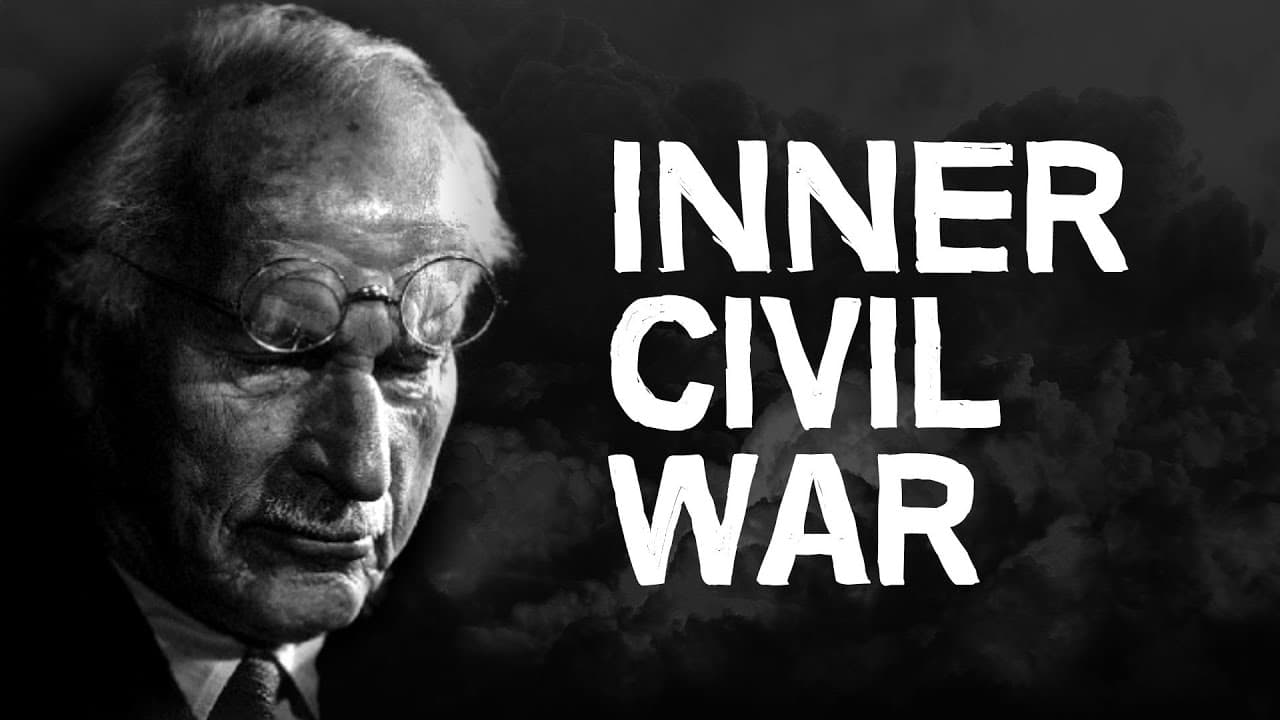
To end your inner civil war, embrace self-acceptance and integrate your shadow self, which consists of repressed traits and desires. Carl Jung emphasized that recognizing and reconciling these hidden aspects is essential for achieving psychological wholeness and inner peace.
Transcript
What drives people to war with themselves is the suspicion or the knowledge that they consist of two persons in opposition to one another. The conflict may be between the sensual and the spiritual man, or between the ego and the shadow. Carl Jung Swiss psychiatrist Carl Jung observed that whatever we repress in ourselves, keeps influencing our beha... Read More
Key Insights
- 🤳 The shadow self, composed of repressed traits and desires, fuels inner conflict between conscious and unconscious aspects of the self.
- 🤳 Characters like Walter White and the Narrator exemplify the destructive consequences of repressing the shadow self.
- 🏆 Self-acceptance and shadow integration are crucial for resolving the inner civil war and achieving inner peace.
- 🤳 Jungian psychology emphasizes the importance of acknowledging and integrating the shadow self to achieve wholeness.
- 🏆 Shadow work involves making the unconscious conscious, leading to the reconciliation of inner conflicts and the end of the inner civil war.
- 🤳 Embracing the shadow self allows for a more authentic and integrated sense of self, leading to greater psychological well-being.
- 🥺 Repression of the shadow self can lead to inner turmoil and external manifestations of unacknowledged traits.
Install to Summarize YouTube Videos and Get Transcripts
Explore YouTube Video Summarizer or Get YouTube Transcript Extractor
Questions & Answers
Q: How does the shadow self contribute to inner conflict?
The shadow self represents repressed traits and desires that are kept hidden from consciousness, leading to discord with our perceived self-image.
Q: What role does self-acceptance play in resolving the inner civil war?
Self-acceptance allows for the acknowledgment and integration of our shadow self, leading to a more complete and authentic sense of self.
Q: How do characters like Walter White and the Narrator illustrate inner conflict?
Characters in popular media like Walter White and the Narrator from Fight Club depict the consequences of repressing the shadow self and the ensuing inner turmoil.
Q: What is the significance of shadow work in resolving the inner civil war?
Shadow work involves bringing unconscious aspects of our psyche to light, allowing for integration and resolution of inner conflicts.
Summary & Key Takeaways
-
Carl Jung observed that our repressed characteristics create an inner conflict between who we think we are and our hidden traits.
-
Characters like Walter White and the Narrator from Fight Club exemplify how the shadow self can take over, leading to drastic changes.
-
Embracing and integrating our shadow self through shadow work is essential for resolving the inner civil war.
Read in Other Languages (beta)
Share This Summary 📚
Summarize YouTube Videos and Get Video Transcripts with 1-Click
Try YouTube Summary with ChatGPT & Claude or YouTube Transcript Generator
Explore More Summaries from Einzelgänger 📚
Summarize YouTube Videos and Get Video Transcripts with 1-Click
Try YouTube Summary with ChatGPT & Claude or YouTube Transcript Generator