Why Does Michael Saylor Say Storing Money in Banks Is a Mistake?
TL;DR
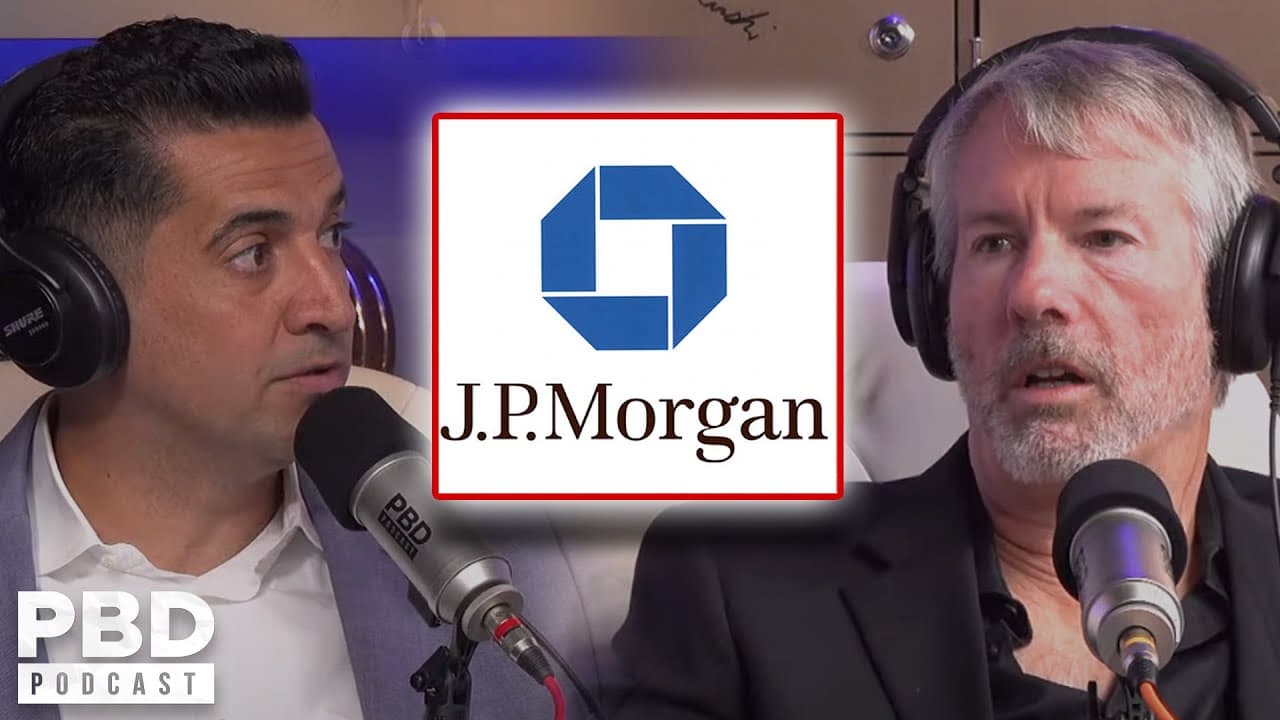
Michael Saylor argues that storing wealth in banks is risky because banks can fail while responses to banking crises can increase the dollar supply and erode currency value. He points to First Republic, Silicon Valley Bank, and Signature Bank among three of the four largest U.S. bank failures, all occurring within 90 days, and presents self-custodied Bitcoin as an alternative that governments cannot print or shut down. Read on for his specific figures and reasoning.
Transcript
if you're trying to use money that requires Banks you can't trust the banks right you certainly can't trust the banks in Africa and South America and most of Asia it used to be Americans thought they could trust American Banks now they're realizing that they can't trust American Banks so the first order impact of the banking crisis is people think ... Read More
Key Insights
- Trust in banks is declining globally, including in the U.S., due to recent bank failures.
- The solution to banking crises often involves printing more money, leading to higher inflation rates.
- Traditional currencies like the Argentine peso and Venezuelan bolivar have suffered extreme devaluation.
- Even the U.S. dollar, considered a strong currency, loses value significantly over decades.
- Bitcoin is capped at 21 million and is immune to inflation, making it a strong store of value.
- Bitcoin's decentralized nature means it cannot be shut down by any nation-state.
- Regional banks are at a disadvantage compared to large banks, which are more likely to receive government support.
- Individuals should consider diversifying their assets, with Bitcoin as a key component for long-term security.
Install to Summarize YouTube Videos and Get Transcripts
Explore YouTube Video Summarizer or Get YouTube Transcript Extractor
Questions & Answers
Q: Why does Michael Saylor say storing money in banks is risky?
Saylor says a banking crisis can make depositors fear that their money may disappear or become subject to decisions outside their control. He also argues that printing more dollars to address the crisis can cause monetary inflation of 10%, 15%, or 20%, reducing the value of currency-based savings and investments.
Q: Which major U.S. bank failures does Michael Saylor cite?
Saylor lists Washington Mutual at $307 billion in September 2008, First Republic at $212 billion on May 1, Silicon Valley Bank at $209 billion on March 10, and Signature Bank at $110 billion on March 12. He says three of the four largest bank failures in U.S. history occurred within the previous 90 days.
Q: Why does Michael Saylor present Bitcoin as an alternative to bank deposits?
Saylor describes Bitcoin as a bank in cyberspace that is not controlled by governments or bankers. He says people can custody the asset themselves, run their own node, and rely on a network that no nation-state, including China, Russia, or the United States, can shut down.
Q: How can printing more dollars affect savings and bonds?
Saylor argues that printing more dollars can raise monetary inflation to 10%, 15%, or 20%. Because bonds are claims on dollars, he says a falling currency can also cause those bonds to fall in value.
Q: What does Michael Saylor say about weak currencies?
He identifies Argentine pesos, Venezuelan bolivars, Zimbabwe dollars, and Nigerian naira as examples of weak money. He says Argentina’s official inflation rate was 105% and argues that inflation around 100% means money loses half its value every 12 months.
Q: How much value did the Argentine peso lose in Michael Saylor’s example?
Saylor says the Argentine peso was one to the dollar 21 years earlier and later traded at about 480 to the dollar. He characterizes that change as a 99.8% loss over roughly 20 to 21 years.
Q: Does Michael Saylor consider the U.S. dollar a reliable long-term store of value?
Saylor calls the dollar the world’s strongest currency but argues that it still loses purchasing power over long periods. He says a family fortune might take about 90 years to lose its value in dollars, compared with about 20 years in pesos, and cites a Miami Beach house rising from $100,000 in 1930 to an appraisal of $46 million.
Q: Why does Michael Saylor prefer Bitcoin over assets such as oil or land?
Saylor argues that oil is difficult to transport, using 100,000 barrels moved to London as an example. He also says land can be seized when political control changes, whereas Bitcoin can be self-custodied and remains beyond the control of a single government or corporate executive.
Summary & Key Takeaways
-
Storing money in banks is increasingly risky due to potential bank failures and inflation. Michael Saylor advocates for Bitcoin as a more reliable store of value, arguing it is beyond government control and immune to inflation. He highlights recent bank failures and suggests that Bitcoin offers a safer alternative to traditional banking systems.
-
Michael Saylor emphasizes that weak currencies like the Argentine peso and Venezuelan bolivar have suffered extreme devaluation. Even the U.S. dollar, considered strong, loses value significantly over decades. Bitcoin, capped at 21 million, is immune to inflation and offers a decentralized, secure alternative.
-
Regional banks face challenges compared to large banks, which are more likely to receive government support. Saylor advises individuals to diversify their assets, with Bitcoin as a key component for long-term security, as it provides a hedge against inflation and government intervention.
Read in Other Languages (beta)
Share This Summary 📚
Summarize YouTube Videos and Get Video Transcripts with 1-Click
Try YouTube Summary with ChatGPT & Claude or YouTube Transcript Generator
Explore More Summaries from Valuetainment 📚






Summarize YouTube Videos and Get Video Transcripts with 1-Click
Try YouTube Summary with ChatGPT & Claude or YouTube Transcript Generator