How to Deploy Machine Learning Models with FastAPI and Docker
TL;DR
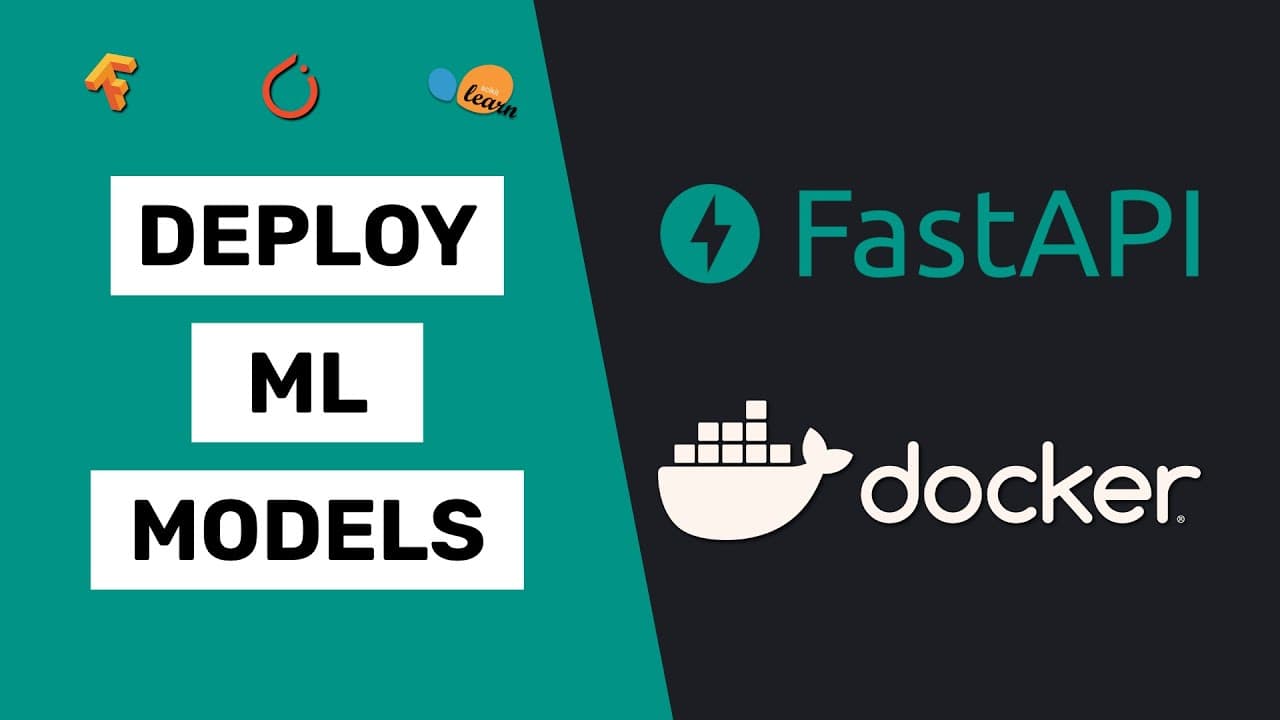
To deploy machine learning models using FastAPI and Docker, create a language detection model in a notebook, save it using scikit-learn, and then build the FastAPI app. Finally, dockerize the application and deploy it to Heroku, which supports a free tier for hosting.
Transcript
hi everyone i'm patrick and in this tutorial we learn how to deploy machine learning models with fast api and docker and then have a production ready app so you can use this template to deploy the container everywhere you want in this video we go ahead and deploy to heroku because there's a free tier and you can follow along also this approach shou... Read More
Key Insights
- 🏷️ ML model training involves preprocessing steps like label encoding and data transformation for efficient predictions.
- 🔠 Fast API provides a user-friendly approach to creating endpoints, simplifying API development.
- 😀 Dockerizing an app streamlines deployment by encapsulating dependencies and configurations.
- 👣 Version control of ML models is essential to track changes and ensure reproducibility.
- 🍵 Using a label encoder maintains consistency in handling classes during model training and prediction.
- 👻 Deploying on Heroku allows for easy access to hosted apps with a free tier option.
- 🔠 Utilizing base models in Fast API ensures proper data types and error handling in API requests.
Install to Summarize YouTube Videos and Get Transcripts
Explore YouTube Video Summarizer or Get YouTube Transcript Extractor
Questions & Answers
Q: What is the focus of the tutorial?
The tutorial focuses on deploying ML models using Fast API and Docker, transitioning from a notebook to a production-ready app.
Q: What is the significance of using a label encoder in the model training process?
The label encoder assigns numerical values to classes, enabling better model performance and consistency in handling classes during prediction.
Q: How does Fast API simplify the creation of endpoints in the app?
Fast API allows easy creation of endpoints by defining functions and decorating them with annotations like app.get or app.post, similar to Flask, making API development straightforward.
Q: What are the key steps to dockerizing the Fast API app?
The steps include creating a Dockerfile, dockerizing the app with Fast API, copying the requirements file, and running the container on a specified port.
Summary & Key Takeaways
-
Create a language detection model in a notebook.
-
Train and save the model using scikit-learn.
-
Build a Fast API app, dockerize it, and deploy on Heroku.
Read in Other Languages (beta)
Share This Summary 📚
Summarize YouTube Videos and Get Video Transcripts with 1-Click
Try YouTube Summary with ChatGPT & Claude or YouTube Transcript Generator
Explore More Summaries from AssemblyAI 📚




Summarize YouTube Videos and Get Video Transcripts with 1-Click
Try YouTube Summary with ChatGPT & Claude or YouTube Transcript Generator