How Are Companies Avoiding Trump Tariffs on Imports?
TL;DR
Companies are frontloading goods to bypass potential tariffs imposed by Trump on imports from China, Mexico, and Canada. This strategy allows larger firms to stockpile products in advance, mitigating the impact of higher costs, which will ultimately be passed on to consumers. The approach creates challenges for smaller companies lacking the same resources to execute such measures.
Transcript
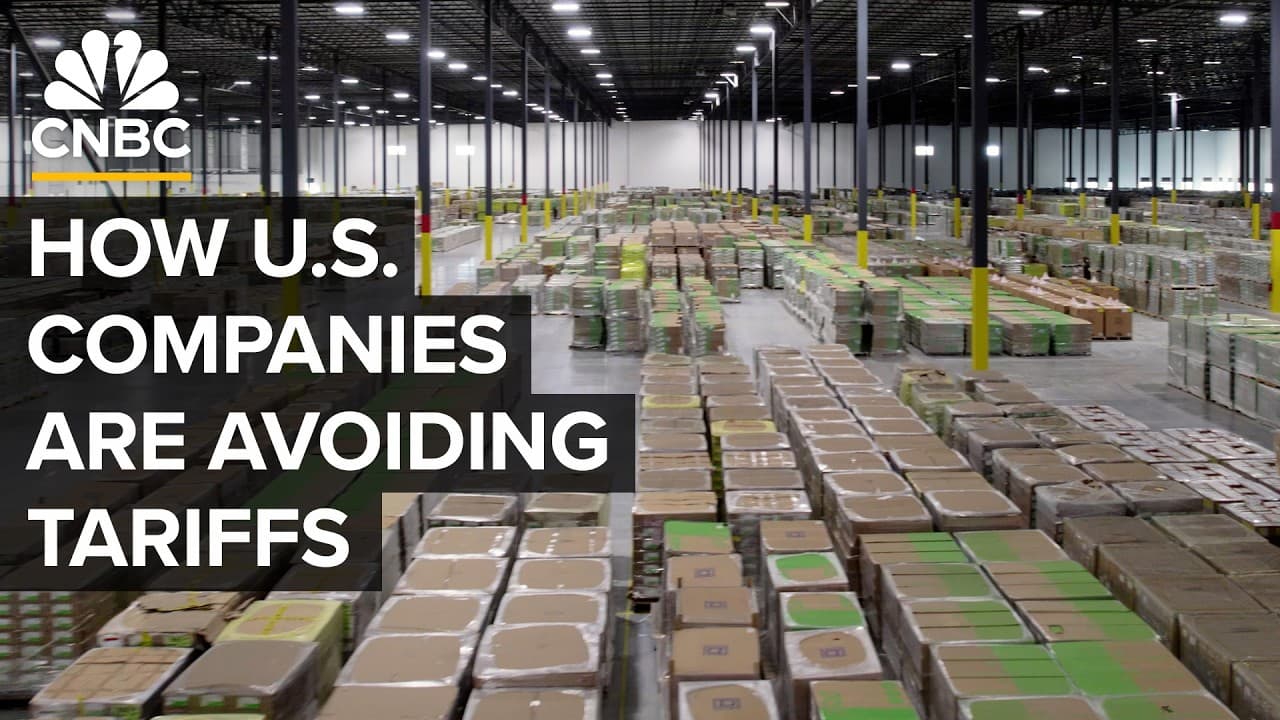
In this 1. 1 million square-foot warehouse in Fort Worth, Texas, millions of dollars worth of goods are stockpiled ahead of potentially sweeping tariffs expected to be levied against China, Mexico, and Canada. This is an import heavy economy. Most of what we consume comes in from Southeast Asia and China. A lot of those goods might be coming in, an... Read More
Key Insights
- Frontloading is a strategy where companies stockpile goods to avoid tariffs, as seen with Walmart and Columbia Sportswear increasing imports from China significantly.
- The uncertainty around tariffs is causing significant anxiety among business managers, as it complicates long-term planning and budgeting.
- Tariffs are essentially a tax on imported goods, and if implemented, both companies and consumers will face higher prices for everyday items.
- ITS Logistics, a major U.S. shipper, is benefiting from frontloading as it provides storage and logistics services for companies avoiding tariffs.
- The footwear industry faces challenges with tariffs, as companies like Deer Stags cannot afford to frontload and will see significant price increases.
- Tariffs not only affect imports but also exports, with potential retaliatory actions from countries like Mexico and China impacting U.S. businesses.
- Mexico is a crucial trading partner for the U.S., and higher tariffs could disrupt the flow of goods, affecting industries like automotive manufacturing.
- Tariffs are a pass-through cost, meaning any increase in tariffs will ultimately be borne by consumers in the form of higher prices.
Install to Summarize YouTube Videos and Get Transcripts
Explore YouTube Video Summarizer or Get YouTube Transcript Extractor
Questions & Answers
Q: What is frontloading and why are companies using this strategy?
Frontloading is a strategy where companies purchase and stockpile goods in advance to avoid anticipated tariffs. Companies like Walmart and Columbia Sportswear are using this approach to mitigate the impact of potential tariff increases on their imports. This strategy helps them manage costs and maintain competitive pricing for consumers.
Q: How do tariffs affect consumer prices?
Tariffs are essentially a tax on imported goods, and when implemented, they increase the cost of these goods. Companies often pass these additional costs onto consumers, resulting in higher prices for everyday items such as electronics, clothing, and food. This pass-through effect means consumers ultimately bear the burden of tariffs.
Q: What challenges do smaller companies face with tariffs?
Smaller companies often lack the resources to engage in frontloading, making them more vulnerable to tariff increases. Without the ability to stockpile goods in advance, these companies face higher costs that they may not be able to absorb, leading to increased prices for their products and potential loss of competitiveness.
Q: Why is Mexico a critical trading partner for the U.S.?
Mexico is the largest exporter of goods to the U.S., with significant trade in automotive manufacturing and other consumer goods. Any disruption in trade due to tariffs could severely impact industries reliant on Mexican imports, affecting supply chains and leading to potential job losses and economic instability.
Q: What is the potential impact of retaliatory tariffs?
Retaliatory tariffs from countries like Mexico and China could exacerbate trade tensions and lead to further economic challenges. Such tariffs would likely increase costs for U.S. businesses operating abroad, affect exports, and result in job losses as companies struggle to maintain profitability amid increased expenses.
Q: How do tariffs impact the supply chain?
Tariffs introduce additional costs into the supply chain, which companies must account for. These costs often lead to increased prices for consumers and can disrupt the flow of goods, particularly if countries retaliate with their own tariffs. This disruption can affect everything from manufacturing to distribution.
Q: What are the long-term implications of tariffs on U.S. manufacturing?
In the long term, tariffs could incentivize companies to relocate manufacturing to countries with lower labor costs or to invest in domestic production. However, this transition is capital-intensive and may not be feasible for all industries, particularly those reliant on specialized machinery or labor-intensive processes.
Q: How do tariffs affect international trade relations?
Tariffs can strain international trade relations, as affected countries may retaliate with their own tariffs or trade barriers. This can lead to a cycle of escalating trade tensions, reducing trade volumes, and impacting global economic growth. Maintaining healthy trade relations is crucial for economic stability and growth.
Summary & Key Takeaways
-
Companies are employing frontloading strategies, stockpiling goods in anticipation of potential tariffs on imports from China, Mexico, and Canada. This approach is particularly advantageous for larger companies with robust distribution networks, while smaller companies struggle to manage the associated costs.
-
Tariffs are a significant concern for businesses and consumers alike, as they represent additional costs that will likely result in higher prices for a wide range of products, from electronics to food and clothing. The impact of these tariffs is far-reaching, affecting supply chains and consumer pricing.
-
The potential for retaliatory tariffs from countries like Mexico and China poses an additional threat to U.S. businesses and the economy. Mexico, in particular, is a vital trading partner, and disruptions in trade could have severe consequences for industries such as automotive manufacturing and consumer goods.
Read in Other Languages (beta)
Share This Summary 📚
Summarize YouTube Videos and Get Video Transcripts with 1-Click
Try YouTube Summary with ChatGPT & Claude or YouTube Transcript Generator
Explore More Summaries from CNBC 📚





Summarize YouTube Videos and Get Video Transcripts with 1-Click
Try YouTube Summary with ChatGPT & Claude or YouTube Transcript Generator