Why Is Kant's Philosophy Still Relevant Today?
TL;DR
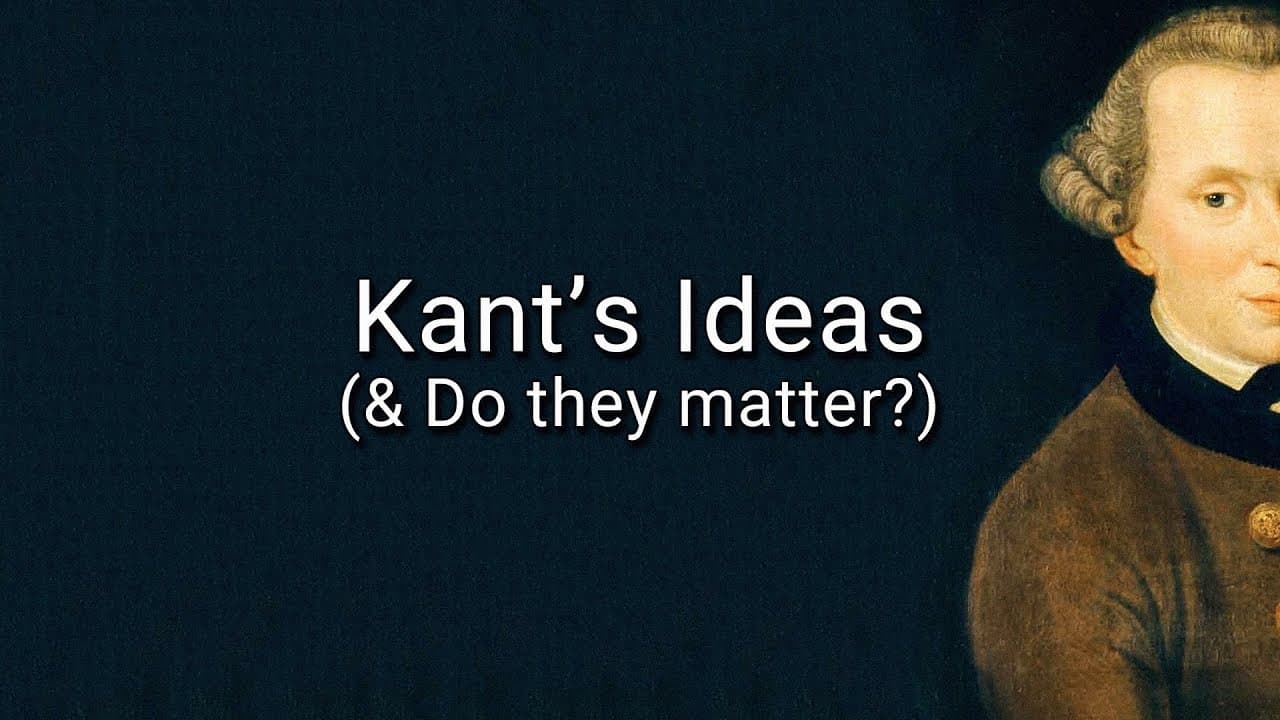
Kant's philosophy remains relevant as it emphasizes the need to emancipate reason from religious dogma and promote critical thinking. His 'Copernican turn' reorients philosophy towards understanding the conditions of experience, aiding in the critique of modern ideologies. This shift encourages a new enlightenment where philosophy leads beyond dogmatism and engages with contemporary civil religious ideologies.
Transcript
so today we're doing a short introductory video on kent i have to make sure to pronounce it not in the german way and in the second part of the video we'll ask the question if kant is still relevant today one way of i think explaining what is important about khan is to look at three core distinctions that he makes and that are all related to one an... Read More
Key Insights
- 🎚️ Kant aimed to elevate philosophy to the level of a modern science by distancing it from religion.
- 🥺 The Copernican turn led to a focus on the transcendental as the conditions of experience.
- 💭 Kant's critique method challenges dogmatic beliefs to uncover the underlying conditions of thought.
- ❓ Philosophy's role as a torchbearer ahead of religion signifies its critical function.
- ❓ Kant's distinctions remain relevant today in critiquing modern civil religious ideologies.
- 🪡 A second enlightenment is needed to reclaim philosophy's critical function from dogmatic discourses.
- 🆘 Kant's principles can help in analyzing the political, economic, and media conditions that shape dominant ideologies.
Install to Summarize YouTube Videos and Get Transcripts
Explore YouTube Video Summarizer or Get YouTube Transcript Extractor
Questions & Answers
Q: How did Kant envision the role of philosophy in relation to religion?
Kant believed in using philosophy to enlighten and emancipate itself from religion to become a modern science instead of a mere servant of religious claims.
Q: What is the significance of Kant's Copernican turn in philosophy?
Kant's Copernican turn shifted focus from transcendent to transcendental concerns, viewing time, space, and reason as conditions of experience rather than beyond experience.
Q: What distinguishes Kant's critique from dogmatism?
Kant's critique method involves analyzing the conditions that underpin concepts like God or reason, contrasting with dogmatism that seeks to establish truths about transcendent entities through conceptual analysis.
Q: How does Kant's critique method continue to impact modern philosophy?
Kant's emphasis on critique over dogmatism has influenced subsequent philosophers to analyze the historical, socio-political, and linguistic conditions underlying beliefs and values rather than asserting them as self-evident truths.
Summary & Key Takeaways
-
Kant sought to emancipate philosophy from religion to transform it into a modern science.
-
He introduced the Copernican turn focusing on the transcendental rather than the transcendent.
-
Kant's critique method aimed to challenge dogmatic beliefs and lead philosophy ahead of religion.
Read in Other Languages (beta)
Share This Summary 📚
Summarize YouTube Videos and Get Video Transcripts with 1-Click
Try YouTube Summary with ChatGPT & Claude or YouTube Transcript Generator
Explore More Summaries from Carefree Wandering 📚



Summarize YouTube Videos and Get Video Transcripts with 1-Click
Try YouTube Summary with ChatGPT & Claude or YouTube Transcript Generator