How Was the Suez Canal Built and Why It Matters
TL;DR
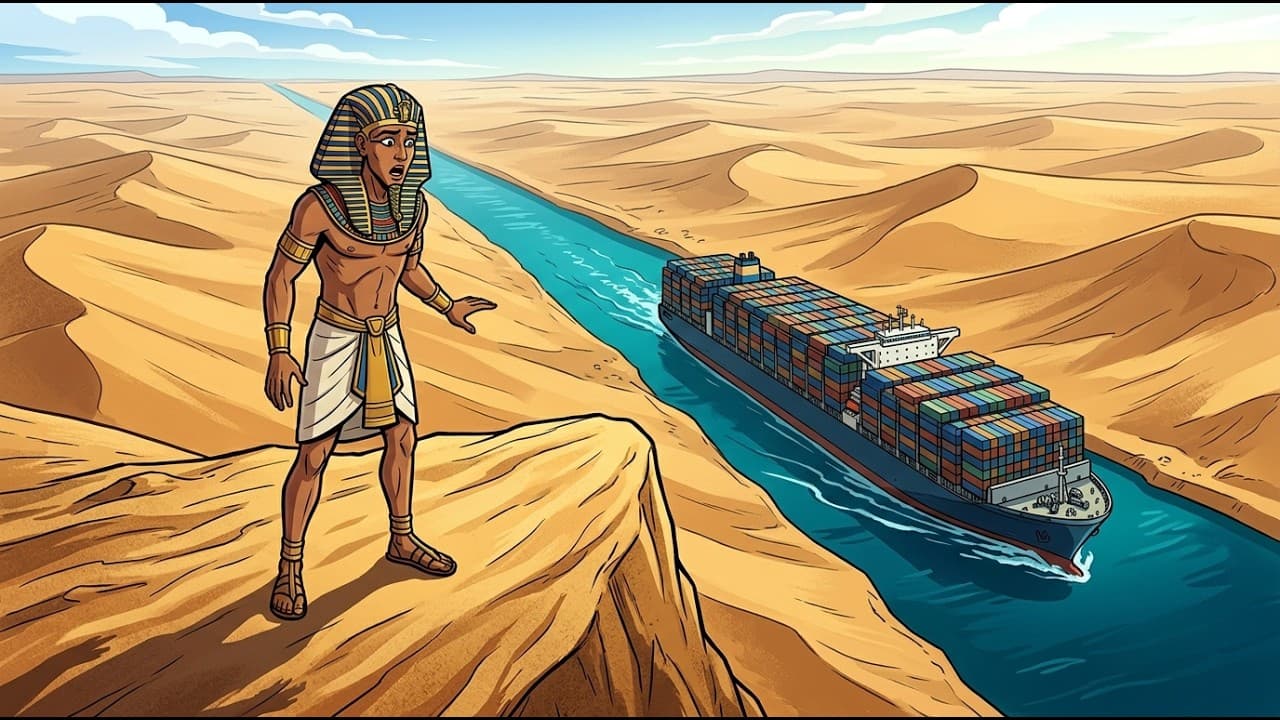
The canal project persisted for two thousand years despite repeated failures, from Necho’s trench to Darius and Roman gates. It finally succeeded in the 19th century with steam powered machines and massive dredging, transforming global trade and geopolitics. The story ends with Egypt’s debt and eventual British control, raising questions about its future amid mega ships.
Transcript
Centuries before our era, Egyptian pharaohs said, "Let's dig here." and hit a dead end. Persian kings tried next, but sandstorms swallowed the whole project. Roman emperors came, saw the insane cost, and ran away. Even Napoleon gave it a shot, but backed off when his engineers falsely claimed one sea was higher than the other and would flood everyt... Read More
Key Insights
- The quest to link the Mediterranean and Red Seas spans over two thousand years and multiple empires, showing relentless pursuit despite brutal conditions.
- The early Necho plan involved directing ships into the Nile and then drilling a land cut toward the Red Sea, driven by thousands of workers and extreme hardships.
- Darius expanded an existing trench to create the first working water link, but the canal faced design flaws and natural desert forces that eroded its usefulness.
- Roman interventions introduced gates to keep seawater from ruining Nile agriculture, yet maintenance failures and sandstorms doomed the effort.
- Napoleon’s surveyors miscalculated water levels, halting the project for decades and illustrating the fragility of early engineering assessments.
- Ferdinand de Lesseps pursued the canal as a diplomatic and commercial gamble, facing opposition and massive financial risk.
- Industrial Revolution technology finally delivered the required scale, with steam powered dredging ships and mechanical conveyors transforming desert excavation into a feasible project.
- By 1869 the canal opened, catalyzing European access to Asia and triggering long term geopolitical shifts that culminated in British control over the waterway
Install to Summarize YouTube Videos and Get Transcripts
Explore YouTube Video Summarizer or Get YouTube Transcript Extractor
Questions & Answers
Q: What historical attempts preceded the 19th century canal construction?
Historical attempts to connect the Mediterranean and Red Seas included Necho's trench work with thousands of laborers, Persian, Roman, and Ottoman projects, andNapoleon's aborted survey. Each phase faced distinct challenges such as superstitions, design flaws, water management issues, or political obstacles, illustrating a long ongoing ambition rather than a single breakthrough.
Q: How did Necho attempt the canal project and what were its consequences?
Necho directed ships into the Nile and began a man made canal toward the Red Sea, mobilizing thousands of workers with wooden shovels. The effort collapsed when a royal fortune teller warned of invasion, causing the cancellation and leaving the trench unfinished while many workers perished in harsh desert conditions.
Q: What role did Darius play in the canal story?
Darius completed the abandoned trench, creating the first working water link between seas, and installed granite stones to mark his achievement. However the canal was too narrow for ships, and desert sandstorms eventually buried the effort, negating the advantages and ending the early success.
Q: What was the Roman response to canal risks and what happened?
Romans implemented water gates to prevent mixing seawater with the Nile, protecting farmland. Despite this engineering approach, the empire eventually declined and the gates fell to sand, causing the canal to fall into disuse as maintenance resources dried up with the empire.
Q: Why did Napoleon cancel the canal project?
Napoleon canceled the project after his surveyor claimed the Red Sea was higher than the Mediterranean, warning of a flood that would ruin Egypt. Corrected later, this miscalculation led to a pause in the mission and delayed the canal dream for about half a century.
Q: Who finally drove the canal project forward and how was it financed?
Ferdinand de Lesseps, leveraging diplomatic influence and support from Egypt, pushed forward the project despite opposition from Britain. He faced tremendous financial risk as he mobilized hundreds of thousands of laborers and secured backing to attempt a grand imperial engineering feat.
Q: What technology finally made the canal possible and when did it open?
Steam powered dredging ships, metal excavators, and mechanical conveyors enabled rapid desert excavation without relying on human labor. These industrial machines accelerated progress and the canal officially opened in 1869, reshaping trade routes and triggering lasting geopolitical consequences.
Q: What are the video’s closing questions about the canal’s future?
The video asks what will happen to the Suez Canal as mega ships reach its limits, inviting viewers to share opinions on how the canal will adapt to changing shipping demands and potential new routes in the future.
Summary & Key Takeaways
-
The video traces a two thousand year effort to connect the Mediterranean and Red Seas through the desert, highlighting initial attempts, repeated failures, and the evolving technology that finally achieved a working water link.
-
The turning point comes with steam powered dredging ships and mechanical conveyors that replaced human labor, enabling rapid progress and completion in 1869 at a great economic cost to Egypt.
-
The canal story ends with Egypt losing control to the British and contemporary concerns about the canal’s future as cargo ships grow larger and global routes shift
Read in Other Languages (beta)
Share This Summary 📚
Summarize YouTube Videos and Get Video Transcripts with 1-Click
Try YouTube Summary with ChatGPT & Claude or YouTube Transcript Generator