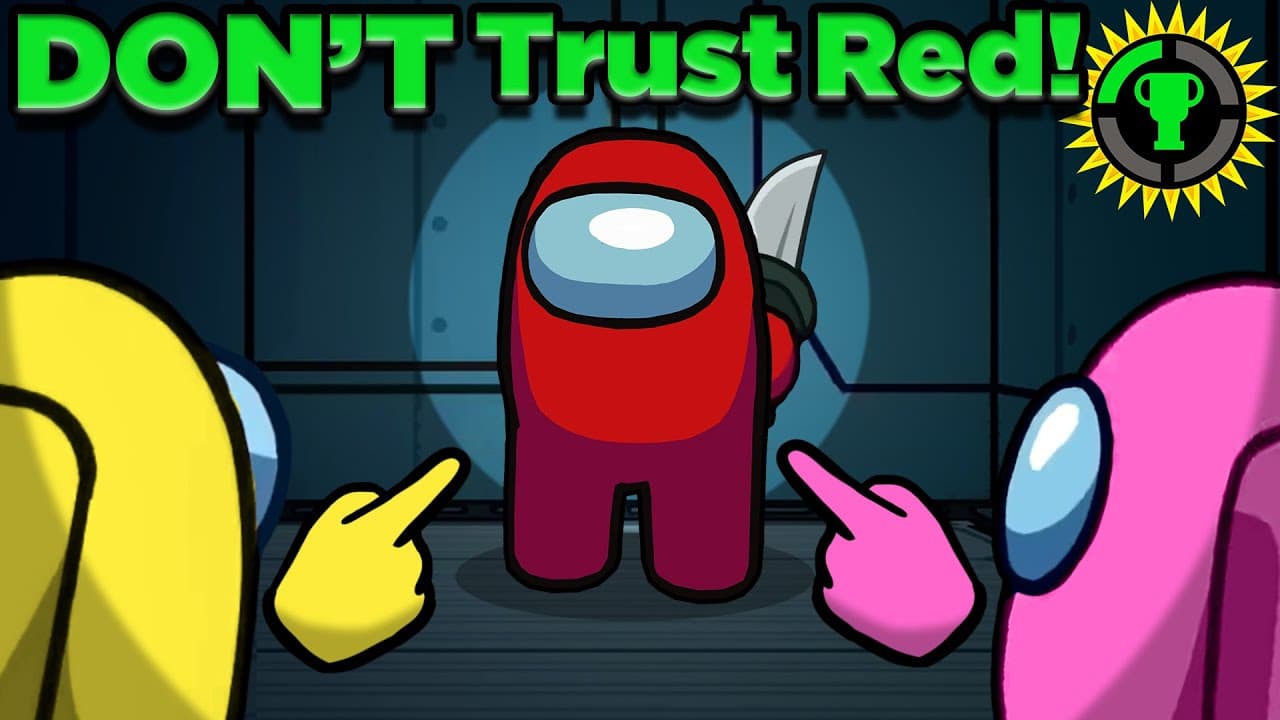
Game Theory: Among Us, Red Is SUS!
TL;DR
Yellow, not red, is presented as one of the most suspicious colors in Among Us, while lighter gray and tan may help players stay under the radar. Color psychology suggests that suit color can shape snap judgments before the impostor is even selected; red carries strong associations, whereas blue has a calming effect. Read on to see how color choice may influence suspicion and strategy during emergency meetings.
Transcript
And then his mouth opened up and he had these, these jaws. Next thing I know, a sharp tongue shot out of his mouth and stabbed him right through the eye. Can you describe who you saw? Well, he was short, two stubby legs, little oval shaped visor, kind of round at the top… Had a cute backpack. Yeah, yeah, sure. We all look like that. What I'm intere... Read More
Key Insights
- 🎚️ Color choice in Among Us influences player perceptions and suspicion levels.
- ❓ Psychological phenomena like priming and color psychology affect how colors are associated with traits like guilt and trustworthiness.
- 🙂 Newer, lighter colors like gray and tan provide strategic advantages in gameplay by avoiding strong emotional connotations.
- 🎮 Understanding the psychology of colors can enhance gameplay strategies and help players navigate suspicion in Among Us.
- 🎮 Player choices in color reflect subconscious associations and perceptions that impact gameplay dynamics.
- 😪 Colors like red, yellow, and black are linked to feelings of guilt, deceit, and authority, affecting how players are viewed in the game.
- 😇 Utilizing lesser-played colors like gray and tan can offer a strategic advantage by keeping players under the radar of suspicion.
Install to Summarize YouTube Videos and Get Transcripts
Explore YouTube Video Summarizer or Get YouTube Transcript Extractor
Questions & Answers
Q: Is red actually the most suspicious color in Among Us?
No. Although “Red is Sus” is the game’s iconic meme, the theory identifies yellow as one of the most suspicious colors and says it may be even more suspicious than red.
Q: Which Among Us colors are most likely to seem suspicious?
The page associates yellow, red, and black with heightened suspicion. Yellow is identified as one of the most suspicious choices, while red and black carry associations that can also affect players’ judgments.
Q: What is the least suspicious color in Among Us?
The page recommends newer, lighter colors such as gray and tan for avoiding suspicion. Because they lack strong emotional connotations, they may help a player remain under the radar.
Q: How does suit color affect gameplay in Among Us?
Suit color is one of the first traits other players see, so it can shape their snap judgments before the impostor is selected. Those subconscious impressions may affect whose name is raised during an emergency meeting.
Q: Why can yellow look suspicious in Among Us?
The theory says yellow is one of the game’s most suspicious colors and connects that conclusion to science and history. It also explains that human vision processes color through three types of cones and works best at a light wavelength of 555 nanometers under normal lighting.
Q: Why does red attract suspicion in Among Us?
Red already carries the powerful “Red is Sus” association within Among Us culture. The transcript also says red can prompt faster, more forceful reactions, and reports that students shown red numbers scored more than 20% lower on a simple test than those shown green or black numbers.
Q: Does blue make an Among Us player seem more trustworthy?
The page links blue with trustworthiness and describes it as calming. It says some studies found that looking at blue releases endorphins that help people physically calm down, which may reduce the strong negative impression attached to other colors.
Q: How can players use color psychology to avoid suspicion in Among Us?
Players can choose colors with fewer strong emotional associations, particularly gray or tan, to attract less attention. This does not outweigh a player’s actions, but it may influence subconscious judgments before and during emergency meetings.
Summary & Key Takeaways
-
In Among Us, color choice affects how suspicious players view you before the imposter is chosen.
-
Colors like red, yellow, and black are associated with guilt and suspicion, while blue evokes trustworthiness.
-
Newer, lighter colors like gray and tan are less likely to draw suspicion due to lack of strong emotional connotations.
Read in Other Languages (beta)
Share This Summary 📚
Summarize YouTube Videos and Get Video Transcripts with 1-Click
Try YouTube Summary with ChatGPT & Claude or YouTube Transcript Generator
Explore More Summaries from The Game Theorists 📚





Summarize YouTube Videos and Get Video Transcripts with 1-Click
Try YouTube Summary with ChatGPT & Claude or YouTube Transcript Generator