Why Is Trump Pressing NATO and China Over Iran’s Strait of Hormuz Shutdown?
TL;DR
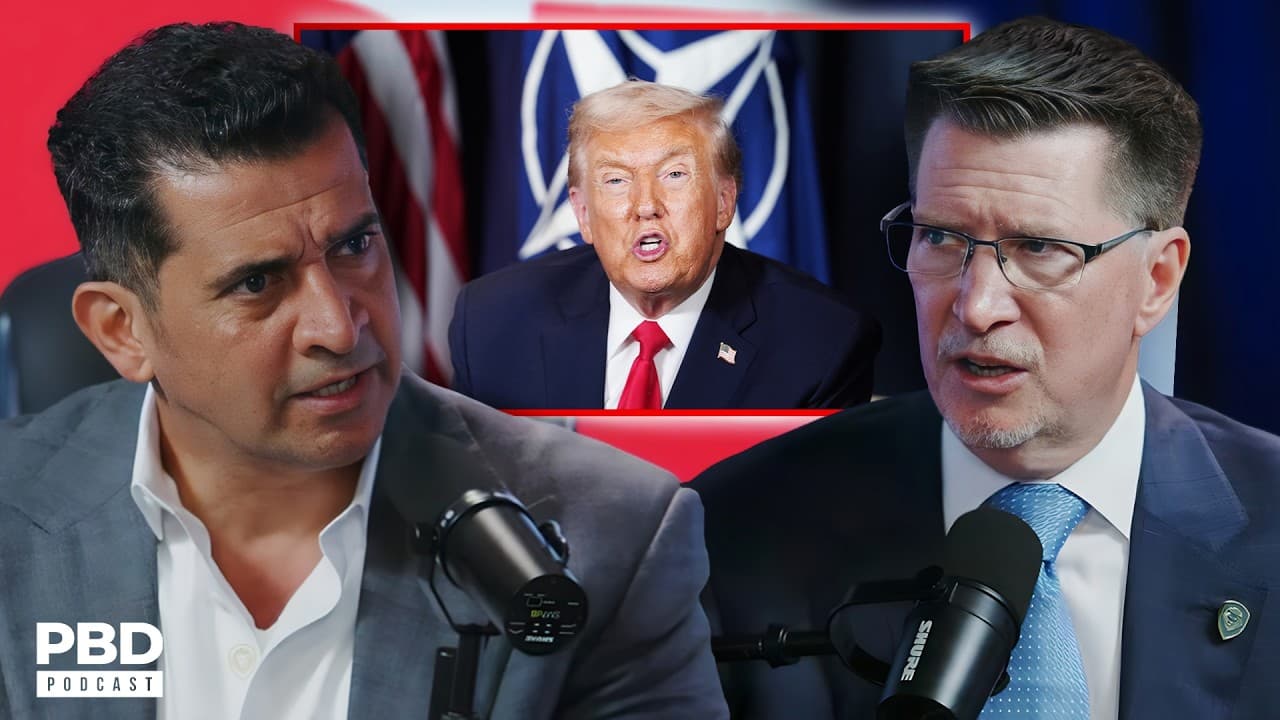
Trump’s strategy is to pressure NATO and China to help reopen the Strait of Hormuz while using a possible delay of his planned summit with President Xi as leverage. He argues that beneficiaries of the strait should help protect it, noting that China gets 90% of its oil from the route. Read on for the panel’s debate over whether this signals strong coalition-building or growing uncertainty.
Transcript
Trump warns NATO presses China to help reopen Straight of Hormuz. What does this really mean? Uh Tom's got some thoughts. Tom Rob, if you want to play the clip and then I'll read the story. Like as an example, in many cases they're in NATO countries. We're always there for NATO. We're helping them with Ukraine as many. It's it's got a notion in bet... Read More
Key Insights
- Trump is urging NATO and China to help keep the Strait of Hormuz open.
- The Strait of Hormuz is a critical chokepoint for global oil supply.
- Iran's actions in the strait are seen as a form of geopolitical leverage.
- China relies on the strait for 90% of its oil imports.
- NATO's involvement is questioned due to the US's significant financial contributions.
- Middle Eastern countries are encouraged to address regional security challenges.
- Iran's foreign minister claims the strait is only closed to US and Israeli ships.
- Economic and strategic pressures are influencing international responses.
Install to Summarize YouTube Videos and Get Transcripts
Explore YouTube Video Summarizer or Get YouTube Transcript Extractor
Questions & Answers
Q: Why is Trump pressing NATO and China to help reopen the Strait of Hormuz?
Trump argues that countries benefiting from the Strait of Hormuz should help ensure that nothing bad happens there. He specifically says China should exert pressure because it gets 90% of its oil from the strait, while NATO allies should support what he describes as a comparatively small endeavor.
Q: How could Trump use the planned summit with President Xi as leverage?
Trump says he wants to know Beijing’s position on the Strait of Hormuz before his planned visit. He indicates that the summit could be delayed, linking China’s response on the strait to an important meeting intended to advance economic agreements.
Q: Does the panel view Trump’s appeal for help as strength or weakness?
The panel presents both interpretations. One speaker sees value in asking China and NATO to apply pressure, while another worries that the outreach makes the United States appear to need help after initially projecting that it had a structured plan under control.
Q: What does Trump want China to do about the Strait of Hormuz?
Trump wants China to help pressure for oil to continue moving through the strait. The panel says China should weigh in and exert its own influence because its oil supply depends heavily on that route.
Q: What does Trump want from NATO over the Strait of Hormuz?
Trump wants NATO members to state whether they support the United States and to contribute diplomatic pressure. He warns of a “very bad future” if allies do not help open the strait and emphasizes that the United States is regularly there for NATO.
Q: Why does NATO funding enter the panel’s argument?
The panel cites NATO’s annual budget as $3.8 billion and says the US share is 16%. It argues that this contribution, along with US military and defense support in Europe, strengthens Trump’s expectation that NATO allies should back the request.
Q: What military support does the panel say the United States provides in Europe?
The discussion says the United States provides military and defense support and stations 100,000 US troops in Europe. The speakers use those commitments to question why some NATO allies might not support the US position on the strait.
Q: Why does the panel single out Spain’s NATO contribution?
The panel says Spain contributes 5% to 6% of NATO’s budget, estimated there as $150 million to $200 million per year. Spain is discussed because a speaker says it would not participate and would not allow flights over its territory, prompting questions about how it supports NATO and European security.
Summary & Key Takeaways
-
Trump is calling on NATO and China to help ensure the Strait of Hormuz remains open, highlighting its importance as a major oil transit route. The panel discusses whether this is a strategic move or a sign of weakness, given Iran's influence in the region.
-
The potential closure of the Strait of Hormuz could disrupt global oil supplies, affecting economies worldwide. Trump's approach involves leveraging international alliances to address the situation, but it also raises questions about the US's reliance on allies.
-
Iran's stance on the strait, claiming it's only closed to US and Israeli ships, adds complexity to the geopolitical landscape. The discussion emphasizes the need for regional cooperation and strategic planning to maintain stability in global energy markets.
Read in Other Languages (beta)
Share This Summary 📚
Summarize YouTube Videos and Get Video Transcripts with 1-Click
Try YouTube Summary with ChatGPT & Claude or YouTube Transcript Generator
Explore More Summaries from Valuetainment 📚



Summarize YouTube Videos and Get Video Transcripts with 1-Click
Try YouTube Summary with ChatGPT & Claude or YouTube Transcript Generator