How Does Astrology Influence Gen Z's Life Decisions?
TL;DR
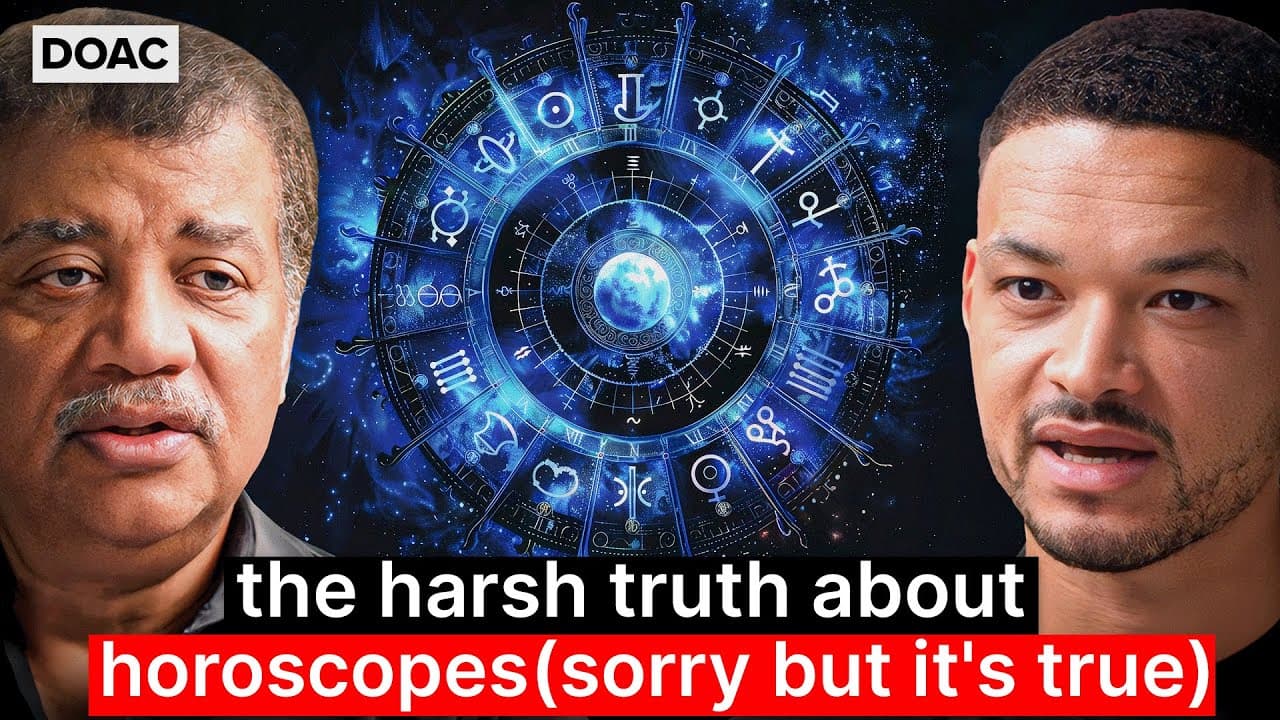
Astrophysicist Neil deGrasse Tyson discusses the influence of astrology on Gen Z, highlighting the importance of scientific understanding over mystical beliefs. He emphasizes the cosmic perspective, which shows our interconnectedness with the universe, and cautions against letting unproven beliefs dictate life decisions. Tyson also explores deeper questions about existence, free will, and the potential for life in the universe.
Transcript
Surveys find that roughly 80% of Gen Z believe in astrology and many allow it to influence major life decisions. But what would be sad is if that number got to 100%. Then the civilization just goes back to the cave where everything that happened in the natural world was created by forces beyond our knowledge and understanding. So if you want to thi... Read More
Key Insights
- 80% of Gen Z believe in astrology and let it influence major life decisions.
- Neil deGrasse Tyson argues that astrology's influence is a step back to pre-scientific thinking.
- A cosmic perspective reveals our interconnectedness with the universe; we are made of stardust.
- Tyson emphasizes the importance of objective truths over personal beliefs in shaping society.
- Life on Earth shares common elements with the universe, supporting the idea of cosmic unity.
- Tyson discusses the potential for life extension and the ethical implications of living indefinitely.
- AI and simulation theory present new challenges and opportunities for understanding reality.
- Tyson believes in the likelihood of extraterrestrial life given the vastness of the universe.
Install to Summarize YouTube Videos and Get Transcripts
Explore YouTube Video Summarizer or Get YouTube Transcript Extractor
Questions & Answers
Q: How does astrology influence Gen Z's decision-making?
Astrology significantly influences Gen Z, with 80% believing in it and many allowing it to guide major life decisions such as romance, health, and career. Neil deGrasse Tyson warns that relying on astrology can lead to a regression in scientific thinking, as it attributes life events to celestial bodies rather than recognizing human agency and objective truths.
Q: What is the cosmic perspective Neil deGrasse Tyson advocates?
The cosmic perspective, as advocated by Neil deGrasse Tyson, is the understanding that we are part of a vast universe, literally composed of stardust. This perspective emphasizes our interconnectedness with the cosmos and all life on Earth, promoting a sense of unity and purpose. It challenges divisive beliefs and encourages a focus on objective truths and scientific inquiry.
Q: Why does Neil deGrasse Tyson caution against unproven beliefs?
Tyson cautions against unproven beliefs like astrology because they can detract from scientific understanding and progress. He argues that attributing life events to celestial influences undermines human agency and the pursuit of objective truths, which are essential for societal advancement and addressing global challenges through informed decision-making.
Q: What are the potential implications of life extension?
Life extension, as discussed by Tyson, raises ethical considerations about resource allocation and societal impact. While extending life could offer more opportunities for personal growth and contribution, it may also lead to stagnation if older generations monopolize resources and decision-making. The balance between longevity and societal progress is a key concern in this debate.
Q: How does Neil deGrasse Tyson view AI and simulation theory?
Tyson sees AI as a tool that can enhance scientific exploration and creativity, though it challenges traditional roles. Simulation theory, which posits that our universe could be an artificial construct, offers a philosophical perspective on reality. Tyson uses these concepts to explore the boundaries of human understanding and the potential for new discoveries in science and technology.
Q: What is the likelihood of extraterrestrial life, according to Tyson?
Neil deGrasse Tyson believes extraterrestrial life is likely given the vastness of the universe and the commonality of life's building blocks. The rapid emergence of life on Earth suggests that similar processes could occur elsewhere. Tyson argues that to dismiss the possibility of alien life is philosophically irresponsible, as it ignores the potential diversity of life forms beyond our planet.
Q: Why does Tyson emphasize the importance of scientific literacy?
Tyson emphasizes scientific literacy to empower individuals to make informed decisions and contribute to societal progress. Understanding scientific principles helps people distinguish between objective facts and personal beliefs, fostering critical thinking and reducing susceptibility to misinformation. This literacy is crucial for addressing complex global challenges and advancing human knowledge.
Q: How does Tyson address the concept of free will?
Tyson explores free will within the context of scientific understanding, suggesting that while we may feel autonomous, our actions are influenced by various factors, including biological and cosmic forces. He encourages embracing life's uncertainties and focusing on creating meaning and purpose through informed choices, rather than seeking definitive answers to existential questions.
Summary & Key Takeaways
-
Neil deGrasse Tyson discusses the influence of astrology on Gen Z, cautioning against allowing unproven beliefs to guide significant life decisions. He advocates for a cosmic perspective, emphasizing our shared existence with the universe, as we are literally made of stardust. Tyson also explores the implications of AI, simulation theory, and the potential for life extension, urging a focus on objective truths and scientific inquiry.
-
Tyson highlights the dangers of letting astrology dictate life choices, likening it to a regression to pre-scientific thinking. He stresses the importance of understanding our cosmic origins and interconnectedness, which can foster a sense of unity and purpose. The conversation also delves into the ethical considerations of living indefinitely and the role of AI in shaping our future.
-
The discussion covers a range of existential topics, from the likelihood of extraterrestrial life to the nature of free will and the universe's mysteries. Tyson encourages curiosity and scientific literacy, warning against the complacency of accepting easy answers. He underscores the value of community and shared human experience in navigating life's challenges and uncertainties.
Read in Other Languages (beta)
Share This Summary 📚
Summarize YouTube Videos and Get Video Transcripts with 1-Click
Try YouTube Summary with ChatGPT & Claude or YouTube Transcript Generator
Explore More Summaries from The Diary Of A CEO 📚





Summarize YouTube Videos and Get Video Transcripts with 1-Click
Try YouTube Summary with ChatGPT & Claude or YouTube Transcript Generator