How to Build Authority Without a Personal Brand
TL;DR
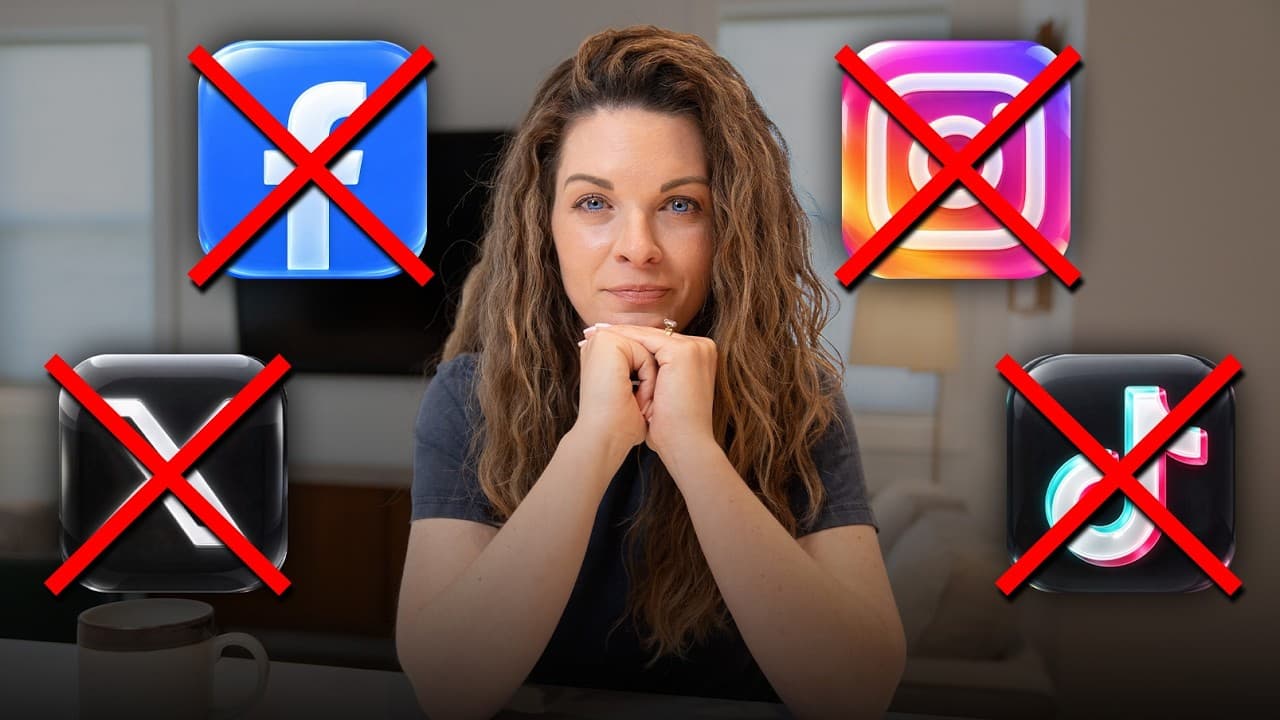
Build an authority business by defining a specific client transformation, creating searchable content for people with urgent problems, and directing those viewers toward a clear next step. Unlike a personal brand, this model sells expertise and client results rather than attention, allowing experts to generate revenue without a massive audience, constant posting, or turning their lives into content.
Transcript
If the idea of building a personal brand and posting constantly online makes you want to close every tab and go back to your actual work, you are not alone. [laughter] The build your personal brand advice that's been dominating the internet for the last decade was really designed for a specific type of person. One who wants to be famous online, one... Read More
Key Insights
- A personal brand is a volume-based model that monetizes visibility through mechanisms such as AdSense, sponsorships, and brand deals. It therefore depends on audience growth, frequent publishing, and the creator's face, personality, life, and presence remaining central to the product.
- An authority business is a precision-based model in which the transformation, method, and client results are the product. Instead of requiring widespread recognition, it seeks a smaller number of suitable prospects who have a specific problem and are ready to pursue a solution.
- YouTube can function as a search engine that connects experts with prospective clients at the moment they need an answer. The most commercially useful videos address one urgent problem for one specific person and provide one clear next step.
- Revenue becomes more predictable when content is optimized for relevance rather than recognition. The creator reports that videos answering specific questions generated clients and revenue, helping build a business described as producing more than $35 million, while personal visibility played only a supporting role.
- Specificity is more important than broad visibility for an authority business. Examples include a specialist serving women in perimenopause and menopause, a former data director helping aspiring analysts find jobs, and a restaurant owner teaching a defined transformation to a defined audience.
- A transformation statement identifies the specific person served, their painful starting state, their desired outcome, and the broader benefit they seek. This statement becomes the foundation for content, funnels, offers, and messaging because it immediately signals who the expertise is designed to help.
- Buyer-focused content targets people at a point of pain and urgency rather than casual viewers who are merely curious. These high-intent prospects have often tried other approaches, recognize that they need a solution, and may be ready to invest in appropriate help.
- Search suggestions reveal the language prospective clients use when looking for solutions. Turning those phrases into topics can make content discoverable on YouTube, blogs, Substack, and other searchable platforms, prioritizing qualified demand and conversion over viral reach.
Install to Summarize YouTube Videos and Get Transcripts
Explore YouTube Video Summarizer or Get YouTube Transcript Extractor
Questions & Answers
Q: What is an authority business?
An authority business sells a specific transformation based on an expert's knowledge, method, and ability to produce client results. The expert's personality and daily life are not the core product. The model uses discoverable content to reach suitable prospects when they are actively searching for help, then gives them a clear next step toward an offer, program, course, or coaching service.
Q: How does an authority business differ from a personal brand?
A personal brand relies on reach, recognition, audience growth, and frequent content, with the creator's identity serving as the product. It may monetize through AdSense, sponsorships, or brand deals. An authority business instead monetizes expertise and results. It focuses on a specific client transformation and uses precise, searchable content to attract a smaller number of people with relevant, urgent problems.
Q: How do you define a specific client transformation?
Complete a statement that identifies the specific person you help, the painful state they want to leave, the desired outcome they want to reach, and the broader benefit they hope to achieve. This statement should be created before producing content or building a funnel. Greater specificity helps prospective clients immediately recognize that the expert understands their situation and is speaking directly to them.
Q: How can YouTube attract clients without a large audience?
Use YouTube as a search engine rather than only as a stage for broad exposure. Create each video around a specific question that an ideal client searches for while experiencing an urgent problem. Answer that question clearly and provide one relevant next step. This approach emphasizes being found by suitable, high-intent viewers instead of accumulating the largest possible number of followers or views.
Q: How do you find search topics that potential clients want?
Enter one current problem faced by an ideal client into YouTube and examine the suggested searches and existing results. These phrases indicate how people describe and search for that problem. They can become video topics because they align content with expressed demand. The same principle can also guide articles, Substack posts, and content on other platforms where users actively search for solutions.
Q: Why can constant personal-brand content be unsustainable?
The personal-brand model requires continuing visibility and frequent publishing because its value depends heavily on attention, reach, and algorithmic distribution. When publishing stops, the algorithm and audience may move on. That creates a content hamster wheel that can be difficult for experts who already manage clients, teams, professional work, and other responsibilities, especially when their revenue does not directly track follower growth.
Q: Why should authority content target buyers instead of browsers?
Browsers are curious and may be casually exploring, but they are not necessarily ready to act. Buyers are experiencing pain or urgency, have often attempted other solutions, and may be prepared to invest in effective help. Content built around their exact search terms can meet them at that moment, demonstrate relevance, and guide them toward a clear solution rather than merely collecting attention.
Q: Can a small audience generate meaningful business results?
A large audience is not presented as necessary for an authority business because conversion depends on precision rather than raw visibility. A small group of suitable viewers can be more valuable than hundreds of thousands of poorly matched followers. The source describes one expert filling a first cohort in three days and another making $89,000 before a program was officially built after focusing on a specific transformation.
Summary & Key Takeaways
-
A personal brand depends on visibility, audience growth, frequent content, and the creator's identity. An authority business instead makes a defined transformation the product. Its success comes from being discoverable when prospective clients search for solutions, then demonstrating enough relevance and expertise to move those people toward a clear next step.
-
The foundation is a precise transformation statement: identify a specific person, the painful state they occupy, the desired outcome, and the broader benefit they want. This positioning shows prospective clients that their problem is understood. It also prevents generic expertise from competing broadly in an undifferentiated market for attention.
-
Content should target buyers experiencing immediate pain rather than casual browsers. Search suggestions and existing results reveal phrases prospective clients use when seeking answers. Those phrases can become topics for YouTube, blogs, Substack, or other searchable platforms. A simple funnel can then guide qualified viewers from useful content toward becoming clients.
Read in Other Languages (beta)
Share This Summary 📚
Summarize YouTube Videos and Get Video Transcripts with 1-Click
Try YouTube Summary with ChatGPT & Claude or YouTube Transcript Generator
Explore More Summaries from Sunny Lenarduzzi 📚
Summarize YouTube Videos and Get Video Transcripts with 1-Click
Try YouTube Summary with ChatGPT & Claude or YouTube Transcript Generator