How Do American and British English Differ?
TL;DR
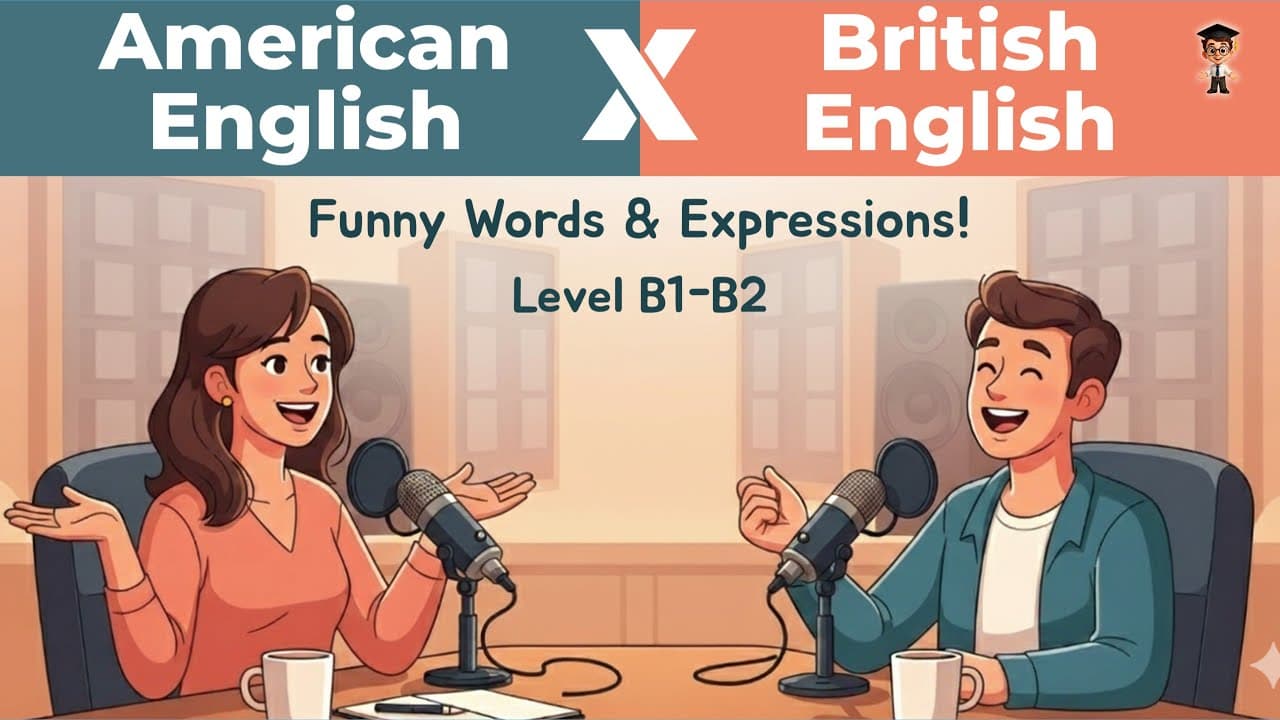
American and British English often use different everyday words for the same objects, including fries and chips, pants and trousers, and trunks and boots. Their slang and idioms also vary, but both forms of English are valid. Understanding these differences can make travel and conversations easier, while clear communication matters more than knowing every expression.
Transcript
Hello everyone and welcome back to Mr. English Channel where learning English is easy and fun. I'm Emily. >> Hello Emily and hello to all our wonderful listeners. It's great to be here today. How are you Emily? I'm doing great, Paul. So happy to be here with you. I'm excited for our topic today. >> Me, too. It's a really fun one. But before we star... Read More
Key Insights
- British chips are American fries, while American chips are British crisps. The same food word can therefore identify two different potato products depending on whether the speaker is using British or American English.
- A British biscuit is a sweet food that Americans call a cookie. An American biscuit is soft and bread-like, and it may be eaten with butter or chicken, making the shared word especially likely to cause confusion.
- The word pants has different meanings across the two varieties. Americans use pants for the clothing British speakers call trousers, while pants means underwear in British English, so travelers should choose the word carefully.
- British speakers call a sweater a jumper and sports shoes trainers. American speakers use sweater and sneakers instead, showing how ordinary clothing vocabulary can differ even when the objects and conversational situations are the same.
- American driving vocabulary includes gas, gas station, highway or freeway, windshield, and trunk. British equivalents presented in the conversation are petrol, petrol station, motorway, windscreen, and boot, alongside the major difference in which side of the road people drive on.
- Bob's your uncle is a British idiom meaning that something is finished or easy to accomplish. The conversation compares it with saying tada, as in putting a cake in the oven, waiting, and then presenting the completed result.
- Bite the bullet is an American idiom for doing something difficult that a person does not want to do. The example involves accepting the need to study for a large test, despite the task being unpleasant.
- Expressions for happiness, dishonesty, and high prices vary between the two varieties. British speakers may say chuffed, porky pie, or costs a bomb, while Americans may say on cloud nine, tall tale, or costs an arm and a leg.
Install to Summarize YouTube Videos and Get Transcripts
Explore YouTube Video Summarizer or Get YouTube Transcript Extractor
Questions & Answers
Q: How do American and British food words differ?
American and British English sometimes assign different words to the same food, or different foods to the same word. British chips are called fries or French fries in America, while British crisps are called chips in America. A British biscuit is a sweet food Americans call a cookie. An American biscuit, however, is soft, bread-like, and may be served with butter or chicken.
Q: What is the difference between pants and trousers?
Americans commonly use pants for the outer clothing worn on the legs, while British speakers call that clothing trousers. In British English, pants means underwear. Because the British meaning is substantially different, an American visitor in London should say, "I like your trousers," rather than complimenting someone by using the American word pants.
Q: What British words correspond to sweater and sneakers?
A British speaker may call a sweater a jumper and call sports shoes trainers. The term trainers reflects the idea that the shoes are used when a person trains. Americans use sweater for the warm shirt and sneakers for the sports shoes. These examples show that familiar clothing items can have different everyday names in the two varieties.
Q: How does American and British car vocabulary differ?
Americans put gas in a car at a gas station, while British speakers use petrol and visit a petrol station. A fast major road may be called a highway or freeway in America and a motorway in Britain. Americans also say windshield and trunk, whereas British speakers say windscreen and boot for those parts of a car.
Q: What does the British idiom Bob's your uncle mean?
Bob's your uncle means that a task is complete, a result has been achieved, or something is that easy. The conversation compares it to saying tada. One example is placing a cake in the oven, waiting 30 minutes, and then saying, "Bob's your uncle," when it is ready. The phrase does not require anyone to have an uncle named Bob.
Q: What does the American idiom bite the bullet mean?
To bite the bullet means to do something difficult that you do not want to do. It describes accepting an unpleasant task and proceeding with it bravely. The conversation gives the example of having a big test the next day and needing to bite the bullet by studying all night. The expression communicates that the task cannot reasonably be avoided.
Q: How do British and American speakers describe happiness and false stories?
A British speaker can say chuffed to mean very happy or pleased, such as after receiving a promotion. An American speaker might say on cloud nine after passing an exam. For a story that is not true, British slang includes porky pie, which is presented as rhyming with lie. Americans may describe a difficult-to-believe story as a tall tale.
Q: How do Americans and British speakers say something is expensive?
Americans may say that something costs an arm and a leg when its price is very high. The example concerns wanting a new car but finding it extremely expensive. British speakers can express the same general idea by saying that something costs a bomb. The conversation uses London house prices as an example of things that cost a bomb.
Summary & Key Takeaways
-
American and British speakers use different names for familiar foods. British chips are American fries, while American chips are British crisps. A British biscuit is what Americans call a cookie, but an American biscuit is soft and bread-like. These contrasts can create confusion even when both speakers are using English correctly.
-
Clothing and transportation vocabulary also changes across the two varieties. Americans say pants, sweater, sneakers, gas station, highway, windshield, and trunk. British speakers say trousers, jumper, trainers, petrol station, motorway, windscreen, and boot. The word pants requires particular care because it refers to underwear in British English.
-
Idioms make both varieties colorful and expressive. British examples include Bob's your uncle, chuffed, porky pie, and costs a bomb. American examples include bite the bullet, on cloud nine, tall tale, and costs an arm and a leg. Learning these phrases supports understanding, but successful communication remains the main goal.
Read in Other Languages (beta)
Share This Summary 📚
Summarize YouTube Videos and Get Video Transcripts with 1-Click
Try YouTube Summary with ChatGPT & Claude or YouTube Transcript Generator
Explore More Summaries from Mr. English Channel 📚


Summarize YouTube Videos and Get Video Transcripts with 1-Click
Try YouTube Summary with ChatGPT & Claude or YouTube Transcript Generator