What Is the Birch Reduction in Organic Chemistry?
TL;DR
The Birch reduction is a process that adds electrons to aromatic compounds like benzene, resulting in an incomplete reduction that retains some double bonds and allows for new product formation. It involves using liquid ammonia, an alkali metal (sodium or lithium), and an alcohol under anhydrous conditions, making it particularly useful for synthesizing compounds such as 1-4 cyclohexadiene.
Transcript
the Birch reduction is a pretty interesting and important reaction in organic chemistry just from the name you can see that it's a reduction reaction which means that electrons are going to be added to the reactant the reactant is always an aromatic compound and the best example of this is benzene I won't really get into the details of what makes s... Read More
Key Insights
- ❓ The Birch reduction is a reduction reaction in organic chemistry used on aromatic compounds.
- 👻 Unlike other reductions, the Birch reduction does not remove all double bonds, allowing for the creation of new products.
- 😒 The Birch reduction requires the use of liquid ammonia, an alkali metal like sodium or lithium, and an alcohol, all under anhydrous conditions.
- ❓ The reaction mechanism of the Birch reduction differs when using the precursor for meth instead of benzene.
- 🫗 Liquid ammonia used in the Birch reduction can be dangerous.
- ❓ The Birch reduction is commonly used in the synthesis of 1-4 cyclohexadiene.
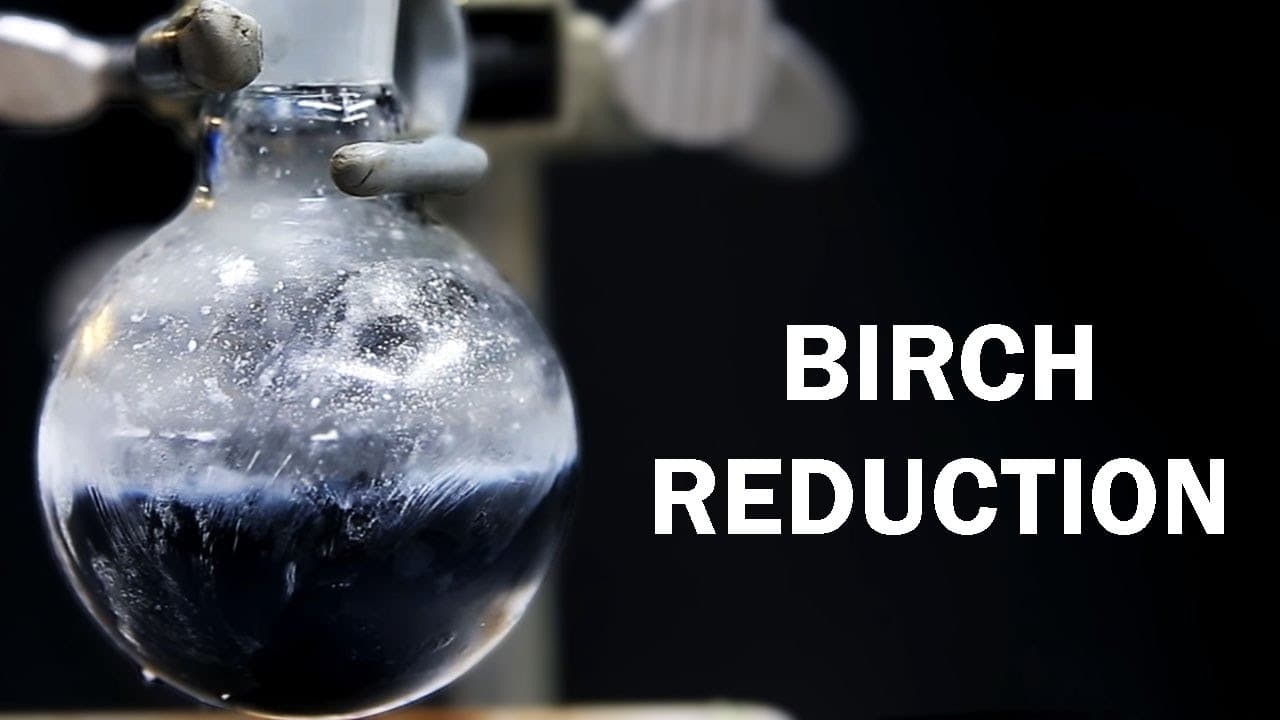
- 💙 The blue color observed during the Birch reduction is due to solvated electrons.
Install to Summarize YouTube Videos and Get Transcripts
Explore YouTube Video Summarizer or Get YouTube Transcript Extractor
Questions & Answers
Q: What is the Birch reduction and what type of compounds does it work on?
The Birch reduction is a reduction reaction in organic chemistry that adds electrons to aromatic compounds. It is commonly used on benzene.
Q: How does the Birch reduction differ from other reduction reactions?
Unlike other reductions, the Birch reduction does not remove all double bonds, allowing for the creation of new products.
Q: What are the requirements for carrying out the Birch reduction?
The Birch reduction requires the use of liquid ammonia, an alkali metal like sodium or lithium, and an alcohol, all under anhydrous conditions.
Q: Can the Birch reduction be used to make meth?
Yes, the Birch reduction can be used to make meth, but the reaction mechanism differs when using the precursor for meth instead of benzene.
Summary & Key Takeaways
-
The Birch reduction is a reduction reaction in organic chemistry that adds electrons to aromatic compounds, such as benzene.
-
Unlike other reduction reactions, the Birch reduction does not remove all double bonds, allowing the creation of new products.
-
The Birch reduction requires the use of liquid ammonia, an alkali metal like sodium or lithium, and an alcohol, all under anhydrous conditions.
Read in Other Languages (beta)
Share This Summary 📚
Summarize YouTube Videos and Get Video Transcripts with 1-Click
Try YouTube Summary with ChatGPT & Claude or YouTube Transcript Generator
Explore More Summaries from NileRed 📚



Summarize YouTube Videos and Get Video Transcripts with 1-Click
Try YouTube Summary with ChatGPT & Claude or YouTube Transcript Generator