Why Is There a Lenin Bust at Antarctica’s Southern Pole of Inaccessibility?
TL;DR
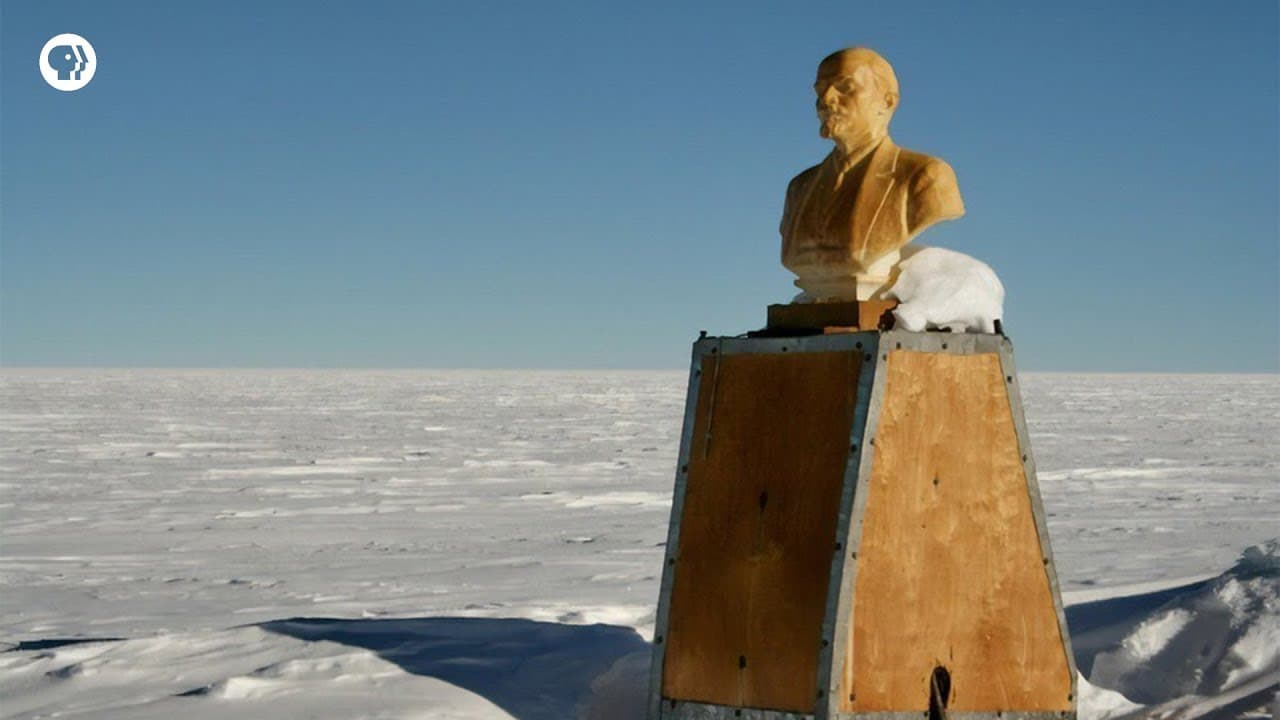
A plastic bust of Vladimir Lenin remains at Antarctica’s Southern Pole of Inaccessibility because an 18-person Soviet expedition installed it atop a research hut in December 1958. The station was abandoned after only 12 days, but the bust survived decades of snowfall and shifting ice, transforming from propaganda into a reflection on art, power, human influence, and mortality. Read on to discover how its isolation changed its meaning.
Transcript
on December 14 1958 a group of 18 scientists and explorers from the Soviet Union arrived at the coldest and most remote plot of land on earth which is known as the southern pole of inaccessibility they were travelling in a convoy of tractors one of which carried a prefabricated 240 square foot Hut and upon arrival the team installed the hut and cle... Read More
Key Insights
- 🍉 The Southern Pole of Inaccessibility in Antarctica is an exceptionally inhospitable and remote location, making it challenging for humans to establish a long-term presence.
- 👨🔬 The surviving Lenin bust at the abandoned research station highlights the presence of human intervention even in the most inaccessible places.
- ✊ Objects, such as the Lenin bust, can change meaning over time, influenced by history, weather, and shifting landscapes of power.
- 💋 It is both remarkable and humbling that humans can leave their mark on places they cannot frequently or comfortably visit.
- 🥰 The surviving Lenin bust and ancient cave paintings serve as reminders of the enduring human desire to create art and leave traces of our existence.
- 🤨 The story of the abandoned research station at the Southern Pole of Inaccessibility raises questions about the significance and impact of human intervention in inaccessible locations.
- ⌛ The changing meanings of objects over time highlight the subjectivity of interpretation and the influence of context and historical shifts.
Install to Summarize YouTube Videos and Get Transcripts
Explore YouTube Video Summarizer or Get YouTube Transcript Extractor
Questions & Answers
Q: Why is there a Lenin bust at Antarctica’s Southern Pole of Inaccessibility?
A Soviet expedition placed the plastic bust atop its newly built research station in December 1958. Lenin initially faced north toward Moscow, and the sculpture was intended as propaganda for the Soviet regime.
Q: Why was the Soviet research station abandoned after only 12 days?
The expedition concluded that the location was too inhospitable for an ongoing human presence. Its average year-round temperature was negative 58 degrees Celsius, and its altitude exceeded 3,800 meters above sea level.
Q: What did the Soviet expedition build at the Southern Pole of Inaccessibility?
The 18 scientists and explorers arrived with a prefabricated 240-square-foot hut carried by a convoy of tractors. They installed the hut, cleared an airplane runway, and placed the Lenin bust on top of the research building.
Q: What is a pole of inaccessibility?
It is the point farthest from a coast within a landmass or body of water. Every ocean has one, and the Pacific Ocean’s pole of inaccessibility is commonly called Point Nemo.
Q: How did the Lenin bust’s direction change?
The Soviets originally positioned Lenin facing north toward Moscow. An American team apparently turned it toward Washington, DC, in 1964, and Soviet visitors apparently turned it back toward Moscow in 1967.
Q: How was the abandoned station rediscovered?
An expedition returned in 2007 after humans had been absent from the site for 40 years. Most of the station was buried beneath decades of snowfall and shifting ice, but the elevated Lenin bust remained visible, yellowed but otherwise in good condition.
Q: When was the Lenin bust last observed at the station?
Humans last visited the site in 2011, when the bust was still present. The speaker notes that it may since have been buried by snow or destroyed by wind, because it cannot last forever.
Q: Why does the surviving Lenin bust matter as art?
Its significance comes less from its craftsmanship than from its location, history, and changing context. The speaker sees it as evidence that objects can acquire new meanings and that humans can place art in locations where they themselves cannot survive for long.
Summary & Key Takeaways
-
In 1958, scientists from the Soviet Union established a research station, known as the Southern Pole of Inaccessibility, in Antarctica. However, due to extreme weather conditions and inhospitable environment, the station was abandoned after only 12 days.
-
The Southern Pole of Inaccessibility refers to the farthest point from a coast on any landmass or body of water. Similar points exist in North America, South America, Eurasia, Africa, and every ocean.
-
After being buried under decades of snowfall and ice, the research station, along with a plastic bust of Lenin, was rediscovered in 2007, highlighting the lasting presence of human intervention in an inaccessible place.
Read in Other Languages (beta)
Share This Summary 📚
Summarize YouTube Videos and Get Video Transcripts with 1-Click
Try YouTube Summary with ChatGPT & Claude or YouTube Transcript Generator
Explore More Summaries from The Art Assignment 📚






Summarize YouTube Videos and Get Video Transcripts with 1-Click
Try YouTube Summary with ChatGPT & Claude or YouTube Transcript Generator