What Happens If Earth Is Ejected from the Solar System?
TL;DR
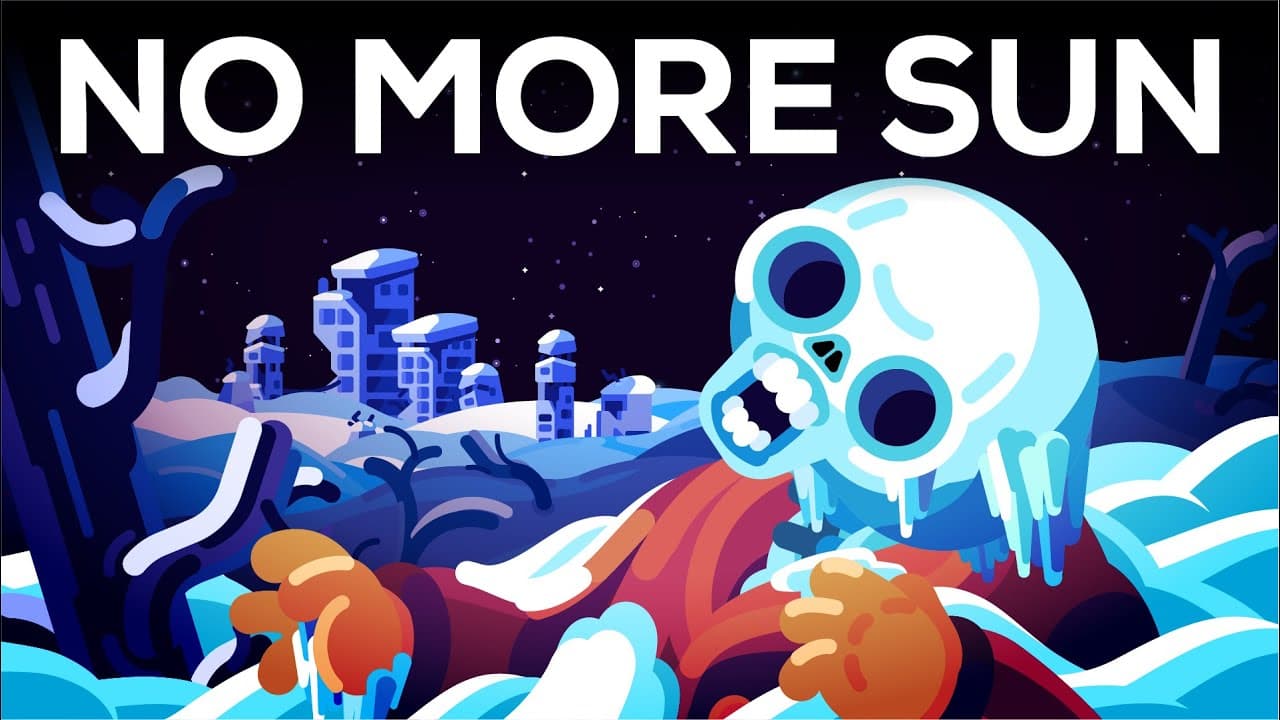
If Earth were kicked out of the solar system, it would become a rogue planet, experiencing a drastic drop in temperatures and loss of sunlight. As the climate becomes inhospitable, most life would perish, leaving humanity to either adapt in underground complexes or seek new habitable worlds. Preparation for such a cosmic event is crucial for our survival.
Transcript
the night sky seems peaceful and orderly but in reality stars are careening through the galaxy at speeds of hundreds of thousands of kilometers per hour not bound by static formations but changing neighborhoods constantly fortunately space is big and so the stars of the milky way are very unlikely to hit us unfortunately they don't have to hit anyt... Read More
Key Insights
- 🤩 Stars' gravitational forces can disrupt the stability of our solar system, leading to disastrous consequences.
- 🤩 The approach of stars like Gliese 710 poses a significant threat to Earth's environment and potential survival.
- 🤩 Understanding the nature of stars and their movements is crucial for humanity's long-term survival in the cosmos.
- 🤩 Human adaptation and resilience could play a vital role in mitigating the impact of cosmic disasters caused by stars.
- 🤩 The potential extinction event caused by stars highlights the need for preparation and awareness of cosmic threats.
- 👾 Earth's journey as a rogue planet post-ejection from the solar system illustrates the harsh realities of deep space survival.
- 😀 Humanity's survival in the face of cosmic catastrophes depends on our ability to innovate and adapt to extreme conditions.
Install to Summarize YouTube Videos and Get Transcripts
Explore YouTube Video Summarizer or Get YouTube Transcript Extractor
Questions & Answers
Q: How does the gravitational force of stars affect our solar system?
Stars' gravitational forces shape the behaviors and orbits of objects in our solar system, with close and massive stars capable of disrupting the established order.
Q: What are the potential consequences of a star passing too close to our solar system?
A close flyby by a star could lead to planetary bombardment, mass extinctions, and extreme climate changes on Earth, posing significant risks to life as we know it.
Q: How would Earth's climate change if ejected from the solar system by a passing star?
Earth's surface temperatures would plummet drastically, leading to global freezing, widespread death, and the potential extinction of all life forms on the planet.
Q: How could humanity survive potential cosmic disasters caused by stars?
By preparing and building large artificial complexes powered by geothermal, nuclear, or fusion energy, a small population of humanity could potentially survive and adapt to a new existence.
Summary & Key Takeaways
-
Stars, despite appearing peaceful, move through the galaxy at high speeds, capable of disrupting the delicate balance in our solar system.
-
Gravity, the force attracting matter, plays a crucial role in shaping the orbits of celestial bodies around massive objects like the sun.
-
The approach of a red dwarf star, Gliese 710, towards our solar system poses a significant threat, potentially causing planetary bombardment and extreme climate shifts.
Read in Other Languages (beta)
Share This Summary 📚
Summarize YouTube Videos and Get Video Transcripts with 1-Click
Try YouTube Summary with ChatGPT & Claude or YouTube Transcript Generator
Explore More Summaries from Kurzgesagt – In a Nutshell 📚


Summarize YouTube Videos and Get Video Transcripts with 1-Click
Try YouTube Summary with ChatGPT & Claude or YouTube Transcript Generator