Why Does Germany Oppose Nuclear Energy?
TL;DR
Germany's opposition to nuclear energy stems from historical protests and environmental concerns, significantly influenced by incidents like Chernobyl and Fukushima. Despite Germany's push for renewable energy, the closure of nuclear plants has increased reliance on fossil fuels, raising carbon emissions. The debate continues over the best path to achieve clean, sustainable energy, with differing opinions on the role of nuclear power.
Transcript
This is Germany in the 1980s. Before the Berlin Wall came down. Still fractured in two between two world superpowers, and this is the map of Nuclear Power plants that powered the country. The 1980s was an eventful time period for this recovering nation. Chernobyl, located here, just north of Kiev, exploded. Showering Europe in radioactive material.... Read More
Key Insights
- Germany's anti-nuclear movement began before Chernobyl, with significant protests in the 1970s and 1980s.
- The Chernobyl disaster in 1986 intensified Germany's opposition to nuclear power, leading to political action and the rise of the Green Party.
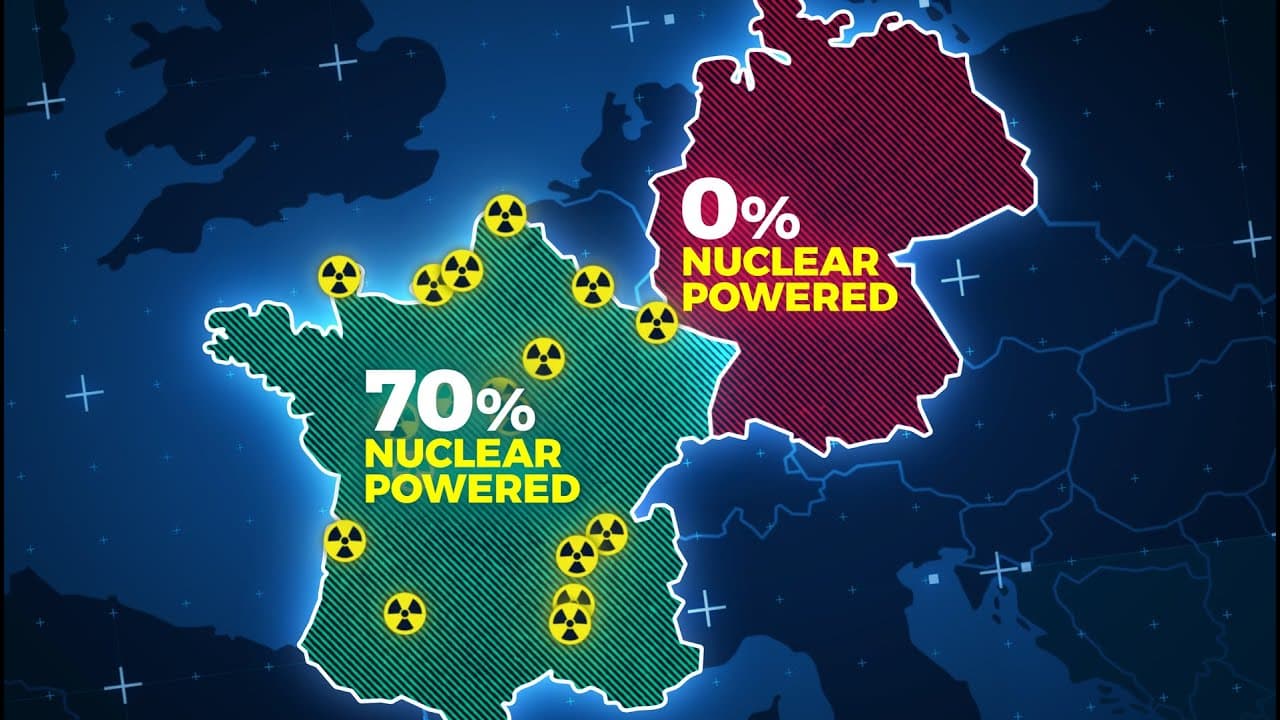
- Germany's decision to phase out nuclear energy has increased its reliance on fossil fuels, particularly coal and natural gas.
- France, in contrast, relies heavily on nuclear energy, providing a low-carbon energy solution and energy independence.
- The aging nuclear infrastructure in France presents challenges, including safety concerns and the need for significant investment.
- Nuclear energy projects often face cost overruns and delays, complicating efforts to expand nuclear capacity.
- Small modular nuclear reactors are being explored as a potential solution to make nuclear energy more viable and flexible.
- The debate over nuclear energy versus renewables is ongoing, with differing views on what constitutes clean and safe energy.
Install to Summarize YouTube Videos and Get Transcripts
Explore YouTube Video Summarizer or Get YouTube Transcript Extractor
Questions & Answers
Q: Why does Germany oppose nuclear energy?
Germany's opposition to nuclear energy is rooted in historical protests and environmental concerns. The anti-nuclear movement gained momentum in the 1970s, with large-scale protests against nuclear power plants. The Chernobyl disaster in 1986 further solidified public and political resistance, leading to the rise of the Green Party and policies to phase out nuclear energy. The Fukushima disaster in 2011 reinforced these views, prompting Germany to accelerate its nuclear phase-out plan.
Q: How did the Chernobyl disaster affect Germany's energy policy?
The Chernobyl disaster had a profound impact on Germany's energy policy by intensifying public fear and opposition to nuclear energy. It bolstered the anti-nuclear movement, leading to increased political pressure to phase out nuclear power plants. The disaster reinforced the Green Party's ideology, which eventually influenced government decisions to halt new nuclear projects and decommission existing plants. This shift aimed to prioritize renewable energy sources, despite challenges in achieving energy independence.
Q: What are the environmental consequences of Germany's nuclear phase-out?
Germany's nuclear phase-out has led to increased reliance on fossil fuels, particularly coal and natural gas, resulting in higher carbon emissions. Without nuclear energy as a low-carbon baseload, Germany struggles to meet its clean energy goals. The transition has made the country more dependent on energy imports and vulnerable to price fluctuations, especially during geopolitical crises. The environmental impact includes a significant rise in greenhouse gas emissions compared to neighboring countries like France, which rely more on nuclear power.
Q: How does France's energy policy differ from Germany's?
France's energy policy heavily relies on nuclear power, providing a stable, low-carbon energy source and ensuring energy independence. Unlike Germany, France has invested significantly in nuclear infrastructure, resulting in a high percentage of electricity generation from nuclear plants. This approach contrasts with Germany's focus on phasing out nuclear energy and expanding renewables. However, France faces challenges with aging nuclear reactors and the need for substantial investment to maintain its nuclear capacity.
Q: What challenges does France face with its nuclear infrastructure?
France faces challenges with its aging nuclear infrastructure, which includes safety concerns and the need for significant investment to maintain and modernize facilities. The average age of French nuclear reactors is nearly 40 years, leading to reliability issues and costly repairs. Recent discoveries of cracks in reactor cooling pipes have raised alarm bells about safety and the need for skilled labor to address these problems. France is now investing in new nuclear projects, but cost overruns and delays remain significant hurdles.
Q: What are small modular nuclear reactors, and how might they benefit energy policy?
Small modular nuclear reactors (SMRs) are designed to offer a more flexible and cost-effective approach to nuclear power. These reactors generate less power than traditional plants but can be deployed incrementally, allowing for lower initial capital investment. SMRs can be placed in locations unsuitable for larger reactors, and their modular nature facilitates easier replacement and expansion. They aim to address some of the cost and safety challenges associated with traditional nuclear energy, potentially making nuclear power more viable in the future.
Q: How do cost overruns and delays impact nuclear energy projects?
Cost overruns and delays are common in nuclear energy projects, often due to the complexity of construction and stringent safety standards. These issues result in projects exceeding budgets and timelines, making nuclear energy less economically attractive compared to rapidly advancing renewable technologies. Delays can stem from technical challenges, regulatory hurdles, and a lack of skilled labor, as seen in France's recent nuclear projects. These factors contribute to the debate over the viability of nuclear energy as a long-term solution.
Q: What is the debate over nuclear energy versus renewables about?
The debate over nuclear energy versus renewables centers on the best path to achieve clean, sustainable energy. Proponents of nuclear energy argue that it provides a reliable, low-carbon baseload power source essential for reducing emissions. Critics highlight safety concerns, high costs, and long construction times. Renewables, such as wind and solar, are becoming cheaper and more scalable but face challenges with energy storage and grid stability. The debate involves differing views on what constitutes clean and safe energy and how to balance these technologies for future energy needs.
Summary & Key Takeaways
-
Germany's anti-nuclear stance is rooted in historical protests and heightened by the Chernobyl disaster, leading to political efforts to phase out nuclear energy. This has increased reliance on fossil fuels, raising carbon emissions, despite efforts to expand renewables.
-
France's energy policy contrasts with Germany's, heavily relying on nuclear power for low-carbon energy and independence. However, aging infrastructure and investment challenges pose risks to this strategy.
-
The future of nuclear energy involves debates over safety, cost, and environmental impact. Small modular reactors offer a potential path forward, but the transition to sustainable energy remains complex and contentious.
Read in Other Languages (beta)
Share This Summary 📚
Summarize YouTube Videos and Get Video Transcripts with 1-Click
Try YouTube Summary with ChatGPT & Claude or YouTube Transcript Generator
Explore More Summaries from Real Engineering 📚




Summarize YouTube Videos and Get Video Transcripts with 1-Click
Try YouTube Summary with ChatGPT & Claude or YouTube Transcript Generator