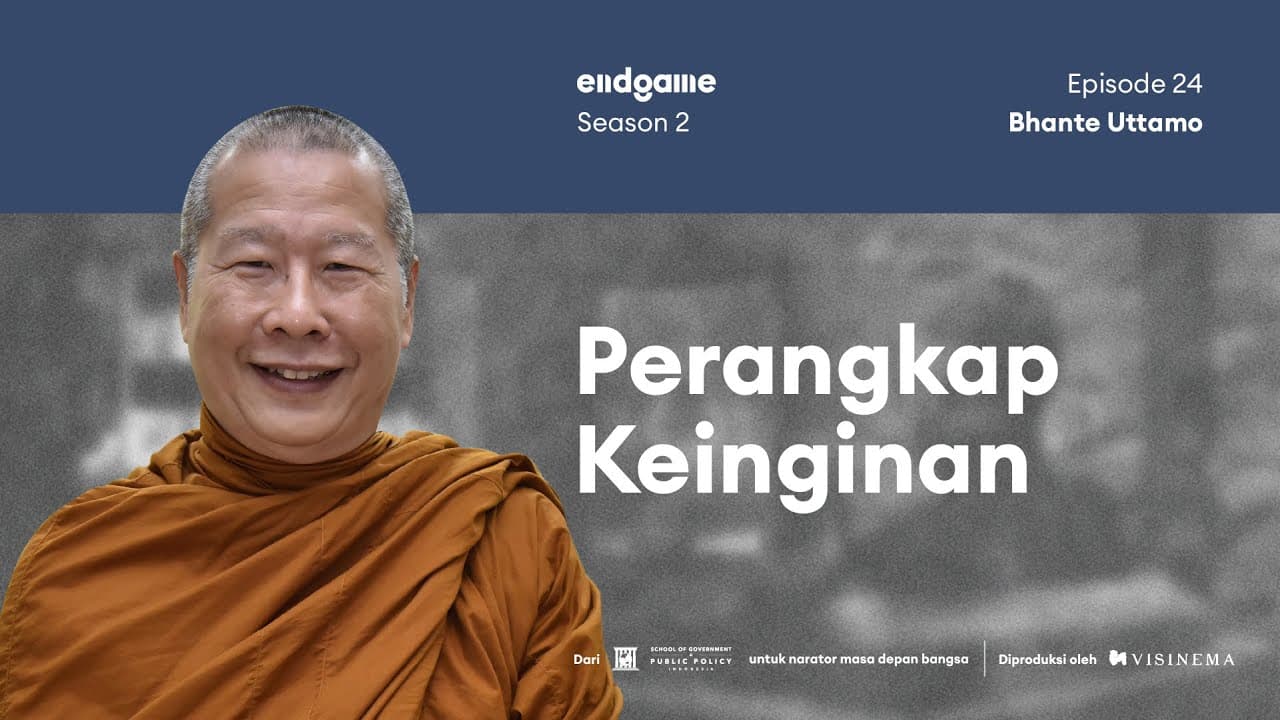
Bhante Uttamo: Segalanya Tidak Kekal | Endgame #39
TL;DR
Bhante Uttamo discusses meditation, life lessons, and cultural insights.
Transcript
Every problem comes from our desires. can you give an example of which doesn't? - It can be. -Like what? that isn't a desire? - Something that isn't a desire... [Voiceover: This is Endgame] GITA WIRJAWAN: Hello Friends, Today we have Bhante Uttamo, the head of Vihara Bodhigiri and Vihara Samaggi Jaya in Blitar Bhante, thank you very much for coming... Read More
Key Insights
- Bhante Uttamo shares his journey from a non-Buddhist family to becoming a Bhikkhu, emphasizing the importance of open-mindedness and tolerance.
- He highlights the role of meditation in understanding oneself and controlling emotions, using personal experiences and teachings from mentors.
- The discussion touches on the transient nature of life and how accepting this can lead to inner peace and better emotional regulation.
- Bhante Uttamo emphasizes the significance of cultural unity and amity in Southeast Asia, drawing historical parallels to the Srivijayan era.
- The conversation explores the impact of technology on spirituality, suggesting that technology is neutral and its effects depend on user morality.
- He advocates for a culture of fear and shame to improve societal behavior, using examples of environmental responsibility and personal conduct.
- Bhante Uttamo discusses the balance between accepting reality and striving for improvement, using meditation as a tool for self-awareness.
- The future of Indonesia in 2045 is envisioned as a nation that embraces its cultural strengths and adapts to global moral challenges.
Install to Summarize YouTube Videos and Get Transcripts
Explore YouTube Video Summarizer or Get YouTube Transcript Extractor
Questions & Answers
Q: What is Bhante Uttamo's perspective on meditation?
Bhante Uttamo views meditation as a tool for self-awareness and emotional regulation. He believes that meditation helps individuals understand themselves better, leading to improved control over emotions. Through meditation, one can learn to accept the transient nature of life, which can result in inner peace and a balanced mindset.
Q: How does Bhante Uttamo describe his journey to becoming a Bhikkhu?
Bhante Uttamo describes his journey to becoming a Bhikkhu as a path of open-mindedness and tolerance. Born in a non-Buddhist family, he explored various religions before finding solace in Buddhism. His decision to become a Bhikkhu was met with initial resistance from his family, but he persevered, proving his commitment to living a life of discipline and meditation.
Q: What cultural insights does Bhante Uttamo provide about Southeast Asia?
Bhante Uttamo highlights the cultural unity and amity in Southeast Asia, drawing historical parallels to the Srivijayan era. He emphasizes the region's tradition of caring for others and the importance of maintaining harmony despite differences. This cultural strength, he suggests, can be a foundation for addressing modern challenges and fostering peace.
Q: How does Bhante Uttamo view the role of technology in spirituality?
Bhante Uttamo views technology as a neutral tool whose impact depends on the user's morality. He suggests that technology can be used to enhance life quality if applied positively. However, it can also spread negativity if misused. Therefore, the focus should be on improving individual morality to ensure technology serves a beneficial role in society.
Q: What does Bhante Uttamo suggest about handling life's challenges?
Bhante Uttamo suggests that life's challenges should be approached with an understanding of the transient nature of desires and reality. By accepting that life is not everlasting and that desires often conflict with reality, individuals can find peace and learn from their experiences. Meditation is a key practice in developing this mindset.
Q: What are Bhante Uttamo's thoughts on the future of Indonesia?
Bhante Uttamo envisions a future where Indonesia leverages its cultural strengths to address global moral challenges. By fostering a culture of fear and shame, Indonesians can improve societal behavior and become role models for other nations. He emphasizes the importance of unity and adaptability in achieving this vision by 2045.
Q: How does Bhante Uttamo address the concept of fear and shame in society?
Bhante Uttamo advocates for a culture of fear and shame as a means to improve societal behavior. He believes that individuals should feel ashamed of negative actions and fear the consequences of their behavior. This cultural mindset can lead to better personal conduct and environmental responsibility, ultimately benefiting society as a whole.
Q: What is Bhante Uttamo's perspective on accepting reality versus striving for improvement?
Bhante Uttamo believes that while accepting reality is important, it should not hinder striving for improvement. He uses meditation as a metaphor for balancing acceptance with the desire to improve. By acknowledging current circumstances and learning from experiences, individuals can set realistic goals and work towards better outcomes without becoming complacent.
Summary & Key Takeaways
-
Bhante Uttamo shares his life story from growing up in a non-Buddhist family to becoming a Bhikkhu, focusing on open-mindedness and tolerance. He discusses how meditation has helped him understand himself and control his emotions, drawing on personal experiences and teachings from mentors.
-
The conversation explores the transient nature of life, emphasizing that accepting this concept can lead to inner peace and better emotional regulation. Bhante Uttamo also highlights the cultural unity in Southeast Asia, drawing historical parallels to the Srivijayan era and the importance of amity.
-
Bhante Uttamo discusses the impact of technology on spirituality, suggesting that technology is neutral and its effects depend on user morality. He advocates for a culture of fear and shame to improve societal behavior, using examples of environmental responsibility and personal conduct.
Read in Other Languages (beta)
Share This Summary 📚
Summarize YouTube Videos and Get Video Transcripts with 1-Click
Try YouTube Summary with ChatGPT & Claude or YouTube Transcript Generator
Explore More Summaries from Gita Wirjawan 📚
Summarize YouTube Videos and Get Video Transcripts with 1-Click
Try YouTube Summary with ChatGPT & Claude or YouTube Transcript Generator