How to survive years of caregiving for a difficult mother-in-law
TL;DR
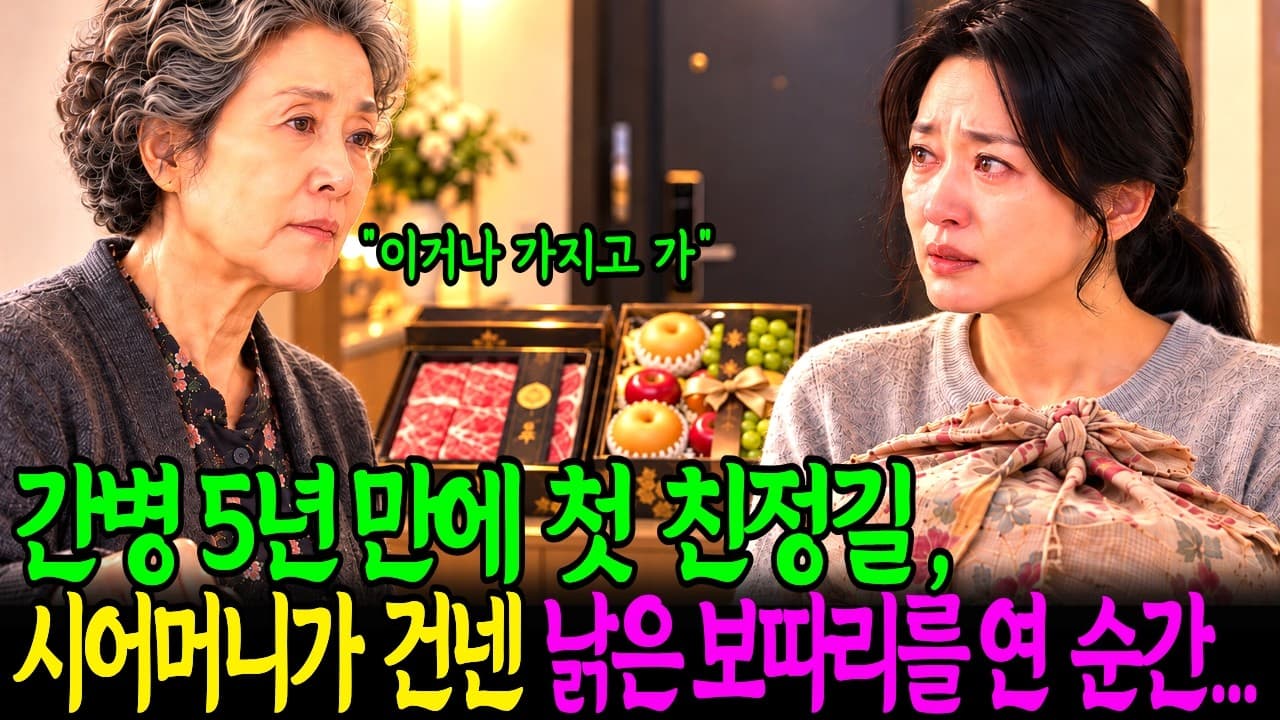
Caregiving for a loved one can consume everyday life and demand sacrifices. The story follows Ji-yeon, who spends five years caring for her paralyzed mother-in-law, resigns from her job, and confronts a painful moment when a worn bundle at the door hints at a deeper truth. The turning point reveals how limits and loyalty shape family bonds.
Transcript
Leave everything else and just take this. It was my first time visiting my parents 'home in five years. My mother-in-law told me to leave the premium beef gift set I’d saved up to buy for my father, and the winter coat I’d prepared for my mother—who only wears old jumpers every winter—all in the entryway. She even told me to change out of ... Read More
Key Insights
- Caregiving for five years can redefine a person’s daily life and priorities.
- The burden of care can strain marriage when partners avoid shared responsibility.
- Family dynamics influence caregiving decisions, including employment and visits.
- A caregiver may face emotional moments of doubt and anger as well as resilience.
- Support from a spouse can be conditional and tested under pressure.
- The moment of truth can come from a tangible object, triggering a realization.
- Sacrifices made for a loved one are often met with complex emotional responses.
- Revealed gratitude or the lack of acknowledgment can reshape family relationships.
Install to Summarize YouTube Videos and Get Transcripts
Explore YouTube Video Summarizer or Get YouTube Transcript Extractor
Questions & Answers
Q: What triggers Ji-yeon to visit her parents after five years of caregiving?
Ji-yeon makes the decision to visit her parents after accepting an exhausting reality in her caregiving role. The burden over time, the pressure from her job, and the emotional distance created by years of intense care culminate in a poignant moment when she decides to go, hoping for a chance to reconnect and find support.
Q: How does Ji-yeon describe the change in her life after her mother-in-law’s illness?
She explains that her life shifted entirely after the cerebral infarction. She initially supported basic needs, then managed daily routines, bathing, feeding, and emergencies. The routine became a continuous cycle that left little room for personal time, leading to a loss of normalcy she once knew before the illness began.
Q: What was the initial reaction of Ji-yeon’s husband to caregiving duties?
Her husband initially showed reluctance to take on caregiving duties, citing exhaustion and a desire for rest. He and Ji-yeon discuss sharing the burden, but his response reflects a common challenge in caregiving dynamics where support from a partner is inconsistent or insufficient, complicating Ji-yeon’s responsibilities.
Q: What happens when Ji-yeon contemplates hiring outside help for caregiving?
The mother-in-law rejects the idea, insisting on not sharing care with a stranger and rejecting nursing homes. This moment highlights the emotional and prideful aspects of caregiving where the caregiver must endure the work alone, even as it becomes increasingly unsustainable.
Q: What symbolic moment marks a turning point in the story?
The turning point is when Ji-yeon opens the old floral bundle left by her mother-in-law. The moment pivots from a display of neglect and hurt to a deeper reveal about their relationship, prompting reflection on unspoken gratitude, dignity, and the true cost of devoted care.
Q: How does the sister-in-law react to Ji-yeon’s caregiving situation?
The sister-in-law offers little help, often making excuses and minimizing Ji-yeon’s needs. She frames care as not needing Ji-yeon’s touch, which underscores strained family dynamics where some relatives distance themselves at times when support is most needed.
Q: What promise does Ji-yeon extract from her husband, and how does it affect the narrative?
Ji-yeon asks her husband to endure three years of caregiving without complaint, proposing a deadline to assess whether her mother-in-law improves. This promise becomes a catalyst for Ji-yeon’s decision to resign from work and tests the balance of loyalty, endurance, and future expectations within the marriage.
Q: What themes does the video explore beyond caregiving itself?
The narrative explores loyalty, sacrifice, dignity, and the complexity of family obligations. It delves into how long-term caregiving reshapes identities, the limits of self-sacrifice, and how small acts and objects can carry heavy emotional weight, ultimately urging viewers to consider gratitude and boundaries within families.
Summary & Key Takeaways
-
Ji-yeon spends five years caring for her mother-in-law after a stroke, sacrificing personal and professional life.
-
She resigns from her eight-year job to provide continuous care, facing denial from family members and the burden of responsibility.
-
A mysterious old bundle from the mother-in-law becomes a pivotal moment that redefines loyalty, dignity, and unseen gratitude.
Read in Other Languages (beta)
Share This Summary 📚
Summarize YouTube Videos and Get Video Transcripts with 1-Click
Try YouTube Summary with ChatGPT & Claude or YouTube Transcript Generator
Explore More Summaries from 꽃다운 나날 📚



Summarize YouTube Videos and Get Video Transcripts with 1-Click
Try YouTube Summary with ChatGPT & Claude or YouTube Transcript Generator