How to Navigate Converging Global Risks
TL;DR
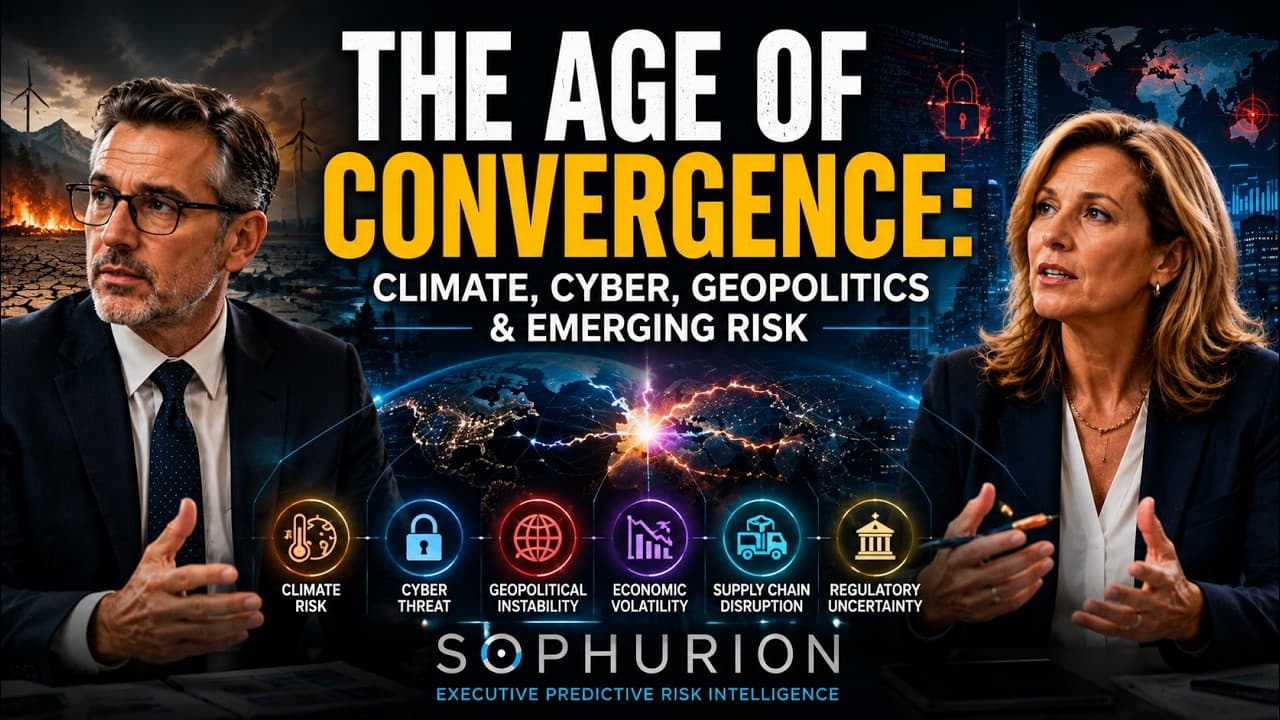
The age of convergence describes a period where climate change, cyber threats, and geopolitical instability are no longer isolated issues but interconnected risks. Organizations need to shift from reactive to proactive strategies by developing resilience capital, leveraging AI for predictive intelligence, and transitioning from information to intelligence economies to maintain competitiveness.
Transcript
[music] [music] >> Imagine for just a moment that you just walk into a high-stakes Fortune 500 boardroom. >> Yeah, the heavy glass doors just shut behind you. >> Exactly. The noise of the outside world drops away. You take your seat at this massive mahogany table. >> Right. >> Because for this deep dive, we're actually going to adopt a bit of a str... Read More
Key Insights
- The age of convergence is characterized by interconnected risks like climate change, cyber threats, and geopolitical instability.
- 90% of the world's data was created in the last two years, yet strategic visibility remains clouded.
- Traditional risk management treated risks as isolated, but modern risks are interconnected and amplify each other.
- Organizational resilience requires a shift from defensive mechanisms to resilience capital as a core strategic asset.
- The global intelligence gap is the inability to connect environmental, geopolitical, financial, and operational signals.
- Executive Predictive Risk Intelligence (EPRI) uses AI to identify weak signals, providing foresight and enabling strategic actions.
- AI augments human decision-making by synthesizing data and highlighting emerging threats with transparency.
- Digital-to-digital (D2D) integrations allow autonomous systems to react in real-time, enhancing organizational agility.
Install to Summarize YouTube Videos and Get Transcripts
Explore YouTube Video Summarizer or Get YouTube Transcript Extractor
Questions & Answers
Q: How do interconnected risks impact businesses today?
Interconnected risks, such as climate change, cyber threats, and geopolitical instability, create complex challenges for businesses. These risks amplify each other, leading to cascading impacts across industries and markets. Organizations must shift from traditional risk management approaches to proactive strategies that anticipate and mitigate these converging threats.
Q: What is the age of convergence?
The age of convergence refers to a period where various global risks, including climate change, cyber threats, and geopolitical instability, no longer occur in isolation. Instead, they interact and amplify each other, creating complex challenges for organizations. This interconnectedness requires new approaches to risk management and strategic planning.
Q: Why is organizational resilience important in the age of convergence?
Organizational resilience is crucial in the age of convergence because interconnected risks can rapidly impact business operations. Resilience involves developing strategies and assets that allow organizations to anticipate, adapt, and respond to disruptions effectively. This proactive approach helps maintain competitiveness and protect shareholder value in a volatile global environment.
Q: How does AI contribute to risk management?
AI enhances risk management by identifying weak signals and providing predictive intelligence. It synthesizes vast amounts of data, connecting disparate signals to offer foresight into emerging threats. This allows organizations to move from reactive to proactive strategies, making informed decisions that protect against converging risks and improve strategic planning.
Q: What is Executive Predictive Risk Intelligence (EPRI)?
Executive Predictive Risk Intelligence (EPRI) is a framework that leverages AI to transform organizational information into actionable intelligence. EPRI platforms analyze global data to identify weak signals and emerging threats, providing foresight that enables strategic decision-making. This approach helps organizations navigate the age of convergence with greater agility and resilience.
Q: How do digital-to-digital (D2D) integrations improve organizational agility?
Digital-to-digital (D2D) integrations enhance organizational agility by enabling autonomous systems to react in real-time to emerging threats. This approach allows enterprise systems to communicate and adjust operations automatically, reducing the reliance on human intervention and ensuring rapid responses to converging risks. D2D integrations are key to maintaining competitiveness in a fast-paced global environment.
Q: What is the global intelligence gap?
The global intelligence gap refers to the inability of organizations to connect various environmental, geopolitical, financial, and operational signals. Despite having vast amounts of data, companies struggle to transform this information into actionable insights. Bridging this gap requires new tools and frameworks that provide predictive intelligence, enabling proactive risk management and strategic planning.
Q: Why is the transition from information to intelligence economies important?
The transition from information to intelligence economies is crucial because traditional data analysis focuses on past events, limiting strategic foresight. In the age of convergence, organizations need predictive tools that offer actionable intelligence, enabling them to anticipate and mitigate emerging risks. This shift enhances decision-making, improves resilience, and maintains competitiveness in a complex global landscape.
Summary & Key Takeaways
-
Organizations are entering an age where risks are no longer isolated but interconnected, requiring a shift in risk management strategies. The age of convergence involves climate, cyber, and geopolitical risks that interact and amplify each other. To navigate this complexity, companies must develop resilience capital and leverage AI for predictive intelligence.
-
Despite having more data than ever, organizations face a global intelligence gap due to the inability to connect various signals. Executive Predictive Risk Intelligence (EPRI) platforms use AI to identify weak signals, offering foresight and enabling proactive strategic actions. This transition from information to intelligence economies is crucial for maintaining competitiveness.
-
Digital-to-digital (D2D) integrations represent the future of risk management, enabling autonomous systems to react in real-time. This shift allows organizations to move from human-AI collaboration to machine-to-machine intelligence, enhancing agility and ensuring rapid responses to emerging threats. The age of convergence demands speed and strategic foresight.
Read in Other Languages (beta)
Share This Summary 📚
Summarize YouTube Videos and Get Video Transcripts with 1-Click
Try YouTube Summary with ChatGPT & Claude or YouTube Transcript Generator