MBA Admissions Insights: Being A Great Applicant
TL;DR
Focus on being a great candidate rather than crafting a perfect application. Jump on meaningful opportunities and projects instead of spending every spare minute retaking the GMAT or GRE, since real growth gives recommenders more to write about. Follow your genuine interests, present your authentic self, research schools deeply, and answer the actual essay questions asked.
Transcript
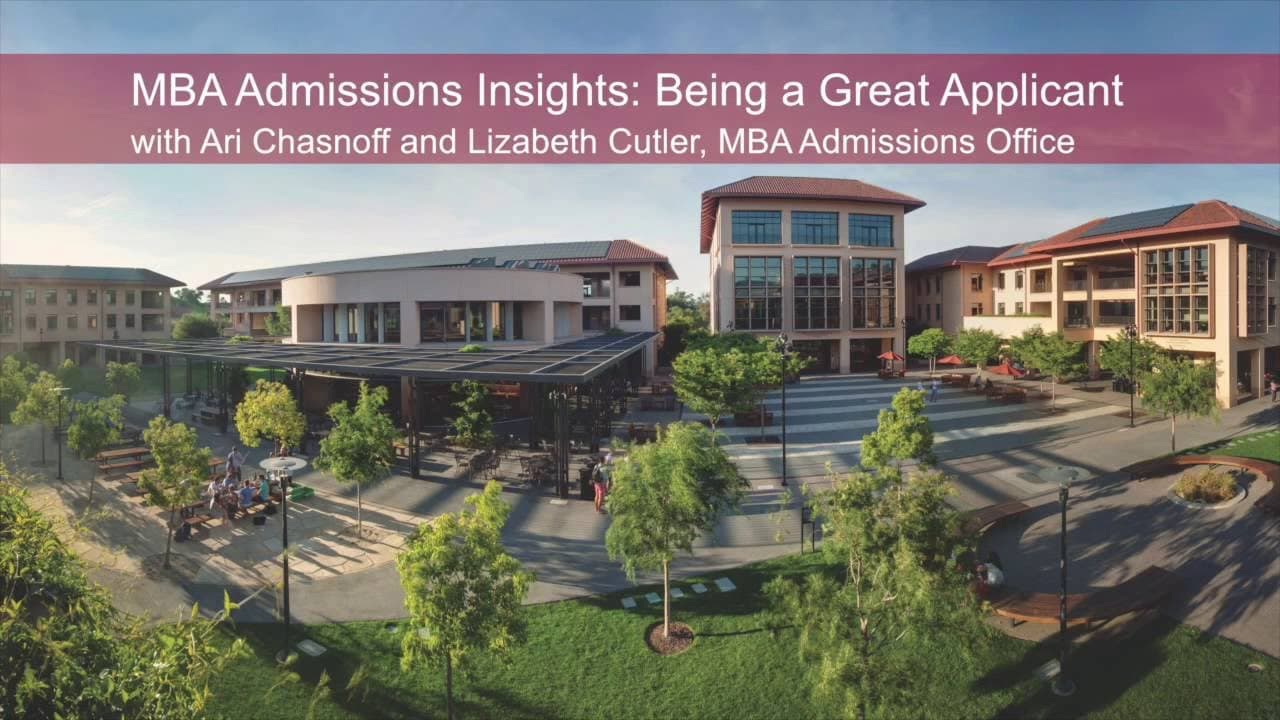
[MUSIC] Hello and welcome to our conference call, MBA Admissions Insights, Being a Great Applicant. Thank you for joining us. My name is Ari Chasnoff. I'm the communications manager in the MBA Admissions Office. I'm joined by my colleague, Lizabeth Cutler, an Associate Director here. >> Hi everybody. >> So in the next 30 minutes, we'll be talking a... Read More
Key Insights
- Being a great candidate matters more than creating a great application. Stanford keeps the process simple and only asks for what it needs to build a strong class, so applicants should not let the application consume their entire life.
- Taking on a great new project beats spending 24/7 on the application. Growth opportunities give your recommender more to talk about and help you become a better student once you arrive on campus.
- A great candidate jumps on exciting opportunities rather than staying in a boring job to impress admissions. Stanford is happy for you to stay where you are, but using the application as an excuse to avoid change is a mistake.
- Knowing when to draw the line is a key skill. Weigh the marginal benefit of retaking the GRE or rewriting an essay once more; if you can genuinely improve, do it, but if you have done your best and are only worrying, move on.
- Following instructions and meeting deadlines are logistics people often miss. Nothing submitted after the deadline counts because Stanford reads applications as they arrive, so late test scores or recommendations are not accepted.
- Applicants must be true and factual about their experience. Stanford validates submitted information before you become a student and can rescind an offer if you have misrepresented yourself, so accuracy matters.
- Stanford evaluates three criteria: intellectual vitality, demonstrated leadership potential, and personal qualities and contributions. There is no single mold for the perfect student, and no quotas or boxes for applicants.
- Formal leadership experience is not required. Stanford looks at self-awareness and the qualities you already have, valuing how you learn from situations and adjust your behavior, even in entry-level or nontraditional roles.
Install to Summarize YouTube Videos and Get Transcripts
Explore YouTube Video Summarizer or Get YouTube Transcript Extractor
Questions & Answers
Q: How can I be a great MBA applicant to Stanford?
Focus on being a great candidate rather than creating a great application. Stanford wants people who will be great students on campus and have a meaningful, positive impact after graduating. Jump on real opportunities, take on growth projects, follow your genuine interests, present your authentic self, research the schools carefully, and answer the actual questions asked rather than trying to impress or distinguish yourself artificially.
Q: Should I stay in my current job or take a new opportunity before applying?
If you are ready and excited about a new opportunity you have always wanted, take it. A great candidate jumps on opportunities. Stanford is perfectly happy for you to stay in your current job for whatever time makes sense, and you should not change jobs just to impress admissions. But using the application process as an excuse to avoid a change you genuinely want is a mistake; getting out and living your life makes you a great candidate.
Q: How much time should I spend retaking the GMAT/GRE or rewriting essays?
Consider the marginal benefit. If you believe you can genuinely improve your score, essay, or application by taking the test again or rewriting, then spend that time. But if you have reached the point where deep down you know you have done your best and are simply worrying over it, move on. Do not let the application take over your life at the expense of projects and growth opportunities.
Q: What are common essay mistakes made by applicants who are not admitted?
The main mistake is pushing your own agenda rather than answering the question actually asked, something even some admitted applicants do. Be careful about essay advice even from people who got in, because you cannot know whether their choices helped or hindered them. Instead, take time to reflect, read the question carefully, find your true answer, and articulate it rather than trying to distinguish yourself from other applicants you cannot see.
Q: How does Stanford evaluate leadership potential in candidates without formal leadership experience?
You do not need work experience or formal leadership experience to apply. Stanford looks at the qualities you already have and how they contribute to your effectiveness as a leader, including your self-awareness, since good leaders learn from situations around them and adjust their behavior. Leadership can show up in small ways, such as helping someone next to you at work. Many candidates come from situations without formal leadership opportunities yet.
Q: Why is meeting the application deadline so important?
Nothing submitted after the deadline counts, because Stanford begins reading applications as soon as they arrive. Applicants often try to submit additional materials like another test score or recommendation after the deadline, but these are not accepted. It is essential to be aware of deadlines, review the entire application ahead of time so you know what to expect, and make sure every section is complete before you submit.
Q: What are Stanford's three MBA evaluation criteria?
Stanford evaluates intellectual vitality, demonstrated leadership potential, and personal qualities and contributions. Intellectual vitality means being intellectually engaged in whatever topics catch your attention, since Stanford is a place to solve big problems and take intellectual risks. Leadership potential reflects the school's mission to change lives, organizations, and the world. Personal qualities is the hardest to define and simply reflects Stanford's interest in getting to know each individual, with no quotas or boxes.
Q: Do I need to misrepresent or exaggerate my experience to stand out?
No. You should put your best foot forward and present yourself well, but be true and factual about your experience. Stanford validates the information you submit before you can become a student, and it can rescind an offer if you have misrepresented yourself. Show your best self, but make sure it is genuinely you rather than what you think admissions wants to hear or what others tell you to sound like.
Summary
In this video, the MBA admissions team at Stanford Graduate School of Business discusses what it means to be a great candidate for their program and provides tips on how to strengthen your application. They emphasize the importance of focusing on being a great candidate rather than just creating a great application, as well as the value of taking on new projects and experiences outside of the application process. The team also addresses common questions and misconceptions about the admissions process, such as the role of age and the evaluation criteria used. They encourage applicants to be authentic and true to themselves, and to reach out to the school directly if they have any doubts or questions about what they are looking for.
Questions & Answers
Q: What steps can people take to be a stronger candidate?
One step is to focus more on being a great candidate than creating a great application. The admissions team wants to make the process as simple and efficient as possible and only asks for what they need to know to create a great class. However, it is important to put in hard work and effort to be successful. It is also suggested that applicants prioritize taking on new projects and experiences that can help them grow and become better students.
Q: Is it okay to pursue new job opportunities instead of staying in the same job until after getting into school?
It is encouraged for applicants to pursue new job opportunities if they are ready and excited about them. Staying in the same job solely for the purpose of getting into business school is not necessary. The admissions team values candidates who are ready for a change and are not using the application process as an excuse to stay in a job they are bored with.
Q: How can applicants strike a balance between what they feel strongly about and what people tell them will help get into business school?
It is important for applicants to follow their own interests and not let others dictate their career decisions. The admissions team advises applicants to come directly to them or to other schools to find out what they truly want, rather than listening to what others think they should do. Being authentic and true to oneself is more important than trying to mold oneself into what they think the admissions committee wants.
Q: What can applicants do to demonstrate their value to the program and their potential as a candidate?
Applicants are advised to show their best self, while also being true and factual about their experiences. It is important to research the schools and understand why they want to attend that specific institution. By narrowing down and applying to schools that are a good fit, applicants can demonstrate their understanding of what the program can offer them. Following instructions, being aware of deadlines, and presenting oneself well in the application are also important.
Q: What are the evaluation criteria used by the admissions committee?
The three main criteria considered are intellectual vitality, demonstrated leadership potential, and personal qualities and contributions. Intellectual vitality refers to a candidate's engagement and interest in topics or issues. Demonstrated leadership potential includes the skills a candidate possesses and their openness to learning and developing new skills. Personal qualities and contributions are more difficult to define, but they encompass an individual's unique background and how they might contribute to the program.
Q: What are some common mistakes made by applicants in their essays?
A common mistake is not directly answering the essay question or pushing one's own agenda instead of addressing the question asked. It is important for applicants to take the time to reflect on their true answers and articulate them honestly. There is no need to focus on trying to distinguish oneself from other applicants, as it is impossible to know what others are saying or doing.
Q: How can applicants demonstrate their leadership potential if their current position does not provide opportunities for it?
Leadership potential does not need to be demonstrated through formal or traditional roles. The admissions team looks at qualities that can contribute to a candidate's effectiveness as a leader, such as self-awareness and the ability to learn from situations and adjust behavior. It is not necessary to have extensive leadership experience; rather, focus on the qualities you have and how they can contribute to your future leadership potential.
Q: How can applicants with a low undergraduate GPA demonstrate their intellectual capacity and academic rigor?
The admissions team looks at the entire transcript, not just the GPA. Applicants can provide evidence of their intellectual capacity, discipline, and academic rigor through their entire academic history and any accomplishments or experiences since graduating. It is important to focus on how you can succeed in the classroom and contribute to your classmates, showing that your GPA does not define your abilities.
Q: How can international applicants engage with the school and demonstrate their interest?
International applicants are not expected to visit the campus, but they can take advantage of opportunities to learn more about the school through alumni interactions, webinars, and website resources. It is important to focus on learning about the school to make an educated decision, rather than trying to impress the admissions committee with outside factors. The application is the primary way for the admissions team to get to know the candidate.
Q: How should applicants reference personal or professional relationships with GSB alumni in their application?
It is not necessary to reference personal or professional relationships with alumni unless it is directly relevant to the applicant's decision to apply or provides unique insights. Applicants should focus on getting strong recommendations from individuals who know them well and can speak to their performance at work, rather than relying on alumni connections.
Q: How can re-applicants who did not get interviewed improve their chances in the application process?
Re-applicants are welcome and should approach the application process with a fresh mindset. It is important to not let previous negative outcomes dominate the process and to focus on presenting oneself as a new applicant. While certain parts of the application, such as essays, can be reused, it is recommended to seek fresh recommendations and present a new perspective to strengthen the application.
Takeaways
The admissions team at Stanford Graduate School of Business emphasizes the importance of being a great candidate rather than just creating a great application. They value authenticity and encourage applicants to follow their own interests and not let others define their career decisions. The evaluation criteria used include intellectual vitality, demonstrated leadership potential, and personal qualities and contributions. Applicants are advised to research the schools, demonstrate their value, and be true to themselves in the application process. The team reassures applicants that the application is the primary way to get to know candidates and that they do not need to rely on personal connections or specific activities to impress the admissions committee. Re-applicants are welcomed and should approach the process with a fresh perspective.
Summary & Key Takeaways
-
Ari Chasnoff and Lizabeth Cutler from Stanford GSB MBA Admissions explain that a great candidate is someone who will be a great student on campus and have a positive impact after graduating. They urge applicants to focus on being a great candidate rather than obsessing over the application itself.
-
Rather than spending every spare minute studying for the GMAT or GRE, applicants should take on meaningful projects and jump on genuine opportunities. Real growth and risk-taking show up in recommendations, and following your own interests rather than others' advice makes you a stronger, more authentic candidate.
-
Logistics matter: follow instructions, review the whole application, meet deadlines, and be factual since Stanford validates information and can rescind offers. Evaluation rests on intellectual vitality, leadership potential, and personal qualities, and formal leadership experience is not required to demonstrate potential.
Read in Other Languages (beta)
Share This Summary 📚
Summarize YouTube Videos and Get Video Transcripts with 1-Click
Try YouTube Summary with ChatGPT & Claude or YouTube Transcript Generator
Explore More Summaries from Stanford Graduate School of Business 📚






Summarize YouTube Videos and Get Video Transcripts with 1-Click
Try YouTube Summary with ChatGPT & Claude or YouTube Transcript Generator