How Does Data Augmentation Improve Machine Learning?
TL;DR
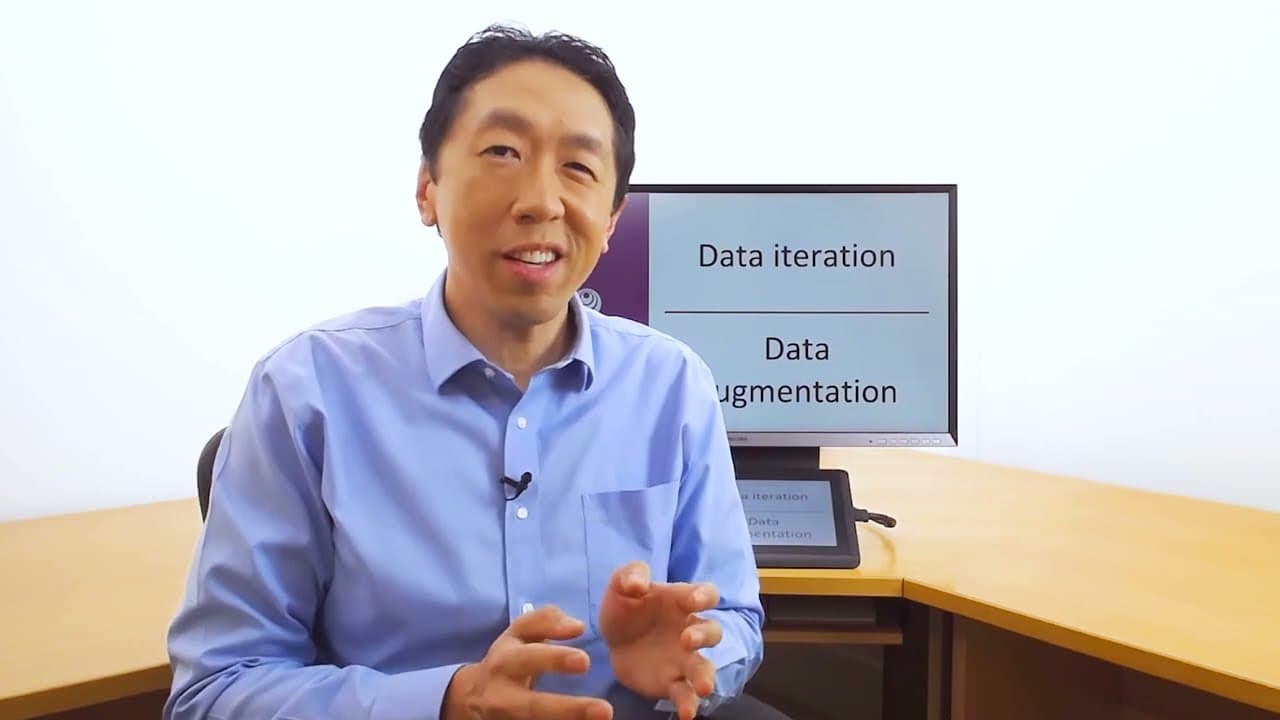
Data augmentation enhances machine learning by creating realistic synthetic examples that challenge algorithms. By adding elements like background noise to audio or manipulating images, the generated data remains recognizable to humans while making it more difficult for the algorithm to learn from, leading to improved performance. A data iteration loop approach focusing on quality and quantity of data can expedite enhancements in learning outcomes.
Transcript
data augmentation can be a very efficient way to get more data especially for unstructured data problems such as images audio maybe text but when carrying out data augmentation there are a lot of choices you have to make what are the parameters how do you design the data augmentation setup let's dive into this to look at some best practices take sp... Read More
Key Insights
- ❓ Data augmentation can efficiently generate more data for unstructured problems like images and audio.
- ❓ Creating realistic examples that challenge learning algorithms while being recognizable to humans is crucial for effective data augmentation.
- 🥺 A data iteration loop approach, focusing on improving the quality and quantity of data, can lead to faster improvement in learning algorithm performance.
- 🪜 Data augmentation techniques like adding background noise to audio or manipulating image contrast can be used to create synthetic examples.
- 💦 Simplified techniques often work well for data augmentation, without the need for more complex methods like generative adversarial networks.
Install to Summarize YouTube Videos and Get Transcripts
Explore YouTube Video Summarizer or Get YouTube Transcript Extractor
Questions & Answers
Q: How can data augmentation create synthetic examples for speech recognition?
By adding background noise, such as cafe noise or background music, to audio clips, data augmentation can generate synthetic examples that sound like real data collected in those environments.
Q: What decisions need to be made when carrying out data augmentation?
Choices like the type of background noise and its volume relative to speech need to be considered, aiming for realistic examples that challenge learning algorithms but can still be recognized by humans.
Q: Why is repeatedly training the learning algorithm with different data augmentation parameters inefficient?
Changing data augmentation parameters requires retraining the algorithm each time, which can be time-consuming. Instead, using principles like realism, clear mapping, and poor algorithm performance on new data can provide a quick sanity check.
Q: How can data augmentation potentially hurt a learning algorithm's performance?
Generally, adding data through augmentation does not harm performance for unstructured data problems. However, there may be exceptions, and the next video will explore this topic further.
Summary & Key Takeaways
-
Data augmentation can create synthetic examples by adding background noise to audio clips, resulting in realistic data that challenges learning algorithms.
-
When carrying out data augmentation, it is essential to consider parameters like background noise types and volume relative to speech, aiming for realistic and challenging examples.
-
Rather than repeatedly training the learning algorithm with different data augmentation parameters, a more efficient approach is to use principles like realism, clear mapping, and performance on new data as a sanity check.
Read in Other Languages (beta)
Share This Summary 📚
Summarize YouTube Videos and Get Video Transcripts with 1-Click
Try YouTube Summary with ChatGPT & Claude or YouTube Transcript Generator
Explore More Summaries from DeepLearningAI 📚


![How Does the Logistic Regression Decision Boundary Work? — #33 Machine Learning Specialization [Course 1, Week 3, Lesson 1] thumbnail](/_next/image?url=https%3A%2F%2Fi.ytimg.com%2Fvi%2F0az8RjxLLPQ%2Fhqdefault.jpg&w=750&q=75)

Summarize YouTube Videos and Get Video Transcripts with 1-Click
Try YouTube Summary with ChatGPT & Claude or YouTube Transcript Generator