What Are Supertasks, and Can They Be Completed?
TL;DR
A supertask is an infinite sequence of distinct actions completed within a finite amount of time by performing each action progressively faster. The example schedules cuts over two minutes, waiting one minute before the second cut, half a minute before the third, and a quarter-minute before the fourth. Supertasks are logically possible as mathematical abstractions but face physical limits, and the resulting paradoxes make the deeper explanation worth exploring.
Transcript
Hey, Vsauce. Michael here. Now, one of my favorite treats of the holiday season is Gabriel's cake. It's a super solid based on Gabriel's Horn that you can make right at home, as long as your home is infinitely large. Okay, all right. Now, the first thing you want to do is bake a cake. I prepared this cake earlier. It's a real beautiful cake. It's a... Read More
Key Insights
- ⌛ Supertasks involve completing an infinite number of tasks within a finite amount of time.
- 🤨 The nature of supertasks raises questions about the concept of infinity and challenges our comprehension of it.
- 🥺 Supertasks can lead to paradoxical outcomes, such as an object simultaneously being both on and off or a seemingly endless sequence ultimately resulting in zero.
- 🌍 While supertasks are intriguing, they are mainly mathematical abstractions and have limited real-world applications.
- 🤔 Exploring supertasks can foster problem-solving skills and encourage us to think beyond conventional boundaries.
- 😷 The ability to ask questions about supertasks reflects our curiosity and desire to understand the world around us.
Install to Summarize YouTube Videos and Get Transcripts
Explore YouTube Video Summarizer or Get YouTube Transcript Extractor
Questions & Answers
Q: What is a supertask?
A supertask is an infinite sequence of distinct actions completed within a finite amount of time. In the cake example, each new cut is made after waiting half as long as before, allowing infinitely many scheduled cuts to fit within two minutes.
Q: How can infinitely many actions fit into a finite amount of time?
Each action must take progressively less time than the preceding one. For a two-minute task, the example waits one minute before the second cut, half a minute before the third, a quarter-minute before the fourth, and continues halving the wait forever.
Q: What is Gabriel's cake?
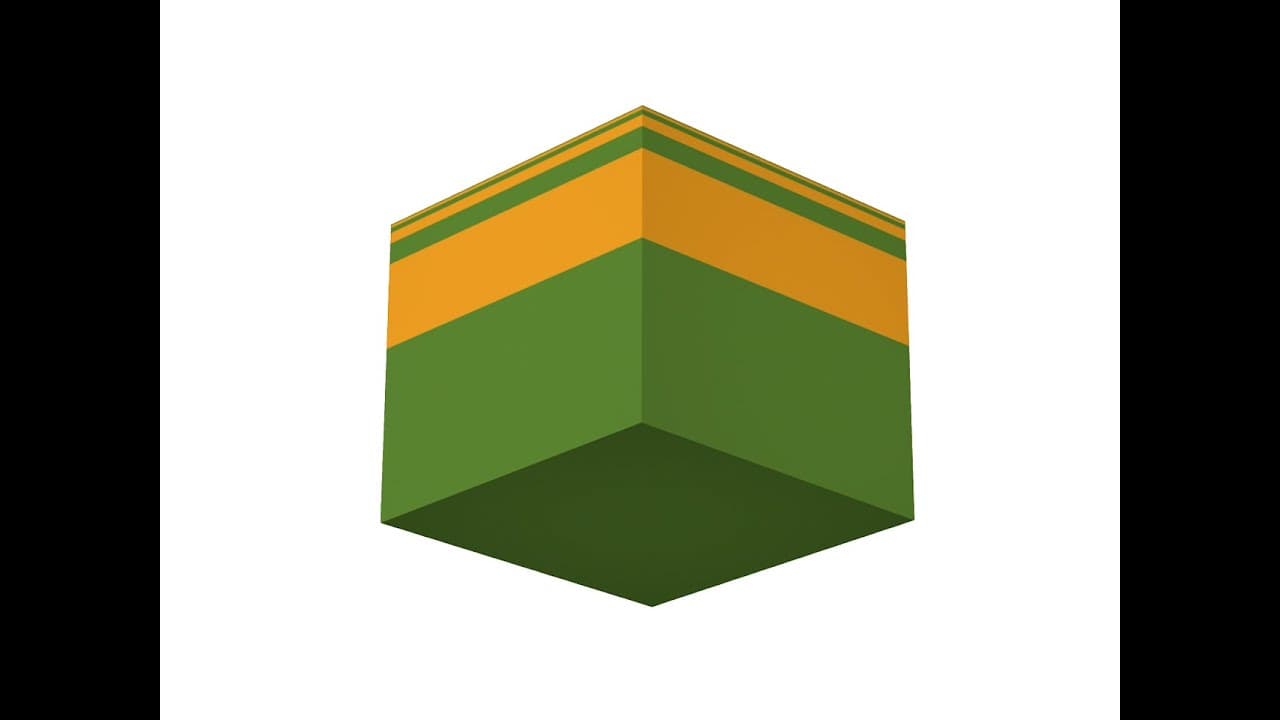
Gabriel's cake is a super solid based on Gabriel's Horn. It is made conceptually by repeatedly cutting one piece of cake in half forever and stacking the resulting thinner slices in order.
Q: Why does Gabriel's cake have finite volume but infinite surface area?
Cutting the cake does not add any cake, so its volume remains equal to the amount originally baked. Each cut exposes more interior surface, and infinitely many cuts produce infinite surface area.
Q: Why can Gabriel's cake be eaten but not completely frosted?
Its finite volume means it contains only the original amount of cake. Its infinite surface area would require an infinite amount of frosting to apply a uniform coat.
Q: How is a supertask related to Zeno's paradox of the dichotomy?
In Zeno's paradox, Achilles must first cover half the race, then half the remaining distance, and continue through infinitely many subdivisions. Although there is always another halfway point, Achilles can still reach the finish line, resembling a supertask completed in finite time.
Q: What is the alternating-flag paradox in the Achilles example?
At each halfway step, Achilles alternates between a blue flag on even steps and a red flag on odd steps. When he finishes, neither flag gives an obvious final answer because choosing one appears to require a largest step number that is either even or odd.
Q: Can supertasks be performed in the real world?
The transcript presents infinitely many distinct actions in finite time as logically possible, but only as a mathematical abstraction. A physical supertask would encounter a smallest meaningful amount of space or time that could no longer be divided in half.
Summary & Key Takeaways
-
Supertasks involve completing an infinite number of tasks, such as slicing a cake, within a finite amount of time.
-
These tasks challenge our understanding of infinity and reveal paradoxes and non-intuitive outcomes.
-
While supertasks may be intriguing, they are primarily mathematical abstractions that do not have real-world applications.
Read in Other Languages (beta)
Share This Summary 📚
Summarize YouTube Videos and Get Video Transcripts with 1-Click
Try YouTube Summary with ChatGPT & Claude or YouTube Transcript Generator
Explore More Summaries from Vsauce 📚
Summarize YouTube Videos and Get Video Transcripts with 1-Click
Try YouTube Summary with ChatGPT & Claude or YouTube Transcript Generator