Why Distributed Solutions Matter for Climate Change
TL;DR
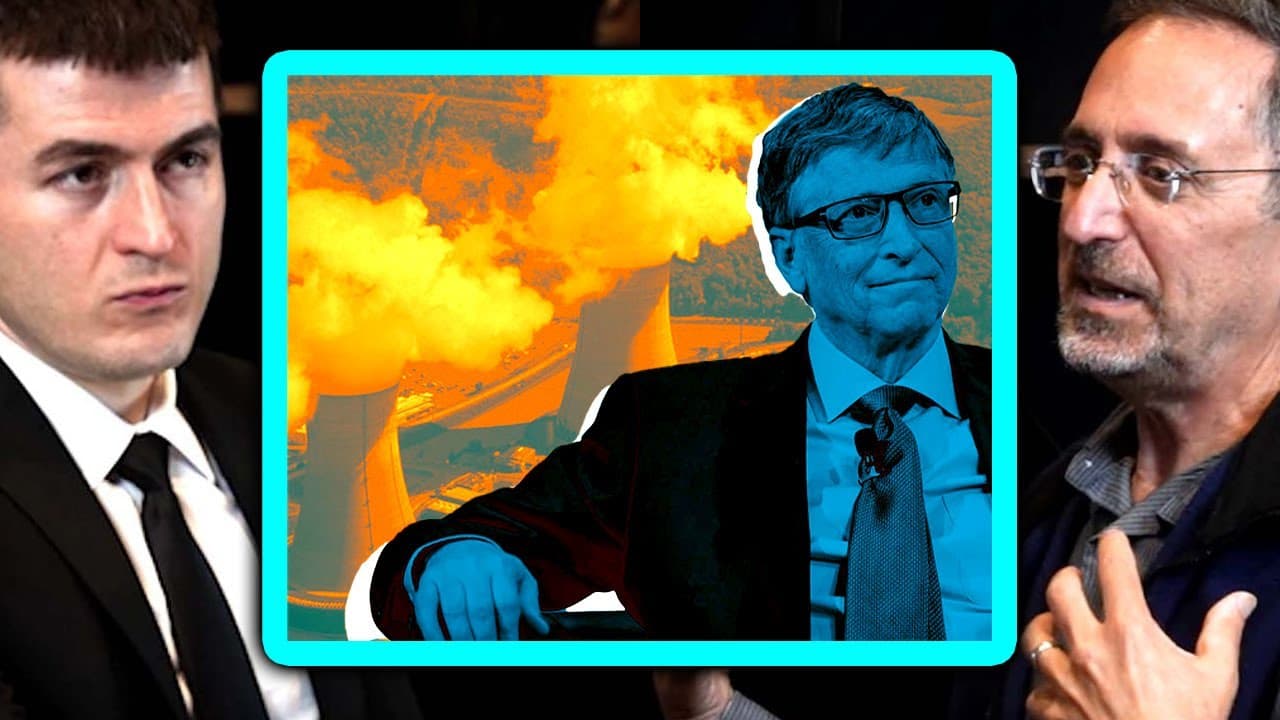
Bill Gates emphasizes the critical role of distributed solutions, like solar-powered wheat mills, in combating climate change at local levels. He argues that while nuclear energy is significant, achieving a zero-energy future for cities requires innovative, scalable approaches that empower communities to control their energy needs.
Transcript
actually I interviewed Bill Bill Gates uh we had to spend an hour with him in Seattle in 2016. um when he was rolling out his breakthrough energy thing I got to spend it was 45 minutes me and Bill Gates which was pretty fun but I I brought this up I said you know because he's all about the new nuclear thing that will solve The World's problems and ... Read More
Key Insights
- 🔬 Bill Gates heavily invests in nuclear energy but recognizes the importance of distributed solutions as well.
- ✊ Small-scale solutions like solar-powered wheat mills can provide communities with energy autonomy and control.
- ✊ Retrofitting existing buildings for zero-energy cities presents challenges, but unlimited clean power can offset inefficiencies.
- 🌥️ Tackling climate change requires both individual actions and large-scale innovations.
- 😌 The power of innovation lies in making solutions seamless and integrated into daily life.
- 💱 Solving complex problems like climate change necessitates true innovation rather than simple adjustments.
- 🤩 Carbon tax alone is not sufficient to solve the climate crisis; focus on innovation for green energy is key.
- 🎙️ More videos with Bill Gates:
Install to Summarize YouTube Videos and Get Transcripts
Explore YouTube Video Summarizer or Get YouTube Transcript Extractor
Questions & Answers
Q: What is Bill Gates' perspective on nuclear energy in solving global energy challenges?
Bill Gates invests heavily in nuclear energy and sees it as one of the potential solutions to address the world's energy problems. He believes it can play a crucial role in achieving net-zero emissions.
Q: How are distributed solutions like solar-powered wheat mills beneficial for communities?
Distributed solutions, such as the solar-powered wheat mills implemented by Selco in India, provide communities with control over their energy sources. They offer a localized solution, reducing dependence on external sources and improving energy access for basic needs.
Q: How does Bill Gates respond to the challenge of retrofitting existing buildings for zero-energy cities like New York?
Gates acknowledges the difficulty of retrofitting existing buildings, particularly in large cities. However, he believes that if unlimited clean power is available, the energy source can make up for inefficiencies in individual buildings, emphasizing the importance of investing in clean energy generation.
Q: Why does the interviewee argue for distributed solutions instead of a top-down approach?
The interviewee has shifted their thinking from a top-down approach to distributed solutions as a means to combat climate change. Distributed solutions offer immediate benefits to communities, such as improved quality of life, education, and empowerment, rather than waiting for global policy changes.
Summary & Key Takeaways
-
The interview with Bill Gates discusses his interest and investment in nuclear energy as a potential solution for global energy issues.
-
The conversation highlights the importance of small-scale, distributed solutions such as solar-powered wheat mills in providing energy autonomy for communities.
-
Retrofitting existing buildings is a challenge in achieving a zero-energy future for cities like New York, but Gates believes that unlimited clean power can mitigate this issue.
Read in Other Languages (beta)
Share This Summary 📚
Summarize YouTube Videos and Get Video Transcripts with 1-Click
Try YouTube Summary with ChatGPT & Claude or YouTube Transcript Generator
Explore More Summaries from Lex Clips 📚

Summarize YouTube Videos and Get Video Transcripts with 1-Click
Try YouTube Summary with ChatGPT & Claude or YouTube Transcript Generator