Do Chairs Really Exist or Just Perceived Objects?
TL;DR
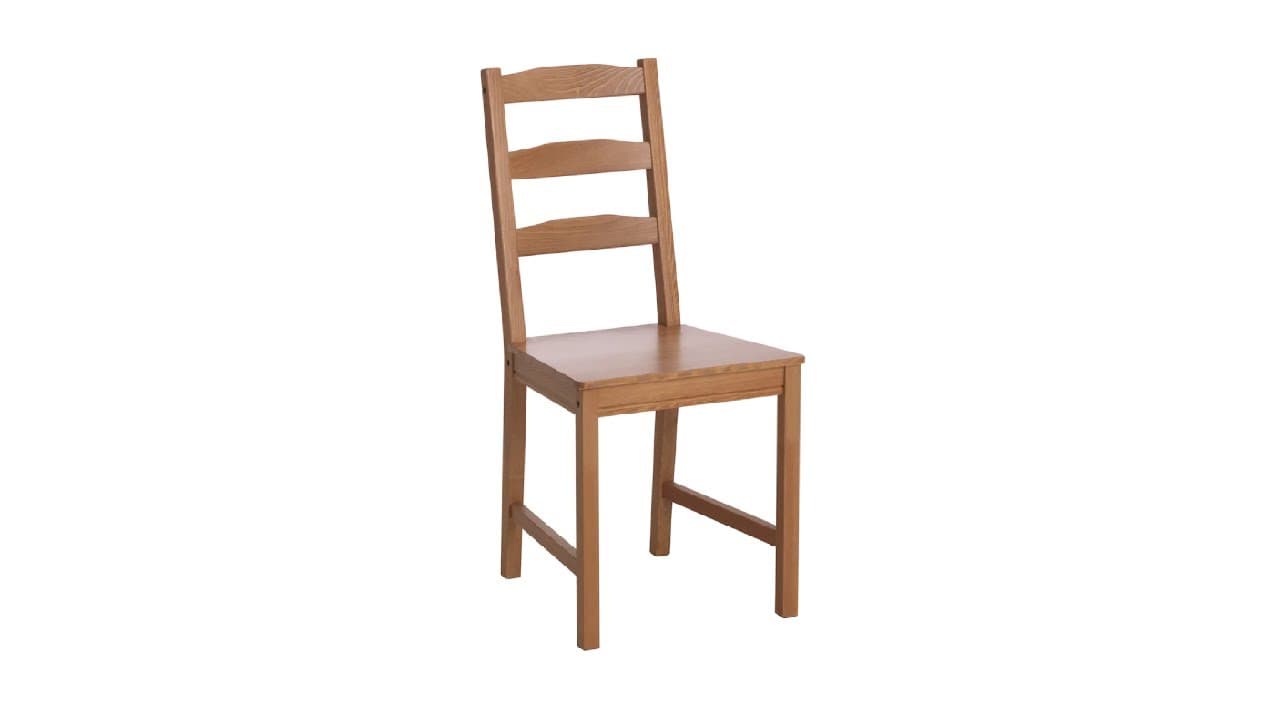
Whether chairs exist depends on what you mean by "exist": something exists if there is more than zero of it. A chair can be seen as an arrangement of "simples" (fundamental particles with no parts), while "constitution" (one-to-one, like paper making a crane) differs from "composition" (many-to-one). The video shows why being made of something differs from being it, and asks whether islands are really more real than made-up objects like "incars" and "trogs."
Transcript
Hey Vsauce! Michael here. And here. Michael here! hey vsauce! what is here? …. what is there? what is there? What REALLY exists? Do waves exist or are there just things that are wavy? When does a piece of food I’ve eaten stop being food and become me? Do chairs exist? Ontology is the philosophy of existence. And chairs are what philosophers call OR... Read More
Key Insights
- 🧑🦼 The existence of ordinary objects, such as chairs, is subjective and dependent on our perception and application conditions.
- ❓ Objects can be understood as arrangements of simples rather than distinct physical entities.
- ❓ The distinction between predication and identity is crucial in understanding the ontological nature of objects.
- 🤯 The vagueness surrounding objects arises from our minds and language, not from the universal reality.
Install to Summarize YouTube Videos and Get Transcripts
Explore YouTube Video Summarizer or Get YouTube Transcript Extractor
Questions & Answers
Q: Do chairs exist?
It depends on what "exist" means. The video proposes that for something to exist is simply for there to be more than zero of it. Under that definition chairs exist, since you can see and feel one, but the video argues they may be better understood as arrangements of fundamental particles ("simples") rather than distinct entities.
Q: What is ontology, and why are chairs an example?
Ontology is the philosophy of existence. Chairs are what philosophers call ordinary objects: the plain, common-sense things we deal with daily, like spoons, buckets, and rocks. Their existence seems obvious, but the more you try to pin down where and what they are, the more questionable it becomes.
Q: What is the difference between constitution and composition?
Constitution is a one-to-one relationship: a piece of paper constitutes an origami crane. Composition is a many-to-one relationship: the paper is composed of sextillions of fundamental particles. The video uses the crane and paper to show that being made of something is different from simply being that thing, since the paper can survive unfolding but the crane cannot.
Q: What are "simples" in this video?
Simples are whatever matter is ultimately composed of. A simple is a thing that, unlike a piece of paper, has no parts, no substructure, not even a top or bottom. The video notes there might be no simples at all, only endless smaller structure, which philosophers call a "gunky" universe.
Q: Can a chair (or crane) be exactly the same as its parts?
No. The video shows an origami crane and the paper it is made of. If they were truly identical they would share everything, but they do not: the paper can survive being unfolded while the crane cannot, and the paper existed before the crane. So being made of something is different from being it.
Q: What are "incars" and "trogs," and why do they matter?
An incar (from Eli Hirsch) is a car that is in a garage; it shrinks to nonexistence as the car leaves. A trog is an object whose parts are a tree and whatever dog is nearest. The video uses these invented objects to ask whether useful concepts like "island" are objectively more real than silly ones, since an island is just a relation between land and water.
Q: Are objects part of the real universe or just things we made up?
The video frames this as a debate. Ontological realists like Theodore Sider believe the universe has "joints" and there is a mind-independent answer to "what is there?" Ontological anti-realists disagree. The video suggests the vagueness around objects may come from our minds and language rather than from reality itself.
Q: How do application conditions affect what counts as a chair?
Application conditions determine which things get deemed chairs or any other object. We give names to stuff, and if they catch on we put them in dictionaries. Different conditions can lead to different categorizations, which raises the question of whether our nouns inventory the universe or just inventory things we invented.
Summary & Key Takeaways
-
The content explores the philosophy of ontology, questioning the existence of ordinary objects like chairs and exploring the relationship between wholes and their parts.
-
It delves into the concepts of constitution (one-to-one relationship) and composition (many-to-one relationship), discussing whether objects are defined by what they are made of or how they are arranged.
-
The content also explores the ideas of ontological reductionism, organismism, eliminativism, and mereological nihilism in relation to the existence of objects.
Read in Other Languages (beta)
Share This Summary 📚
Summarize YouTube Videos and Get Video Transcripts with 1-Click
Try YouTube Summary with ChatGPT & Claude or YouTube Transcript Generator
Explore More Summaries from Vsauce 📚

Summarize YouTube Videos and Get Video Transcripts with 1-Click
Try YouTube Summary with ChatGPT & Claude or YouTube Transcript Generator