What Does GPT-3 Mean for the Future of Web3?
TL;DR
GPT-3 is a powerful AI language model that significantly enhances natural language generation capabilities, creating applications from text summarization to imitating historic conversations. However, it faces challenges such as limited context windows and trust issues regarding AI-generated content. Web3 technologies, with their focus on traceability and decentralization, can help address these concerns and enhance accountability in AI use.
Transcript
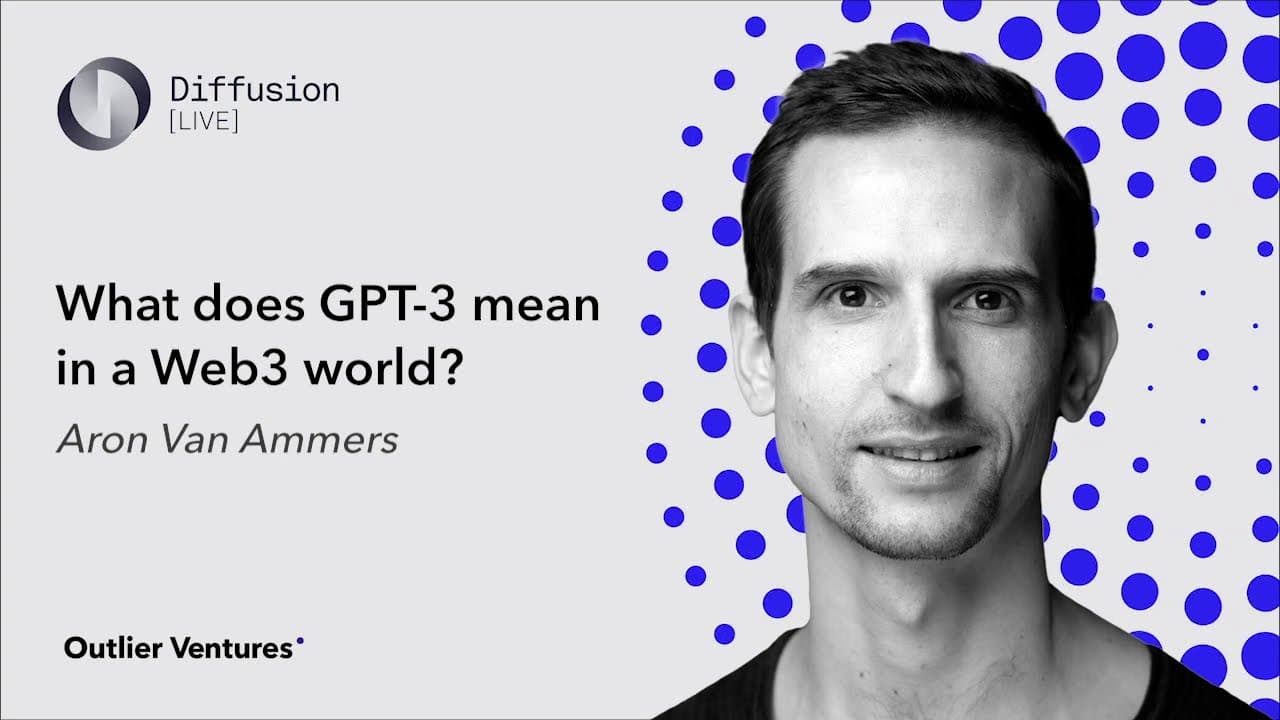
this is aaron namas cto and founding partner of outdoor adventures and today we'll be speaking about gpt-3 the big bold and powerful new uh ai by open ai um and some of the implications that it has for um well everything and especially trust in um in everything and how web 3 can play a role in that or how it can play a role for uh for work three um... Read More
Key Insights
- ❓ GPT-3 represents a major advancement in natural language generation and has the potential to transform various domains.
- 🔆 The role of humans is still crucial in asking the right questions, curating generated content, and architecting higher-level systems.
- ✊ Concerns about trust, interpretability, and accountability arise with the increasing power of AI and the potential for deepfakes.
- ❓ Web3 principles and technologies, such as traceability and verifiability, can enhance trust in AI-generated content.
- 🤗 Open alternatives and collaborations within the Web3 community have the potential to address the limitations and concerns associated with GPT-3.
- 🌥️ The future may bring better and larger versions of language models like GPT-3, as well as increased interest and participation from startups in AI-related fields.
Install to Summarize YouTube Videos and Get Transcripts
Explore YouTube Video Summarizer or Get YouTube Transcript Extractor
Questions & Answers
Q: What is GPT-3 and how does it work?
GPT-3 is a language model developed by OpenAI that uses unsupervised learning to generate natural language based on the input it receives. It is trained on a large amount of text data to understand patterns and generate coherent responses.
Q: What are the potential use cases of GPT-3 in the web3 world?
GPT-3 can be used to generate smart contracts, create natural language interfaces for decentralized platforms, and even produce artistic content. It also has the potential to support content curation in a more open and decentralized manner.
Q: What are the limitations of GPT-3?
GPT-3 has a limited context window and tends to repeat certain patterns of text. It may not perform as well as specialized models in specific domains. Additionally, generating longer stretches of interaction can lead to decreased performance.
Q: How can trust be ensured when using AI-generated content?
Trust is a significant concern with AI-generated content. Verifiability and traceability through cryptographic functions can help establish trust. Self-sovereign identity technologies and verifiable credentials can also play a role in ensuring the authenticity of generated content.
Summary & Key Takeaways
-
GPT-3 is a machine learning-based language model developed by OpenAI, representing a significant advancement in natural language generation.
-
It can generate SQL queries, transform jargon into readable text, and even imitate conversations with historical figures.
-
However, GPT-3 has limitations in terms of context window, repetition, and performance on specific tasks compared to pre-existing models.
Read in Other Languages (beta)
Share This Summary 📚
Summarize YouTube Videos and Get Video Transcripts with 1-Click
Try YouTube Summary with ChatGPT & Claude or YouTube Transcript Generator
Explore More Summaries from Outlier Ventures 📚



Summarize YouTube Videos and Get Video Transcripts with 1-Click
Try YouTube Summary with ChatGPT & Claude or YouTube Transcript Generator