What Everyday Spending Habits Waste the Most Money?
TL;DR
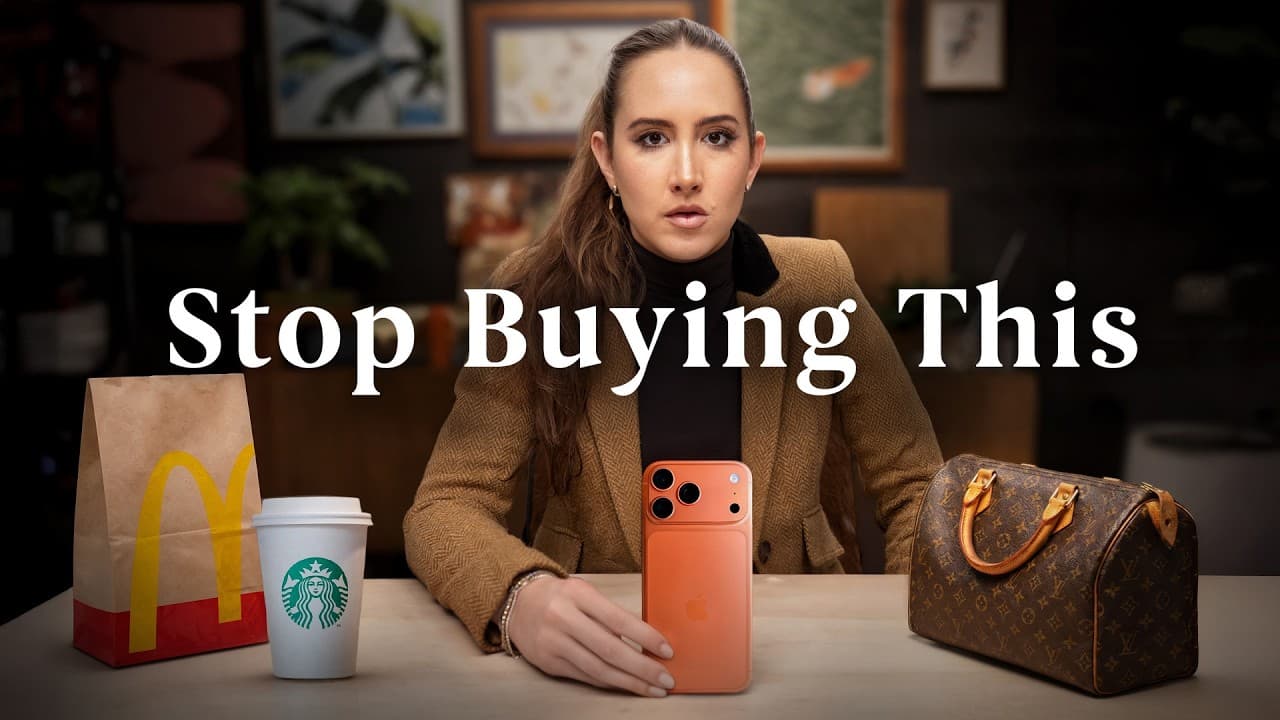
Most people are not short on money because they earn too little. Their money goes to everyday habits treated as normal: fast food, expensive weddings, brand new cars, college degrees taken on loans, and designer goods. Cutting these and putting the money into assets that hold value, such as a house or a business, keeps far more of it.
Transcript
You don't have as much money as you want. But it's not always because you don't earn enough. That's a lie that they've been telling us. It's not these big one-off purchases that are draining your account. It's the everyday spending habits we've normalized without question. I've pulled the numbers and the stats on the most common ways people waste t... Read More
Key Insights
- Fast food only looks cheap. It is overpriced for what it gives you nutritionally, and its prices are rising faster than grocery prices, so regular combo meals cost a meaningful amount every year and may also hurt your energy and earning power.
- Personal appearance is tied to income. Codie cites data showing that people who are fitter or wear makeup earn noticeably more than people who are not, and she says this holds for both men and women.
- The modern wedding is largely a performance for other people. Vendors charge more once they know it is a wedding, while elopements, backyard ceremonies and thrifted dresses cost far less and leave money for a down payment.
- A brand new car is one of the most socially accepted ways to lose money, because depreciation is the biggest cost of owning a car, larger than fuel, insurance or maintenance.
- Leasing is not a fix for car costs. It amounts to renting a car long term, so after years of payments the driver walks away owning nothing.
- Writing off a luxury vehicle under the tax code does not make it free. A deduction only recovers part of the spending at your tax rate, and you have to prove the vehicle is really used for work.
- A college degree pays off mainly in fields like engineering, computer science, medicine and law. For many graduates who borrow to attend, the main result is debt, and skills, trades, apprenticeships and boot camps cost less.
- Luxury clothing and accessories are not investments, because items made of leather, canvas or fabric lose value. Codie argues they mostly signal status to strangers, and buyers often cannot tell a real designer watch from a copy.
Install to Summarize YouTube Videos and Get Transcripts
Explore YouTube Video Summarizer or Get YouTube Transcript Extractor
Questions & Answers
Q: Is fast food actually cheaper than cooking at home?
Codie argues that it is not. Fast food only looks cheap: you pay restaurant prices for heavily processed ingredients with poor nutrition, and fast food prices are rising faster than grocery prices. She adds that lower-income customers are already switching to groceries. Eating fast food several times a week adds up to a significant yearly cost, and it may also cost you energy and earning power.
Q: How much should you spend on a wedding?
Codie says you should not spend more than five thousand dollars on a wedding unless you earn a million or more a year. She herself married in a parking lot, wore an inexpensive dress from Anthropologie and bought her roses at a grocery store. Her advice is to skip ballrooms and expensive flower arches and put the savings toward a house down payment instead.
Q: Why are weddings so expensive?
According to Codie, the modern wedding has become a luxury product built around performance, effectively an extended photo shoot for social media. Vendors charge more when they know an event is a wedding, because couples are emotionally overwhelmed and less sensitive to price. That is how small items such as place cards become surprisingly expensive. She also cites data showing that cheaper weddings tend to go with longer marriages.
Q: Why is buying a brand new car a bad financial decision?
Codie says a new car loses a large share of its value within the first few years, and depreciation is the biggest single cost of owning a car, larger than fuel, insurance or maintenance. She argues that people often buy new cars so strangers will see them as successful. A well-maintained used car that has already depreciated, kept for many years with no car payment, leaves you with more cash.
Q: Is leasing a car better than buying one?
Codie says leasing is not the solution. She describes it as renting a car long term while the paperwork makes it look like a good deal. Dealers pitch leases as getting more car for less money, but she warns against trusting that pitch, because after years of payments you hand the car back and walk away owning nothing.
Q: Can you write off a luxury car like a G Wagon through your business?
Codie is skeptical. Even if the tax code allows a deduction, the deduction only reduces taxes at your tax rate, so you still spend far more than you save. You also have to prove the vehicle is actually used for work, which invites a fight with the government. In her view, buying an expensive depreciating vehicle for a tax break is a poor strategy.
Q: Is a college degree worth the money?
Codie calls college the most expensive lottery ticket in America once you add up tuition, fees, living expenses and years of not earning. She says it can pay off in engineering, computer science, medicine and law, or when an employer pays for it. For others, she argues, skills, trades, apprenticeships, boot camps and real-world experience cost less and take less time, without years of loan interest.
Q: Are designer handbags and luxury watches good investments?
Codie says they are not. She argues that most luxury fashion is financial self-harm disguised as treating yourself, and that items made of leather, canvas or fabric are not investments, pointing out that even Kim Kardashian sells her investment pieces at a discount. She says luxury mostly signals status to strangers, and she could not tell her real watches from fakes she bought, so she sees the premium as paying for others' opinions.
Summary & Key Takeaways
-
Codie argues that the everyday spending habits society has normalized drain people's accounts more than one-off big purchases do. Fast food is her first example: it costs restaurant prices for heavily processed ingredients, its prices are rising faster than groceries, and eating it often may hurt health and earning power.
-
She calls lavish weddings financial cosplay, a performance mainly for social media. She notes that vendors charge more for weddings, cites data linking cheaper weddings to longer marriages, and recommends small ceremonies, with the savings going toward a house, which she presents as a non-depreciating asset.
-
She calls new cars, leases and luxury vehicles written off for taxes money traps because of depreciation. She also argues that college degrees financed with loans, outside high-return fields, and designer goods sold as investment pieces are ways people pay for status rather than building wealth.
Read in Other Languages (beta)
Share This Summary 📚
Summarize YouTube Videos and Get Video Transcripts with 1-Click
Try YouTube Summary with ChatGPT & Claude or YouTube Transcript Generator