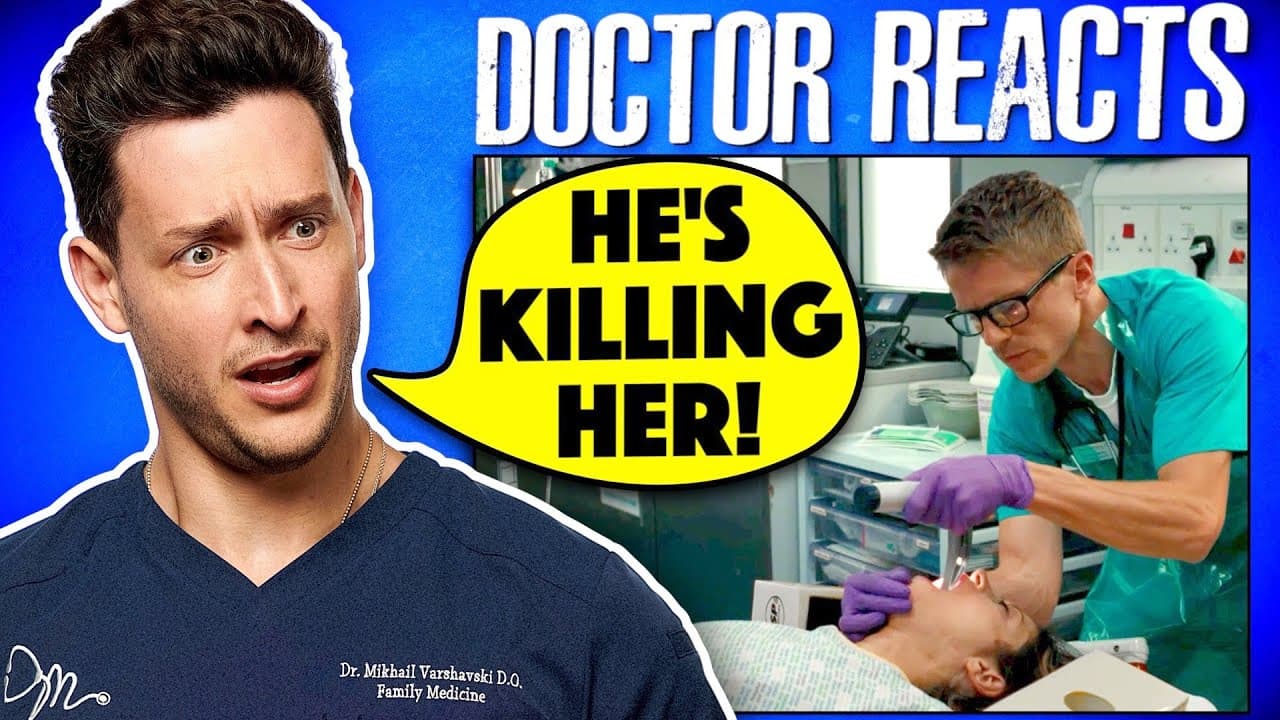
Doctor Reacts To UK Medical Drama "Casualty"
TL;DR
A critical review of medical drama's portrayal of medical scenarios.
Transcript
- The longest running British med drama. We have to review it, season 36, what? Let's go! Pee-woop! (car honking) (car breaking) Good reaction. - [Young Woman] Hey! - By both parties. - Hey, what you doing? - Don't road rage, that's not healthy. - Abusing fellow road users isn't very constructive, is it? (car engine going) (shoulder dislocating) Ah... Read More
Key Insights
- 😷 Dramas often dramatize medical procedures, leading to misrepresentation of urgency and protocol.
- 🦺 Improper handling of critical situations can affect public understanding and safety.
- 😨 Characters with dementia highlight the complexities of providing care to vulnerable individuals.
- 😷 Effective communication is crucial in emergency settings, both among medical staff and with patients' families.
- 😨 The necessity of immediate and thorough assessments is vital for successful trauma care.
- 😷 Misinformation about medical practices can lead to unrealistic expectations from viewers.
- 😷 The portrayal of personal dilemmas and their influence on medical situations is often oversimplified in dramas.
Install to Summarize YouTube Videos and Get Transcripts
Explore YouTube Video Summarizer or Get YouTube Transcript Extractor
Questions & Answers
Q: What are the common errors seen in the portrayal of trauma care in medical dramas?
Medical dramas often oversimplify complex trauma situations, failing to show the rushed response of a full team. In reality, immediate assessment, multiple concurrent actions like drawing labs, and continuous updates to family members are critical. The dramatization can mislead viewers about actual emergency room protocols.
Q: How does the content address the issue of dementia in medical scenarios?
The content discusses a character with mild dementia, noting how it may complicate care and navigation. It highlights that even mild dementia can be problematic for tasks requiring memory and suggests that family members should be vigilant around potentially exploitative situations, emphasizing the need for support structures for those affected.
Q: What risks are associated with improper intubation according to the review?
Improper intubation can lead to significant risks, including the potential for the endotracheal tube to be placed incorrectly in the esophagus rather than the trachea. This could cause a patient to be deprived of oxygen, potentially resulting in severe brain injury or death, reinforcing the necessity of careful monitoring during such procedures.
Q: Why is it important to accurately represent medical procedures in dramas?
Accurate portrayals of medical procedures in dramas are essential to inform the public about real healthcare practices and to prevent misconceptions. Misinformation can lead to unrealistic expectations of emergency responses, potentially affecting patient outcomes in real-life situations and undermining trust in healthcare professionals.
Q: What insights does the content provide regarding patient assessment in emergency settings?
The analysis stresses the urgency of proper patient assessment in emergency situations, highlighting that all visible injuries must be evaluated promptly. It critiques lack of thorough examinations as potentially life-threatening and underscores the necessity of teamwork and coordination in emergency departments for effective patient care.
Q: How does the review comment on the portrayal of medical professionals' interpersonal communication?
The review notes the inadequacy of interpersonal communication depicted among medical staff and between staff and families. It points out that conversations about a patient's condition should be sensitive and informative, reflecting the emotional weight of such discussions rather than the awkwardness showcased in the drama.
Summary & Key Takeaways
-
The content analyzes various medical scenes from a long-running British medical drama, highlighting unrealistic portrayals of emergencies and treatments.
-
It critiques the actors' performances and the medical professionals' responses, pointing out errors in handling critical situations such as dislocated shoulders and trauma cases.
-
It emphasizes the importance of authenticity in medical shows and the impact erroneous representation can have on public perception of healthcare.
Read in Other Languages (beta)
Share This Summary 📚
Summarize YouTube Videos and Get Video Transcripts with 1-Click
Try YouTube Summary with ChatGPT & Claude or YouTube Transcript Generator
Explore More Summaries from Doctor Mike 📚

Summarize YouTube Videos and Get Video Transcripts with 1-Click
Try YouTube Summary with ChatGPT & Claude or YouTube Transcript Generator