How to educate yourself like a self taught millionaire
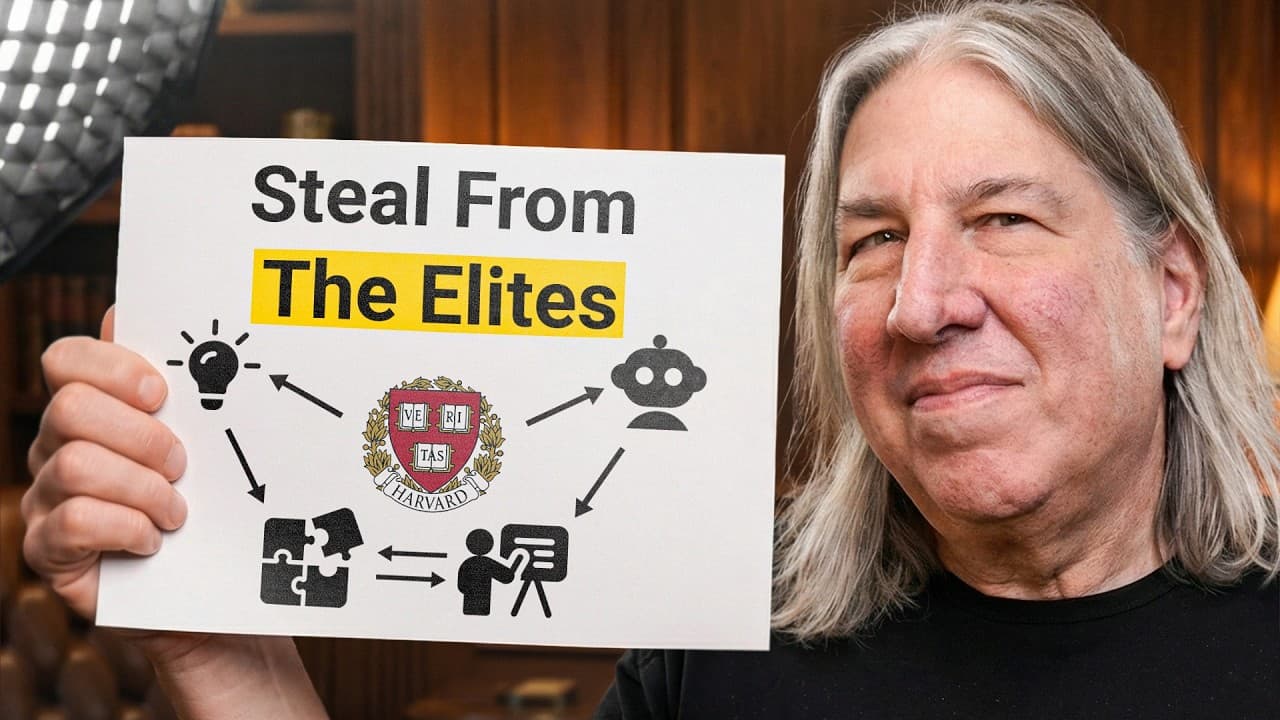
TL;DR
AI fluency is essential for competitive hiring and can differentiate you through real projects. Build something real, learn to present it in the room, and continuously improve your communication and presence to accelerate advancement. The market rewards demonstrated skill and storytelling as much as credentials.
Transcript
Being ridiculously well educated is easier and cheaper than you think. I didn't learn about business, trading, or startups from a textbook. I learned them screaming in a pit at 6:00 a.m. taking losses that would make your portfolio and your partner weep, and figuring out what mindset the financial system actually rewards. I have moved from the trad... Read More
Key Insights
- AI fluency is essential for a competitive candidate because job postings requiring AI literacy grew 450% between 2022 and 2025, signaling a market shift that values AI skills over traditional credentials.
- Building something real is a key credential, as demonstrated products, portfolios, or real users show capability beyond a resume and can attract attention from major implications and opportunities.
- Being able to learn to be in a room matters because AI handles execution and the human ability to persuade, tell a story, and present a point of view is what drives results.
- Ownership of the room is critical, since likability helps you get in the door and strong communication drives top-level advancement in a world where media exposure is common.
- Keeping learning new stuff is necessary because the premium for college degrees is shrinking as supply exceeds demand, so real demonstrations of skill are increasingly valuable.
- The most important differentiators are what you have built, learned, and how you present it, not where you studied, making practical output more impactful than diplomas.
- The future of hiring emphasizes visible outcomes like GitHub portfolios, newsletters with subscribers, and revenue-generating projects, which prove capability better than traditional resumes.
- Effective communication is described as adding a significant value boost and being a decisive factor in promotions and opportunities, per the reference to Buffett's view on communication.
Install to Summarize YouTube Videos and Get Transcripts
Explore YouTube Video Summarizer or Get YouTube Transcript Extractor
Questions & Answers
Q: What is the role of AI fluency in the current job market?
AI fluency functions as a gatekeeper and differentiator in the job market today. The text notes that AI literacy is increasingly demanded, with job postings showing a 450% growth in AI related requirements between 2022 and 2025. This is described not as a trend but as a market reordering. Therefore, candidates who lack AI skills are at a disadvantage, while those who are fluent can present themselves as competitive options and potential value adders in any field. Becoming fluent in tools like ChatGPT, Claude, and others relevant to one’s field is presented as essential because the window to leverage AI is closing, and the first movers will have a clear advantage.
Q: Why is building something real more valuable than traditional credentials?
Building something real is presented as a primary credential because it demonstrates the ability to execute from concept to real users. The speaker highlights that a GitHub portfolio, a newsletter with subscribers, or a business generating actual revenue provide tangible proof of capability, initiative, and market fit. In contrast, a resume or college pedigree alone does not convey practical execution power. The message is that in a world where AI can automate many tasks, demonstrable outputs show what a person can actually create, iterate, and monetize, making the differentiator a real product or project rather than a line on a resume.
Q: What does it mean to learn to be in the room, and why does it matter?
Learning to be in the room means possessing a presence and the ability to engage others with a point of view, even if one is not the most technically brilliant. The idea is that AI will handle technical execution, but the human element—storytelling, personality, and the ability to persuade—remains crucial. People who can disagree without being disagreeable, tell compelling stories, and make others want to pay attention are valued. This soft skill set is what separates high performers, because a presence that motivates others to lean forward can drive outcomes beyond raw technical skill.
Q: How does owning the room translate to career advancement?
Owning the room translates to career advancement through communication and visibility. The material cites Warren Buffett’s claim that communication adds a 50% value boost and asserts that in 2026 every professional is a media professional. The implication is that the ability to project conviction through a screen, deliver clear and persuasive messages, and show consistent, high-quality communication is a direct route to higher roles and promotions, beyond mere technical competence.
Q: Why is staying in the loop with new knowledge important for career growth?
Keeping learning new stuff is important because the economic return on traditional college credentials is changing. While college graduates still earn more on average, the premium has declined as supply exceeds demand. This means continual learning and building new skills, especially in AI and related areas, can compensate for the shifting premium and create ongoing opportunities, making the pursuit of new knowledge a practical necessity for long-term career growth.
Q: What does it mean to differentiate yourself through real examples?
Differentiation through real examples means showing tangible outputs that prove you can execute and deliver value. This includes projects you built, skills you demonstrated, and concrete results you achieved. The text argues that potential employers want to see what you have done and what you can do with real impact, not just what you claim you can do, so having visible, verifiable demonstrations is crucial for standing out.
Q: How should one view the balance between degree and practical output?
The guidance presented is to view a degree as the minimum entry requirement rather than the ultimate solution. While a degree remains important, it is not sufficient on its own. The next generation will win by combining the degree with real-world outputs and the ability to communicate effectively. This combination creates a compelling package that signals both foundational knowledge and practical application, thus increasing employability.
Q: What is the strategic takeaway for someone entering the job market in 2026?
The strategic takeaway is to develop five capabilities: AI fluency, a track record of building real products, the ability to perform in and own a room, strong communication skills, and ongoing learning. These elements together create a competitive profile that is resistant to automation and capable of capturing opportunities in a crowded market. By demonstrating concrete outputs, a compelling presence, and clear growth, an individual can outpace others who rely solely on traditional credentials.
Summary & Key Takeaways
-
A practical framework for self education in the modern job market, emphasizing AI skills, real-world builds, and the ability to own and convey a compelling presence in professional settings.
-
The five concepts shift focus from traditional schooling to demonstrated capability, personal output, and communication as routes to career growth and significant opportunities.
-
Ultimately, becoming truly educated in 2026 means fluency in AI, tangible outputs, strong room presence, and ongoing learning that outpace formal degree alone.
Read in Other Languages (beta)
Share This Summary 📚
Summarize YouTube Videos and Get Video Transcripts with 1-Click
Try YouTube Summary with ChatGPT & Claude or YouTube Transcript Generator
Explore More Summaries from Tom Sosnoff 📚


Summarize YouTube Videos and Get Video Transcripts with 1-Click
Try YouTube Summary with ChatGPT & Claude or YouTube Transcript Generator