How Many Through Holes Are in the Human Body?
TL;DR
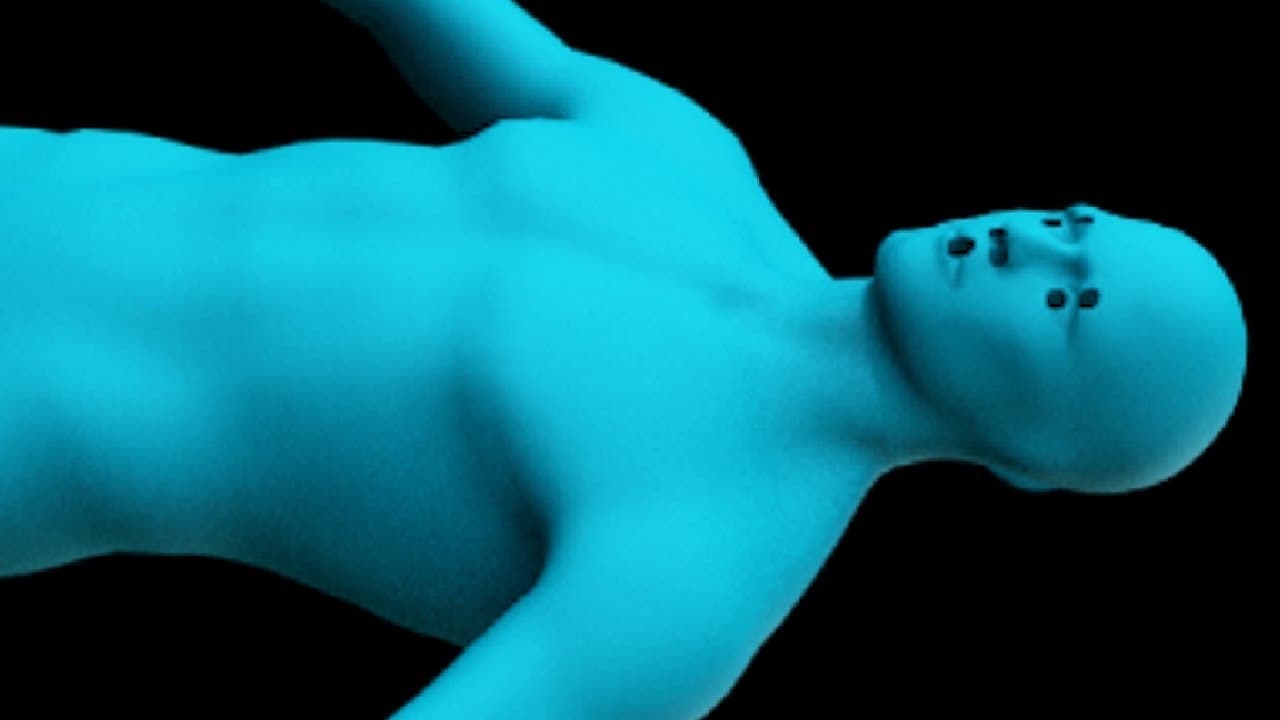
A human has seven through holes, like the gastrointestinal tract, plus millions of blind holes such as pores and hair follicles, explains Vsauce's Michael. The answer depends on setting a minimum hole size of about 20 to 60 microns, roughly the width of a human hair. At smaller scales the question becomes meaningless, since the body is just a loose constellation of atoms and molecules. Read on for why holes might not even exist.
Transcript
hey Vsauce Michael here come on in if you keep going you will eventually emerge out my other end and for this reason it has been said that the human body is like a doughnut yeah you are just a bunch of meat packed around a central Hulk or are you humans have more than one hole right I mean we've got nostrils and ears the whole sweetpea out of the h... Read More
Key Insights
- 🫀 The human body is not a solid object, but rather a collection of atoms and molecules that can permeate through various openings.
- 🕳️ Blind holes, such as pores and hair follicles, differ from through holes, like the gastrointestinal tract and nasal cavity, in their ability to allow for passage from one end to another.
- 🕳️ The number of through holes in the human body can be defined using topological principles, and variations in through holes can exist among individuals.
Install to Summarize YouTube Videos and Get Transcripts
Explore YouTube Video Summarizer or Get YouTube Transcript Extractor
Questions & Answers
Q: How many holes does a human have?
If you set a minimum hole size, a human has seven through holes plus millions of blind holes like pores and hair follicles. Through holes, such as the gastrointestinal tract, let something pass all the way from one end to the other, while blind holes eventually dead end. At atomic scales the question becomes meaningless, because the body is really just a loose constellation of atoms and molecules.
Q: What is the difference between a through hole and a blind hole?
A through hole lets a traveler pass all the way through, so a 60 micron string could be threaded into your mouth and come out the other end via the GI tract. Blind holes such as pores, urethras, nipples, ears, hair follicles, birth canals, and sinuses can be entered but eventually dead end, usually at narrow capillaries. Blind holes can also be removed by molding without cutting, while a through hole cannot.
Q: What minimum hole size does the video use?
It uses a minimum hole size of about twenty to sixty millionths of a meter, roughly the width of a human hair. At that scale, a 60 micron wide ship could fly into your pores like giant craters, but it could not continue through the vasculature, diffuse through cells, or slip between molecules. This threshold is what makes the count of holes interesting rather than meaningless.
Q: Why does rubbing garlic on your foot make your mouth taste garlic?
If you rub a fresh cut clove of garlic on your foot, about an hour later you start to taste garlic in your mouth. The molecules that give garlic its taste are small enough and have the right properties to permeate the skin cells in your foot, enter your bloodstream, and reach your mouth. It shows the body is permeable to small molecules even where there is no obvious hole.
Q: How many neutrinos pass through your body?
About 60 billion neutrinos from the Sun pass through just your thumbnail every second, day and night. This illustrates that at small enough scales the body is extremely permeable. It is part of why the video argues that, ultimately, the human body is not a solid thing that can even have holes.
Q: Can the human body have more than seven through holes?
Yes, additional through holes can exist based on individual differences. Examples include a supernumerary lacrimal punctum and accessory ostia in the sinuses, which some people may have. So the count of through holes can vary from person to person.
Q: Topologically speaking, do holes even exist?
The video argues a hole is a fuzzy, imprecise word that eludes a single mathematical definition, and that holes are at best ontologically parasitic, depending on something else to inhabit. If you mold a shape continuously from a doughnut to a glass to a bowl to a plate without gluing or pinching anything shut, the hole disappears with no clear moment it vanished. That is why blind holes are unique and why holes might not even exist.
Q: Why is the gastrointestinal tract considered a through hole?
The GI tract is what engineers call a through hole because a 60 micron wide traveler could enter your mouth, meander down the esophagus, and keep going until they are dumped out the other end. In contrast, turning down the trachea would dead end in the lungs, making that a blind hole. This is why it is often said the human body is like a doughnut.
Summary & Key Takeaways
-
The human body is not a solid object and can be seen as a loose constellation of atoms and molecules.
-
At small scales, the concept of holes becomes meaningless, as the human body is permeable to various molecules.
-
The human body has millions of blind holes, such as pores and hair follicles, but it also has seven through holes, including the gastrointestinal tract and nasal cavity.
Read in Other Languages (beta)
Share This Summary 📚
Summarize YouTube Videos and Get Video Transcripts with 1-Click
Try YouTube Summary with ChatGPT & Claude or YouTube Transcript Generator
Explore More Summaries from Vsauce 📚

Summarize YouTube Videos and Get Video Transcripts with 1-Click
Try YouTube Summary with ChatGPT & Claude or YouTube Transcript Generator