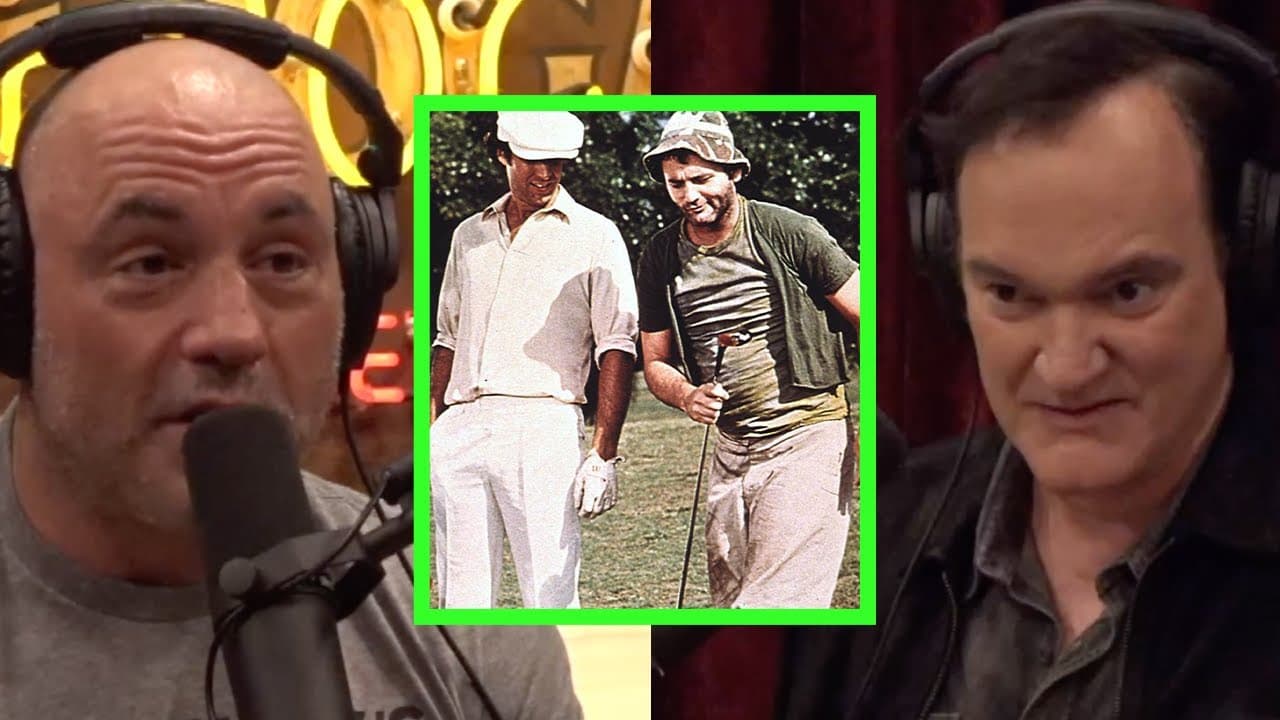
Quentin Tarantino Analyzes the Differences Between Bill Murray & Chevy Chase Movies
TL;DR
Bill Murray’s movie characters often transform into nicer, more likable people, while Chevy Chase’s sarcastic personas generally remain unchanged and unapologetic. Quentin Tarantino connects that contrast to an 80s shift away from the cynicism of the 70s, arguing that even provocative films often reversed course in their last 20 minutes. Read on for his examples from Stripes, Groundhog Day, Scrooged, Vacation, and Fletch.
Transcript
the jurgen experience the 80s and the 50s were the worst time for movies ever because it was just this kind of politically correct time now in the 50s it was different because that was just was society what is that in the 80s it was self it was uh self-censorship was going on what started that well it was just the the rise of political correctness ... Read More
Key Insights
- ❓ The 70s embraced flawed, cynical characters like Travis Bickle.
- 🦸 The 80s favored likable heroes undergoing transformation like Bill Murray's characters.
- 🎥 Political correctness in the 80s influenced storytelling and characterizations in movies.
- 🫠 Chevy Chase's consistent personas contrasted with Bill Murray's transformative character arcs.
- 🎥 The shift in audience preferences from cynicism to likability affected movie storytelling.
- 💋 The 80s marked a departure from the rawness and complexity of character portrayals in the 70s.
- 🎥 The evolution of movie storytelling reflects societal changes and audience demands.
Install to Summarize YouTube Videos and Get Transcripts
Explore YouTube Video Summarizer or Get YouTube Transcript Extractor
Questions & Answers
Q: How does Quentin Tarantino distinguish Bill Murray movies from Chevy Chase movies?
Tarantino says Bill Murray often plays a hip, sarcastic curmudgeon who transforms into a nice guy near the end. Chevy Chase’s characters usually remain sarcastic and unapologetic throughout, with any slight change not becoming the movie’s central point.
Q: Why does Tarantino say critics preferred Bill Murray movies to Chevy Chase movies?
He observes that critics consistently favored Murray’s films, whose characters typically become more likable by the conclusion. He contrasts those redemptive arcs with Chase’s characters, who generally refuse to apologize for who they are.
Q: How does Stripes illustrate Bill Murray’s typical character transformation?
Tarantino describes Murray beginning Stripes as an iconoclast who does not care about anything and deservedly gets beaten by Warren Oates. He then rallies the troops during the parade and ultimately leads a secret mission.
Q: What does Tarantino say about Bill Murray’s transformation in Groundhog Day?
He points to Groundhog Day as another film that turns Murray’s sarcastic character into a nicer person. Tarantino questions whether a less sarcastic Bill Murray is actually better for viewers, even if it is better for Andie MacDowell’s character.
Q: How did movie characters change from the 70s to the 80s, according to Tarantino?
He says 70s films could follow deeply flawed, cynical people such as Travis Bickle, Charlie Rane, or Joe without presenting them as conventional heroes. In the 80s, he argues, likability became the most important requirement and audiences were expected to like everyone.
Q: What role does Tarantino attribute to political correctness in 80s movies?
He characterizes the 80s as a period of political correctness and self-censorship following the boundary-pushing 70s. In his view, this atmosphere watered down stories and made likable characters more important.
Q: Why does Tarantino focus on the last 20 minutes of some 80s movies?
He argues that a film could take chances for about an hour but spend its last 20 minutes reversing or apologizing for those choices. Bill Murray’s late transformation into a nicer person is his main example of that pattern.
Q: What does Tarantino admire about Chevy Chase’s early work?
He calls himself a gigantic fan of Chase’s early work, specifically mentioning Fletch, Saturday Night Live’s first season, and most of the early movies except Oh Heavenly Dog. He also says he would love to work with Chase, though he had not done so.
Summary
In this video, the speaker discusses the decline of movies in the 80s and the 50s due to political correctness and self-censorship. He explains how characters in films went from being flawed and complex in the 70s to becoming likable and apologetic in the 80s. The speaker also compares the character development in Bill Murray movies versus Chevy Chase movies, pointing out the difference in how their characters evolve throughout the films.
Questions & Answers
Q: Why were the 80s and the 50s considered the worst time for movies?
The speaker explains that the 80s and the 50s were considered the worst time for movies because of the rise of political correctness. In the 50s, society demanded a certain level of conformity, while in the 80s, self-censorship became prevalent.
Q: What characterized movies in the 70s?
In the 70s, movies featured characters who were not necessarily heroes but were flawed and interesting. Films like "Taxi Driver" and "Rolling Thunder" showcased protagonists who didn't always win and could meet a meaningless end.
Q: How is character likability prioritized in the 80s?
In the 80s, the most important aspect of a character became their likability. The audience had to like every character, and even movies that pushed boundaries had to backtrack in the last 20 minutes to ensure everyone was comfortable.
Q: Can you give an example of a movie that followed this pattern?
The speaker uses Bill Murray movies as an example of films that followed the likability pattern. He points out that most of Murray's characters start off as cool, curmudgeon smart-asses, but by the last 20 minutes, they undergo a transformation and become nice guys, apologizing for their previous behavior.
Q: How does this differ from Chevy Chase movies?
The speaker claims that Chevy Chase movies do not follow the same likability pattern. Chase's characters remain the same throughout the film and rarely apologize or change. Even when there is a slight change, it is not the central focus of the movie.
Q: Have you ever worked with Chevy Chase?
The speaker expresses his admiration for Chevy Chase and his early work, mentioning movies like "Fletch" and his time on "Saturday Night Live." He confesses that he would love to work with Chase but observes that Chase seems uncomfortable in the public eye and may have been overwhelmed by attention.
Q: What is your perception of Chevy Chase's current demeanor?
Based on stories, interviews, and controversies surrounding Chevy Chase, the speaker believes that Chase has become a recluse who wants to be left alone and dislikes excessive attention.
Q: Where can viewers access the full episode of the Joe Rogan Experience?
Viewers can find the full episode of the Joe Rogan Experience on Spotify. It is available for free, and users can switch between video and audio, download episodes to save data, and listen in the background while using other apps.
Q: Do you need a premium account to watch the Joe Rogan Experience on Spotify?
No, a premium account is not necessary to watch new episodes of the Joe Rogan Experience on Spotify. Users can simply search for the show on their Spotify app to access the content.
Q: Can previous episodes of the Joe Rogan Experience be found on Spotify?
Yes, viewers can also find back catalog JRE videos on Spotify, including clips from previous episodes. Spotify offers a seamless experience for switching between video and audio content.
Takeaways
In summary, the speaker highlights the negative impact of political correctness and self-censorship on movies in the 80s and the 50s. He discusses the shift from complex and flawed characters in the 70s to likable and apologetic characters in the 80s. He uses Bill Murray and Chevy Chase movies as examples to illustrate this difference in character development. Additionally, the speaker expresses his admiration for Chevy Chase's early work but believes that Chase has become reclusive due to overwhelming attention.
Summary & Key Takeaways
-
The 70s featured flawed, cynical characters like Travis Bickle, while the 80s favored likable heroes with transformations.
-
Critics preferred Bill Murray's apologetic character arcs over Chevy Chase's consistent personas in movies.
-
The shift from cynicism to likable heroes marked a change in audience preferences and storytelling in movies.
Read in Other Languages (beta)
Share This Summary 📚
Summarize YouTube Videos and Get Video Transcripts with 1-Click
Try YouTube Summary with ChatGPT & Claude or YouTube Transcript Generator
Explore More Summaries from PowerfulJRE 📚

Summarize YouTube Videos and Get Video Transcripts with 1-Click
Try YouTube Summary with ChatGPT & Claude or YouTube Transcript Generator