How to reverse aging with stem cell therapy OSKM
TL;DR
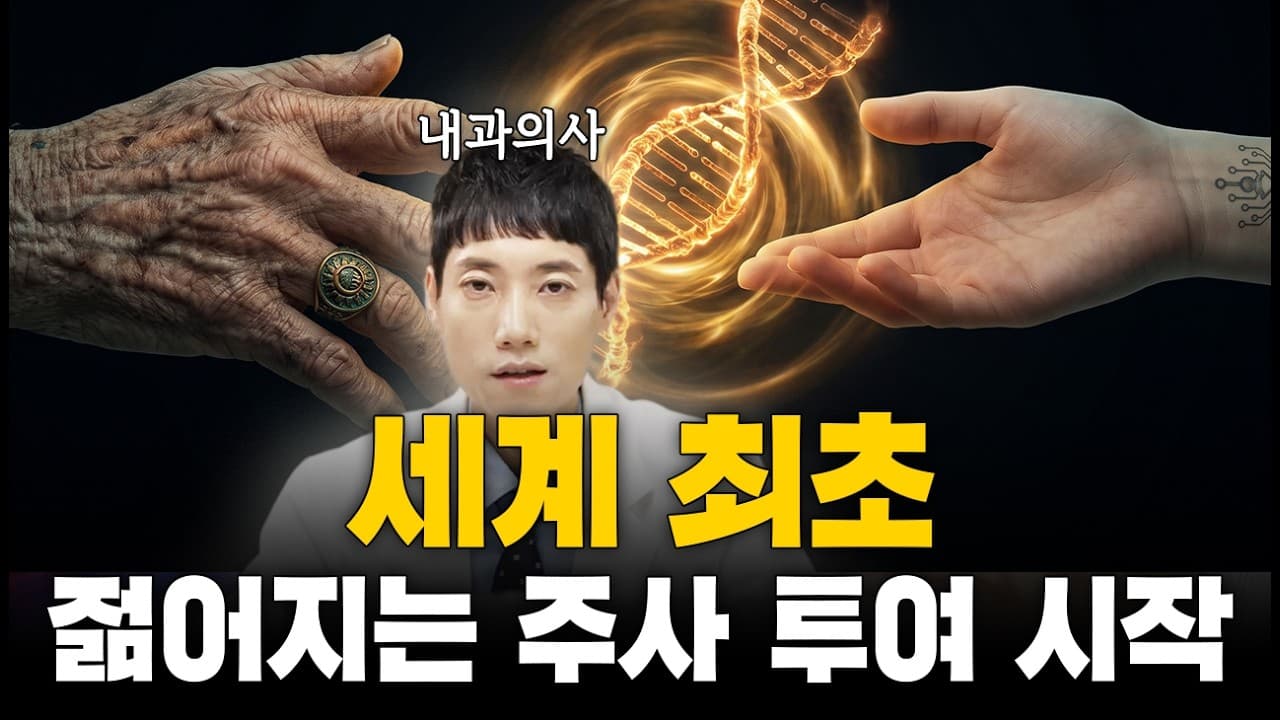
OSKM stands for Oct3/4, Sox2, c-Myc, and Klf4, the four genes scientists identified as capable of reprogramming adult cells into stem cells. The video explains Yamanaka’s method, how stem cells can potentially repair damaged tissues, and introduces the ER-100 trial as a human age-reversal concept. It also contrasts embryo-derived and induced pluripotent stem cell methods and discusses foundational science behind regeneration.
Transcript
Well, I can guarantee that today's video will be the most shocking one in the history of my channel. It's not about anti-aging or slowing down aging. It is a story that can clearly be called "age reversal," where your body truly returns to its youth. You might think it's just mice getting younger, but this is a human clinical trial. Like C... Read More
Key Insights
- OSKM refers to the four genes Oct3/4, Sox2, c-Myc, and Klf4, which together can transform adult cells into stem cells.
- Stem cell therapy aims to replace damaged cells in organs like the heart and brain, potentially extending functional lifespan by restoring tissue vitality.
- Yamanaka used a systematic elimination approach to identify the essential four genes, proving that all four are necessary for successful reprogramming.
- Embryonic stem cell methods require eggs and raise ethical concerns, whereas induced pluripotent stem cells use the patient’s own cells to avoid immune rejection.
- The video uses simple analogies, such as clay becoming a jar, to explain the concept of reverting cells to a more primitive, versatile state.
- FBX15 is discussed as a marker gene used to verify stem cell status in experiments, highlighting how scientists distinguish stem cells from other cells.
- The brain and heart are described as critical limits in natural regeneration, with many tissues capable of regeneration while these two organs do not recover once damaged.
- ER-100 is presented as a human clinical trial concept related to aging reversal, identifying a potential bridge between stem cell science and clinical longevity.
Install to Summarize YouTube Videos and Get Transcripts
Explore YouTube Video Summarizer or Get YouTube Transcript Extractor
Questions & Answers
Q: What does OSKM stand for and why is it important in stem cell research?
OSKM stands for Oct3/4, Sox2, c-Myc, and Klf4. These four genes can reprogram adult cells back into a stem cell state, which is a foundational breakthrough in regenerative medicine. The video emphasizes that identifying these four genes marked a turning point, enabling safer, patient-specific approaches to tissue repair and potential age reversal strategies through induced pluripotent stem cells.
Q: How did Yamanaka identify the four essential genes for stem cell transformation?
Yamanaka started with 24 candidate genes found by searching existing knowledge, then tested them one by one using a retroviral delivery system in fibroblasts. When all 24 were introduced, cells became stem cells. He then removed genes one at a time to see which were indispensable, eventually narrowing down to four essential genes: Oct3/4, Sox2, c-Myc, and Klf4.
Q: What is the difference between embryonic stem cell methods and induced pluripotent stem cells?
Embryonic stem cell methods involve using egg cells and creating embryos to derive stem cells, which raises ethical concerns and immune compatibility questions. Induced pluripotent stem cells use mature adult cells that are genetically reprogrammed back into a stem cell state, avoiding the need for eggs and reducing immune rejection risks, as they originate from the patient’s own cells.
Q: What role does FBX15 play in stem cell verification?
FBX15 is described as a marker gene that is expressed when a cell becomes a stem cell. In experiments, scientists modify cells to express a blue color and antibiotic resistance when FBX15 is active, allowing easy identification of true stem cells by applying antibiotics and observing which cells survive and turn blue.
Q: Why is the brain and heart highlighted as non-regenerative organs in the video?
The video explains that brain and heart cells do not regenerate once damaged, acting like the mainboard of a device in contrast to organs like the liver which can regenerate. Because of this, repairing or replacing damaged brain and heart tissue is challenging, which sets practical limits on natural aging reversal.
Q: What is the ER-100 concept mentioned in the video?
ER-100 is introduced as a human clinical age-reversal treatment connected to Harvard professor David Sinclair’s work. The video frames it within the broader stem cell and rejuvenation narrative, suggesting it could symbolize a real clinical step toward reversing aging, while acknowledging the complexity and ongoing research involved.
Q: How does the video describe stem cell therapy in practical terms?
Stem cell therapy is described as creating cells outside the body that can be transplanted into damaged areas, such as the heart, with the goal of repairing tissue. The explanation uses metaphors like turning clay back into a form that can become a functional jar to illustrate how reprogramming can restore tissue function.
Q: What ethical considerations are touched upon in the stem cell discussion?
Ethical considerations arise with embryonic stem cell methods due to the use of eggs and embryo creation, which the video contrasts with induced pluripotent stem cells that avoid this issue by using the patient’s own cells. The discussion implies that ethical decisions influence the choice of stem cell technology in clinical applications.
Summary & Key Takeaways
-
The video explains the difference between organs with reserve stem cells and those that cannot regenerate, highlighting brain and heart as limits to natural aging reversal. It uses analogies like clay to illustrate reprogramming cells back into stem cells. The aim is to show how turning mature cells into stem cells could enable rejuvenation strategies.
-
Yamanaka identified four key genes that can reprogram cells, and the video describes how systematic testing revealed that all four are required to create stem cells, marking a pivotal moment in stem cell research. It emphasizes the OSKM combination as the critical discovery in adult cell reprogramming.
-
The ER-100 treatment by Harvard professor David Sinclair is presented as a human clinical age-reversal concept, framed within the broader stem cell narrative, and discussed alongside ethical considerations of embryonic versus induced stem cell methods and the potential to patch damaged organs at a cellular level.
Read in Other Languages (beta)
Share This Summary 📚
Summarize YouTube Videos and Get Video Transcripts with 1-Click
Try YouTube Summary with ChatGPT & Claude or YouTube Transcript Generator
Explore More Summaries from 닥터딩요 📚

Summarize YouTube Videos and Get Video Transcripts with 1-Click
Try YouTube Summary with ChatGPT & Claude or YouTube Transcript Generator