How Big Tech Companies Profit Off Our Attention (Meta, Twitter, Snap, TikTok)
TL;DR
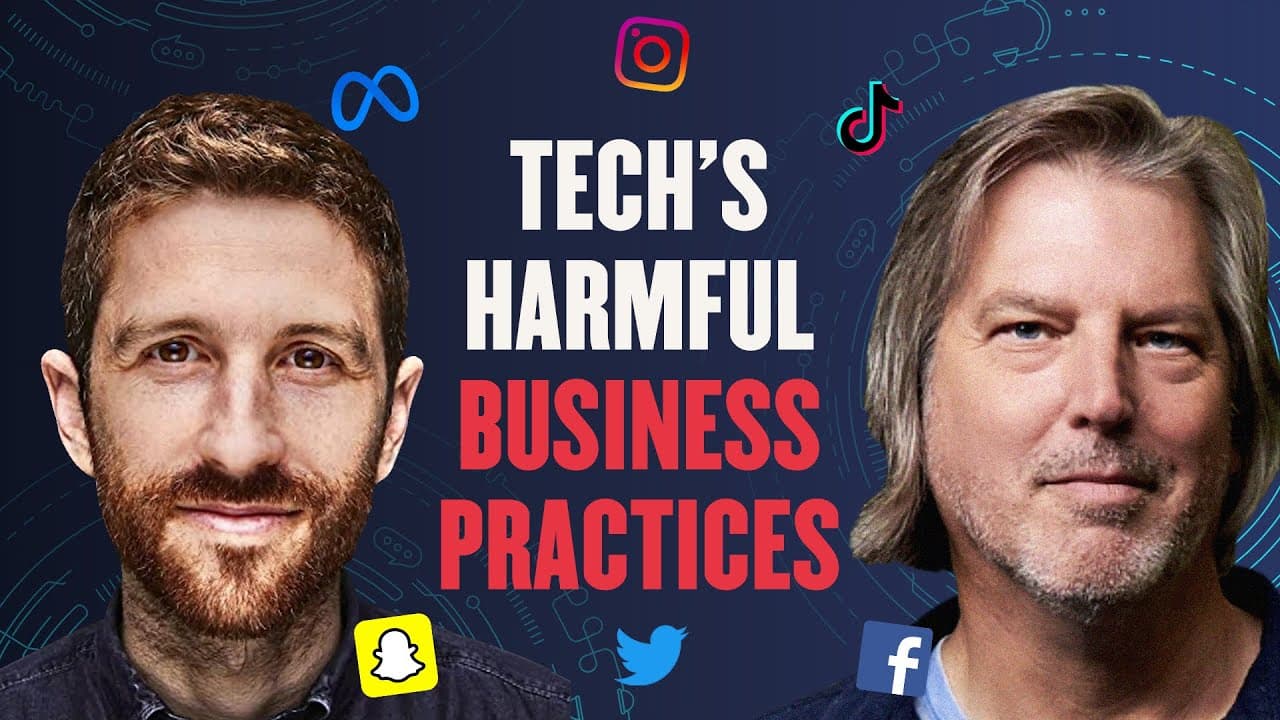
Big tech companies profit from attention by optimizing their platforms for more time spent, usage, clicks, and swipes each year. Personalized algorithms learn from the behavior of roughly two billion users and serve whatever keeps each person engaged, even when that promotes doomscrolling, polarization, addiction, or harmful content. Read on to understand why this business model can fracture shared reality without algorithms deliberately intending harm.
Transcript
you know much of our stock market is propped up by the big five tech companies whose business models are are well not all of them by the way some of them we should talk about the distinction but for those who optimize for maximizing attention and engagement they call it engagement their business model is making sure they get more time spent more us... Read More
Key Insights
- 👨💼 The engagement-focused business models of major tech companies prioritize click optimization over the well-being of users and the cohesion of society.
- 😐 Algorithms are neutral, lacking intent, but their outcomes can inadvertently lead individuals toward harmful or polarizing content based on engagement metrics.
- 😑 Societal polarization is exacerbated by personalized content, further eroding shared realities and group cooperation on pressing issues.
- 🥺 The diversity of media voices today diminishes collective understanding, as simpler narratives gaining traction often lead to misinformation and emotional manipulation.
- 🔉 Historical media environments provided a more homogenized reality, which could facilitate a shared understanding of complex topics, unlike today's fragmented landscape.
- 🥺 Users often default to engagement with sensational content, leading to an addictive cycle that diminishes attention spans and fosters unhealthy habits.
- 😒 The digital infrastructure has immense influence on personal behaviors and societal norms, suggesting a strong link between technology use and broader cultural issues.
Install to Summarize YouTube Videos and Get Transcripts
Explore YouTube Video Summarizer or Get YouTube Transcript Extractor
Questions & Answers
Q: How do big tech companies profit from our attention?
Companies whose business models maximize attention and engagement seek more time spent, usage, clicks, and swipes each year. When engagement declines, they make choices intended to push it back up, so platforms continually show individuals the content most likely to keep them scrolling.
Q: How do engagement algorithms decide what content to show?
The algorithms identify what has kept clusters of similar users clicking or swiping and use those behavioral patterns to select more content. A system trained on roughly two billion users’ behavior can determine what will keep someone engaged better than that person may recognize themselves.
Q: Why can dieting content lead users toward anorexia videos?
Someone may begin by swiping through dieting videos, food tips, and healthy-food content. The algorithm can then discover that anorexia videos generate strong engagement among that cluster of users and recommend them because they work at sustaining attention, not because it understands what anorexia means.
Q: Are tech algorithms intentionally trying to cause harm?
No hidden brain is deliberately choosing to lead users down a harmful path. The algorithms follow mathematical rules that optimize for clicks and do not understand whether the content they promote is good or bad.
Q: How does personalized content weaken shared reality?
A platform optimizes for what keeps each individual scrolling rather than what helps society understand the world together. When personalization is pushed too far, it can break shared facts, shared understanding, and the ability to coordinate solutions.
Q: Why should tech companies be held accountable if algorithms lack harmful intent?
The people at tech companies are described as being caught in an arms race for engagement rather than deliberately trying to damage society. However, companies can make different decisions, and the transcript argues that denying the effects caused by their products gives them responsibility for the outcome.
Q: How does TikTok illustrate the competition for user attention?
As people use some Facebook products less, they may move to TikTok, which continues the same race to capture attention. TikTok is described as a supercomputer pointed at the user’s brain, selecting the next video most likely to keep that person swiping.
Q: How is today’s media environment different from an era with fewer channels?
A smaller number of channels did not create a perfect shared reality, and centralized media carried costs of its own. Today, tens of millions of voices face incentives to inflame emotions and affirm audiences so they keep returning, creating more echo chambers and fragmentation.
Summary & Key Takeaways
-
The dominance of major tech companies impacts societal engagement, focusing on personalized content that caters to individual users while fostering a fragmented reality and polarization.
-
Algorithms merely optimize for clicks, often resulting in harmful content being promoted, as they lack an understanding of the impact of their suggestions on users' mental health and social interactions.
-
The current media landscape has shifted dramatically, creating many voices prioritizing simple narratives that appeal emotionally, which undermines the complexity and nuance needed for meaningful societal discussions.
Read in Other Languages (beta)
Share This Summary 📚
Summarize YouTube Videos and Get Video Transcripts with 1-Click
Try YouTube Summary with ChatGPT & Claude or YouTube Transcript Generator
Explore More Summaries from Center for Humane Technology 📚
Summarize YouTube Videos and Get Video Transcripts with 1-Click
Try YouTube Summary with ChatGPT & Claude or YouTube Transcript Generator