The Evolution of the Modern Milky Way Galaxy
TL;DR
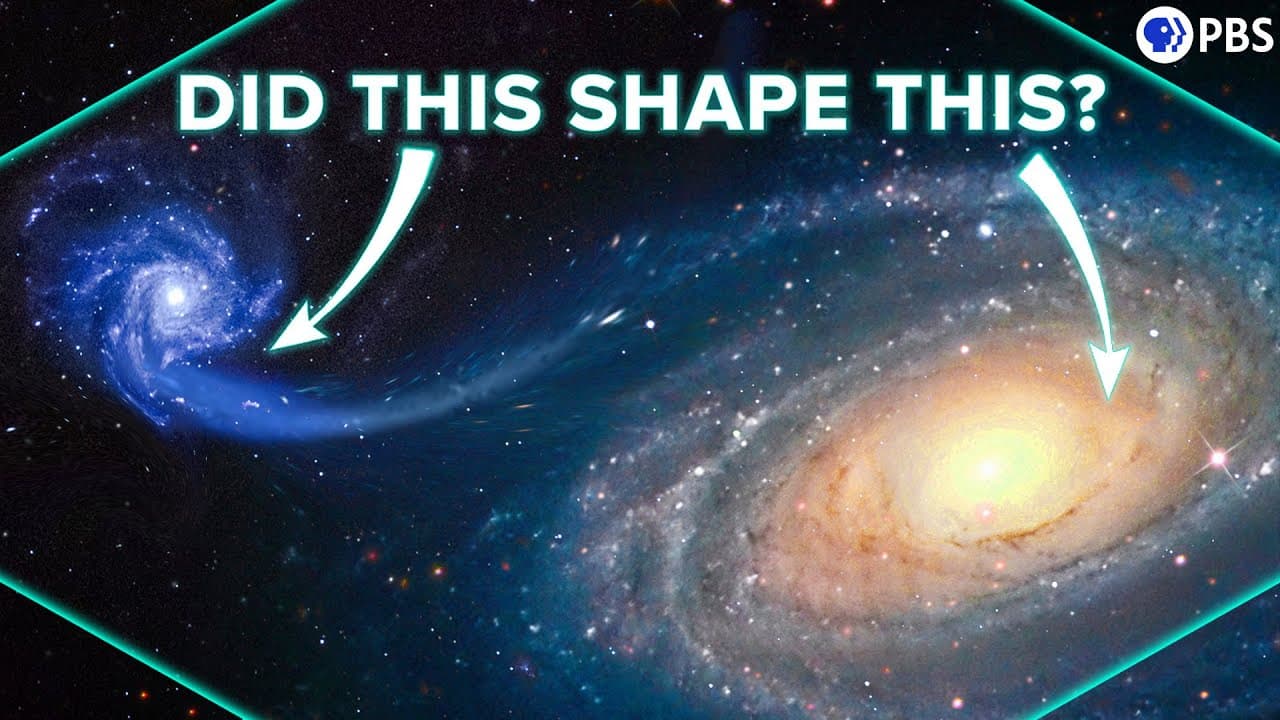
The Milky Way's history involves mergers and future collisions.
Transcript
When I was a young graduate student I got to use one of the giant telescopes at the Las Campanas observatory in the Atacama Desert in Chile. I was traveling with a much more experienced astronomer from Europe, but it was also his first time in the southern hemisphere observatory. He went outside for a weather check and came back looking annoyed... Read More
Key Insights
- The Milky Way's structure is a result of violent galactic mergers, with the last major merger occurring 10 billion years ago with Gaia-Enceladus.
- Galaxies form through a process of galactic cannibalism, where smaller galaxies merge into larger ones, contributing to their growth and evolution.
- The Milky Way is a barred spiral galaxy with a disk, bulge, and halo, with dark matter constituting 80% of its mass.
- Stellar archaeology, or galactic forensics, involves studying the properties and orbits of stars to reconstruct the Milky Way's merger history.
- The Milky Way has experienced at least seven mergers and has over 42 distinct stellar streams, indicating its dynamic history.
- Future mergers include the Milky Way's collision with the Large and Small Magellanic Clouds and a major merger with the Andromeda galaxy.
- The Milky Way's thick disk likely formed during the Gaia-Enceladus merger, while the thin disk was replenished and reformed.
- The Sagittarius Dwarf Spheroidal Galaxy's interactions with the Milky Way have influenced star formation, potentially affecting the formation of our solar system.
Install to Summarize YouTube Videos and Get Transcripts
Explore YouTube Video Summarizer or Get YouTube Transcript Extractor
Questions & Answers
Q: What is the significance of the Gaia-Enceladus merger?
The Gaia-Enceladus merger, which occurred around 10 billion years ago, is significant because it represents the last major merger that the Milky Way experienced. This event contributed to the reshaping of the galaxy, leading to the formation of the modern Milky Way. The merger involved the absorption of a galaxy with around 50 billion Suns worth of matter, and it played a crucial role in the development of the Milky Way's structure, including the formation of its thick disk.
Q: How do astronomers reconstruct the Milky Way's history?
Astronomers reconstruct the Milky Way's history through a process known as stellar archaeology or galactic forensics. This involves analyzing the properties and orbits of stars within the galaxy. Stars that joined the Milky Way during mergers tend to have similar properties, such as metallicity, and similar orbital characteristics. By studying these aspects, astronomers can piece together the sequence of mergers and interactions that have shaped the Milky Way over billions of years.
Q: What role does dark matter play in the Milky Way?
Dark matter plays a significant role in the Milky Way, constituting about 80% of its total mass. It is distributed throughout the galaxy, including the disk and halo. Although dark matter does not emit or absorb light, its gravitational effects are crucial for maintaining the galaxy's structure and dynamics. The presence of dark matter influences the orbits of stars and the overall gravitational stability of the Milky Way.
Q: What future mergers are expected for the Milky Way?
The Milky Way is expected to experience several future mergers. The most imminent interactions involve the Large and Small Magellanic Clouds, which are currently making their first pass around the Milky Way. These dwarf galaxies are being pulled apart, and their gas and stars are being integrated into the Milky Way. In the more distant future, the Milky Way is expected to undergo a major merger with the Andromeda galaxy, which is a spiral galaxy twice the mass of the Milky Way.
Q: How have past mergers affected star formation in the Milky Way?
Past mergers have significantly influenced star formation in the Milky Way. For instance, the Gaia-Enceladus merger is thought to have contributed to the formation of the galaxy's thick disk by kicking up the orbits of stars in the original thin disk. Additionally, interactions with the Sagittarius Dwarf Spheroidal Galaxy have triggered episodes of star formation, with its gravitational influence causing oscillations in the Milky Way's disk. These events have played a role in shaping the current star formation patterns within the galaxy.
Q: What is the Magellanic Stream, and how did it form?
The Magellanic Stream is a massive tail of gas that extends across the 'bottom' half of the Milky Way, stretching about 600,000 light-years. It formed as a result of interactions between the Milky Way and its two brightest satellite galaxies, the Large and Small Magellanic Clouds. As these dwarf galaxies are pulled apart by the Milky Way's gravitational forces, they leave behind a trail of gas, known as the Magellanic Stream. This stream contains a significant amount of dark matter and is part of the ongoing process of the Magellanic Clouds being absorbed into the Milky Way.
Q: What is the significance of the Sagittarius Dwarf Spheroidal Galaxy's interactions with the Milky Way?
The Sagittarius Dwarf Spheroidal Galaxy has been interacting with the Milky Way for about 5 billion years. Its gravitational influence has caused significant disturbances in the Milky Way's disk, leading to episodes of star formation. As the core of the Sagittarius Dwarf passes through the Milky Way's disk, it creates oscillations similar to beating a drum, which can trigger star formation. One of these interactions even coincides with the formation of our solar system, although it is not definitively responsible for it. Overall, the Sagittarius Dwarf's interactions have played a role in shaping the Milky Way's star formation history.
Q: What are stellar streams, and what do they reveal about the Milky Way?
Stellar streams are elongated trails of stars that are remnants of dwarf galaxies or globular clusters being torn apart by the Milky Way's gravitational forces. These streams provide valuable insights into the Milky Way's merger history and its dynamic evolution. By studying the properties and distribution of these streams, astronomers can trace the past interactions and mergers that have contributed to the growth of the Milky Way. The galaxy currently has dozens of known streams, each offering clues about its complex past.
Summary & Key Takeaways
-
The Milky Way's evolution has been shaped by a series of mergers, with the last major one involving Gaia-Enceladus around 10 billion years ago. This process of galactic cannibalism is common, with smaller galaxies being absorbed into larger ones, contributing to their growth and the formation of their structures.
-
The Milky Way is a barred spiral galaxy with a complex structure, including a disk, bulge, and halo. Dark matter makes up a significant portion of its mass. Stellar archaeology helps astronomers reconstruct the galaxy's history by analyzing the properties and orbits of stars.
-
Future interactions include the Milky Way's collision with the Magellanic Clouds and a major merger with Andromeda. These events will continue to shape the galaxy's structure and star formation. The Sagittarius Dwarf Spheroidal Galaxy's interactions have already influenced star formation in the Milky Way.
Read in Other Languages (beta)
Share This Summary 📚
Summarize YouTube Videos and Get Video Transcripts with 1-Click
Try YouTube Summary with ChatGPT & Claude or YouTube Transcript Generator
Explore More Summaries from PBS Space Time 📚





Summarize YouTube Videos and Get Video Transcripts with 1-Click
Try YouTube Summary with ChatGPT & Claude or YouTube Transcript Generator