Is Privacy Dead, and Do We Even Care? | Ear Biscuits with Rhett and Link
TL;DR
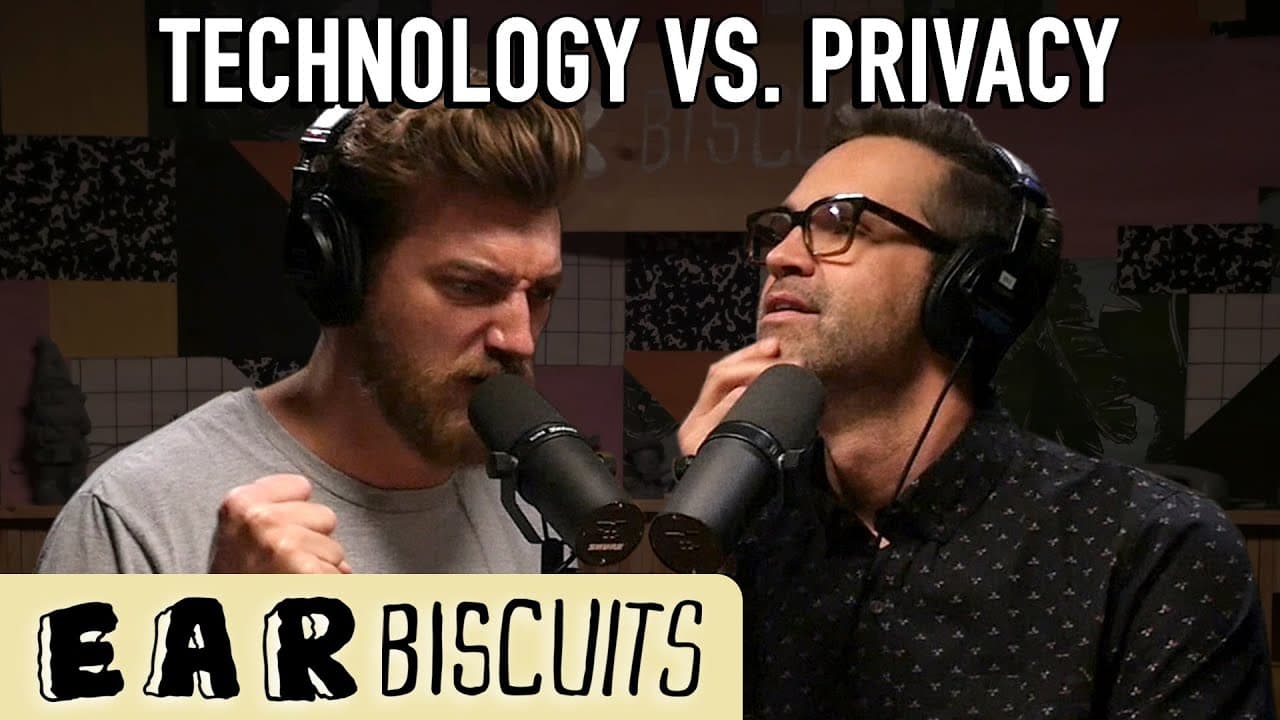
Privacy is not simply dead, but Rhett and Link argue that modern surveillance and digital convenience are steadily eroding personal space, anonymity, and trust. Starting with Rhett’s broken doorbell, they examine smart cameras, monitoring family members, corporate and government data collection, and the tension between safety and intrusion. Read on for their proposed boundaries and the historical context behind today’s privacy concerns.
Transcript
welcome to ear biscuits I'm Linc and I'm Rhett this week at the round table of dim lighting we are exploring the question is privacy dead and do we even care Wow Wow it could get philosophical it could get intimate how private are we going to get you know what kind of price are we talking about here I don't sorry I mean what how public are we gonna... Read More
Key Insights
- 🍝 Privacy has evolved significantly over the past century, becoming a major concern in a digitized society.
- 👪 The introduction of surveillance technologies can create ethical dilemmas about monitoring family members and the implications of such actions for trust.
- 💱 Historical perspectives reveal humanity's changing relationship with privacy, highlighting its absence in primitive societies compared to modern expectations.
- 😄 The tension between convenience and privacy often leads individuals to relinquish their personal data, battling the desire for security and ease.
- 👪 Awareness of how technology impacts personal boundaries is essential in navigating modern family dynamics and relationships.
- 🦺 Transparency may become increasingly essential as privacy wanes, with surveillance potentially being perceived as a means of safety rather than an invasion.
- 🤗 Acknowledging the complexities of privacy can foster responsible usage of technology, encouraging open conversations about boundaries within families.
Install to Summarize YouTube Videos and Get Transcripts
Explore YouTube Video Summarizer or Get YouTube Transcript Extractor
Questions & Answers
Q: Is privacy dead, according to Rhett and Link?
Rhett and Link do not offer a simple yes-or-no conclusion. They describe privacy as increasingly weakened by surveillance technology, digital data collection, and people’s willingness to trade personal information for convenience.
Q: What prompted Rhett and Link’s discussion about privacy?
The discussion began with Rhett’s broken doorbell, which had caused missed visitors and problems with package deliveries. His search for a modern replacement led them toward smart doorbells, cameras, and the privacy questions created by those devices.
Q: Why are Rhett and Link uncomfortable with indoor security cameras?
They are uneasy about using cameras to monitor their children or other people inside their homes. Constant observation could undermine trust and remove the intimate privacy family members expect.
Q: What ethical boundaries do they suggest for home surveillance?
They suggest disclosing when cameras are present and avoiding random monitoring for voyeuristic purposes. Their approach is to use surveillance technology deliberately while considering its effects on privacy and relationships.
Q: What concerns do they raise about digital surveillance?
They worry that companies and the government can collect information that might later be used against individuals. Rather than creating security, constant monitoring can therefore produce vulnerability and anxiety.
Q: What is the privacy paradox discussed in the episode?
The privacy paradox is the conflict between expressing concern about personal privacy and willingly sharing data for convenience. Rhett and Link use it to show how everyday choices can weaken the privacy people say they value.
Q: How has the idea of privacy changed over time?
The hosts describe privacy as a relatively modern expectation that emerged within the last 150 years. They contrast it with earlier communities that offered little personal space and connect its development to changes such as the printing press and improved living conditions.
Q: How can surveillance technology affect family relationships?
Surveillance can create tension when safety and convenience come at the cost of personal boundaries. Rhett and Link emphasize transparency and open conversations so that cameras do not quietly damage trust within a family.
Summary & Key Takeaways
-
Rhett and Link contemplate the state of privacy today, discussing how technological advancements have fostered an environment increasingly devoid of personal space and anonymity.
-
The hosts share personal anecdotes regarding security cameras, raising ethical questions about surveillance in their homes and its potential impact on family dynamics.
-
They draw connections between historical notions of privacy and today's digital world, highlighting how convenience often outweighs concerns about personal data security.
Read in Other Languages (beta)
Share This Summary 📚
Summarize YouTube Videos and Get Video Transcripts with 1-Click
Try YouTube Summary with ChatGPT & Claude or YouTube Transcript Generator
Explore More Summaries from Ear Biscuits 📚

Summarize YouTube Videos and Get Video Transcripts with 1-Click
Try YouTube Summary with ChatGPT & Claude or YouTube Transcript Generator