What Does Bill Nye Say About Science Education and Space?
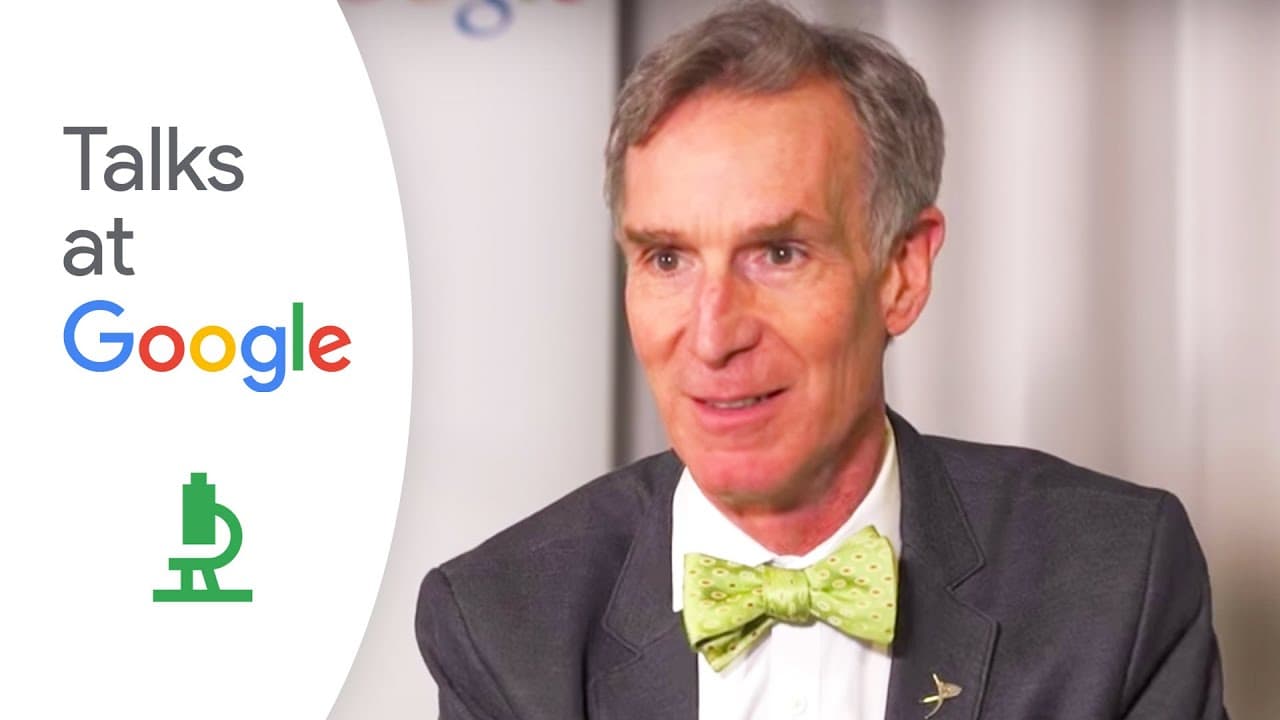
TL;DR
Bill Nye emphasizes the critical role of passionate science teachers in inspiring future generations and believes that better education can combat challenges like climate change and advance space exploration. He advocates for increased funding in planetary science, highlights the significance of improved battery technology, and discusses the importance of making complex scientific ideas accessible to the public.
Transcript
DANA HAN-KLEIN: Hi, everyone. I'm Dana, and this, more importantly, is Bill Nye. We are very excited to have him here for Talks at Google. He's published a book recently some of you might have read or will be purchasing very soon at the back of the room. It's "Undeniable: Evolution and the Science of Creation." BILL NYE: That's right. There's 20 bo... Read More
Key Insights
- 👾 Education is vital for inspiring the next generation and addressing challenges like climate change and space exploration.
- 👾 Solar sailing has the potential to reduce the costs of space exploration and enable interplanetary missions.
- 💌 It is important to vote, write letters to policymakers, and support local initiatives to promote scientific education and research.
- 🎙️ More videos with Bill Nye:
Install to Summarize YouTube Videos and Get Transcripts
Explore YouTube Video Summarizer or Get YouTube Transcript Extractor
Questions & Answers
Q: Do you think mankind will eventually move to space where kids are born and raised?
While it would be fascinating, Bill Nye believes that living in space would pose many challenges and uncertainties.
Q: How can the average person be a more effective advocate for science and science education?
Bill Nye suggests voting, writing letters to policymakers, and supporting programs like ExploraVision that nurture scientific thinking in children.
Summary & Key Takeaways
-
Bill Nye emphasizes the importance of science education and the need for more passionate science teachers to inspire the next generation.
-
He discusses his motivation for writing a book on evolution and the challenges of making complex scientific concepts accessible to the general public.
-
Bill Nye highlights the significance of space exploration and the need for better batteries and improved desalination methods.
-
He also addresses concerns about artificial intelligence and offers insights on how to influence policymakers to embrace science and scientific thinking.
Read in Other Languages (beta)
Share This Summary 📚
Summarize YouTube Videos and Get Video Transcripts with 1-Click
Try YouTube Summary with ChatGPT & Claude or YouTube Transcript Generator
Explore More Summaries from Talks at Google 📚


Summarize YouTube Videos and Get Video Transcripts with 1-Click
Try YouTube Summary with ChatGPT & Claude or YouTube Transcript Generator