Why Does Being Liked Make You Weak? The Dark Power of Respect According to Machiavelli
TL;DR
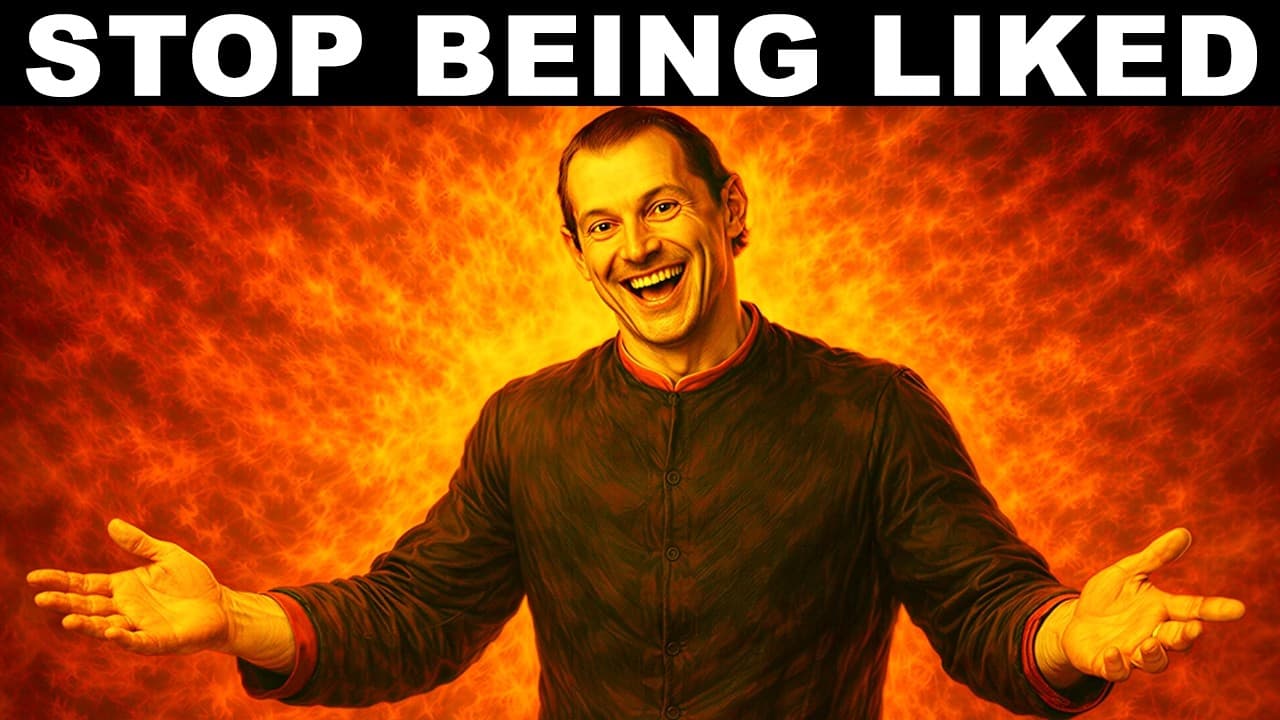
Being liked makes you weak when seeking approval causes you to tolerate insults, wasted time, and broken boundaries. The page argues that respect comes from consequences: when mistreatment costs someone access to your time, help, or presence, disrespect is no longer free. Read on to understand how approval creates predictability, how boundaries change interactions, and why choosing respect restores control.
Transcript
Ever wonder why some people always earn respect effortlessly? They're never interrupted. Their time is never wasted. So, what makes them different? And what do they have that you don't? I'm about to tell you something that's going to make you angry. The reason they get respect isn't because they're smarter, richer, or more successful than you. It's... Read More
Key Insights
- Predictability reduces personal leverage: When people know that you will smile after an insult, agree despite disagreement, and remain available after your time is dismissed, they can anticipate every response. The page describes this predictability as the step that turns an approval seeker into someone disposable.
- Approval transfers emotional control: Needing another person's validation gives that person influence over your actions, voice, choices, and self-worth. Guilt, shame, and pressure work because the target fears disapproval. Removing that need prevents those tactics from automatically determining what you do next.
- Silence teaches a lesson: Doing nothing after disrespect is not presented as neutral. It communicates that the behavior carries no cost and can safely be repeated. The person crossing the boundary learns from the absence of consequences, even if you privately feel angry or hurt.
- Consequences define real boundaries: A boundary matters only when violating it changes access to something valuable. The examples given are access to your time, help, energy, and presence. When those are withdrawn immediately after mistreatment, the other person has a concrete reason to reconsider repeating the behavior.
- Fear means anticipated cost: Machiavelli's contrast between fear and love is interpreted narrowly as the expectation of consequences. It does not mean creating terror or acting like a tyrant. It means making clear that crossing you will cost something instead of being absorbed without pushback.
- Admiration is not respect: Someone may be impressive, successful, or talented and still allow others to walk over them. Those qualities can inspire admiration, but they do not establish protection against mistreatment. Respect comes from knowing that a person will enforce limits when those limits are crossed.
- Niceness can become permission: The nicest people may receive the worst treatment when they repeatedly accept bad behavior without changing the relationship. Their continued availability makes them safe to disrespect. Once others learn that pattern, being agreeable produces neglect rather than the love and respect they expected.
- Availability affects perceived value: Making yourself available to everyone can make you special to no one. People who benefit from endless accommodation may use pleasant words while still expecting you to bend over backwards for limited attention. Constant availability therefore becomes evidence that access requires little care.
- Truthfulness can command respect: The tough teacher, strict boss, and honest friend share a willingness to act without first securing approval. The friend tells the truth even when it hurts, while the teacher and boss maintain standards. Their boundaries matter because they do not depend on being liked.
- Every concession shifts control: Control changes hands when you modify your behavior to please someone, suppress what you mean, or agree to something you do not want. These choices let another person's anticipated reaction set the terms. Refusing automatic compliance restores authority over your own decisions.
- Independence blocks manipulation: A person who can tolerate being disliked cannot be directed as easily through validation. The page does not claim that confident people feel nothing. Its point is that other people's opinions no longer control their self-worth or dictate every action.
- Respect filters relationships: Choosing respect over approval changes who retains access to you. People seeking easy compliance lose leverage, while relationships capable of mutual respect remain. The result is not universal popularity, but a clearer distinction between people who value your boundaries and those who valued your willingness to bend.
Install to Summarize YouTube Videos and Get Transcripts
Explore YouTube Video Summarizer or Get YouTube Transcript Extractor
Questions & Answers
Q: Why does being liked make you weak according to Machiavelli?
Being liked becomes a weakness when approval is your priority and other people can predict that you will tolerate mistreatment to preserve it. They learn that you will smile at insults, agree when they are wrong, and remain available when they waste your time. That predictability makes you disposable because disrespect has no cost. The page uses Machiavelli's idea to argue that consequences, not desperate agreeableness, create respect.
Q: Why does Machiavelli say it is better to be feared than loved?
The page interprets Machiavelli's statement as a lesson about consequences, not terror or tyranny. Being feared means that people know crossing you has a cost. That expectation makes them think before wasting your time or violating a boundary. Love without consequences can invite mistreatment when preserving affection matters more to you than enforcing respect.
Q: How do you make people respect your boundaries?
A boundary must produce an immediate consequence when it is crossed. The page suggests that someone who disrespects you can lose access to your time, help, or presence. This teaches that mistreatment is not free and discourages repetition. A stated limit without enforcement teaches the opposite because the relationship continues unchanged.
Q: What is the difference between respect and admiration?
Admiration comes from appearing impressive, successful, or talented. Respect comes from knowing that you will not tolerate disrespect and that your boundaries have practical consequences. A person can admire your abilities while still walking over you if nothing happens afterward. Enforced limits create respect because they make access conditional on how you are treated.
Q: Why are nice people sometimes treated badly?
The page argues that consistently accepting bad behavior can train others to believe there are no consequences. Continued smiling, helping, and showing up make the nice person safe to disrespect. Once mistreatment is free, other people have little reason to change. Niceness is therefore not the problem by itself, but niceness combined with boundaries that are never enforced invites being taken for granted.
Q: How does approval seeking make someone predictable?
Approval seekers repeatedly choose the response most likely to avoid rejection or conflict. They smile when insulted, agree when they believe someone is wrong, and say yes when they want to say no. Other people soon learn that pattern and know the approval seeker will keep accommodating them. This predictability enables manipulation because the fear of disapproval reliably controls the response.
Q: How can someone stop being controlled by approval?
The required shift is accepting that someone may dislike you when you remain true to yourself. Once approval is no longer necessary, guilt, shame, and pressure lose their automatic power. You can speak honestly, say no, and decide according to your own interests. The purpose is not to become unaffected by every opinion, but to stop allowing those opinions to control your self-worth.
Q: What happens after breaking the approval trap?
Manipulation becomes harder because other people can no longer activate your need for validation to control your actions. Decision-making becomes clearer when you ask what serves your own interests instead of predicting how everyone will react. Relationships also become a filter, since people who depended on your compliance may resist the change. Those capable of mutual respect can remain without requiring you to surrender your boundaries.
Summary & Key Takeaways
-
Recognizing tolerated disrespect: The opening contrasts people who command respect with those who are interrupted, ignored, or treated as a backup plan. Staying silent when someone cuts in line, repeatedly cancels plans, or takes credit for an idea teaches that person what they can get away with. The central claim is that respect does not come primarily from being smarter, richer, or more successful. It begins with refusing to train others to walk over you.
-
Exposing the approval trap: Making likability the priority reveals that you need another person's approval more than they need yours. That need makes your reactions predictable: you smile at insults, agree with people who are wrong, and keep showing up when your time is not respected. Predictability then makes you disposable. The harder you chase approval, the more you reduce your value in the eyes of people who know you will keep accommodating them.
-
Reframing Machiavelli's warning: The statement that it is better to be feared than loved, if both are impossible, is presented as a lesson about consequences rather than terror or tyranny. A tough teacher, strict boss, or truthful friend commands respect because approval is not required for their self-worth. They establish boundaries and enforce them. By contrast, making yourself available to everyone can leave you special to no one and vulnerable to being taken for granted.
-
Separating respect from admiration: Success, talent, and impressive achievements may produce admiration, but the argument distinguishes that response from respect. Respect develops when people know that you will not tolerate mistreatment and that your boundaries have practical meaning. If disrespect produces no response, the offender learns that repeating it is free. If it immediately costs access to your help, time, or presence, the relationship changes because crossing you now carries a consequence.
-
Reclaiming personal control: Approval seekers surrender control when they bite their tongue, change their behavior to please someone, or say yes while wanting to say no. Breaking that pattern disconnects guilt, pressure, and shame from automatic compliance. Decisions become clearer because they can be based on personal interests rather than anticipated reactions. Relationships are also filtered, leaving room for connections based on mutual respect instead of continued access gained through manipulation or scraps of attention.
Read in Other Languages (beta)
Share This Summary 📚
Summarize YouTube Videos and Get Video Transcripts with 1-Click
Try YouTube Summary with ChatGPT & Claude or YouTube Transcript Generator
Explore More Summaries from Dark Psychology Coded 📚






Summarize YouTube Videos and Get Video Transcripts with 1-Click
Try YouTube Summary with ChatGPT & Claude or YouTube Transcript Generator