Why Does Access to Facts Increase Fake News and Polarization?
TL;DR
Despite having more access to facts than ever, the proliferation of fake news and increased polarization stem from online communities with extreme biases and algorithms that promote sensational content. Initially expected to foster understanding and tolerance, the internet instead allows users to form echo chambers where divisive narratives thrive, making it challenging to identify and agree upon what is true.
Transcript
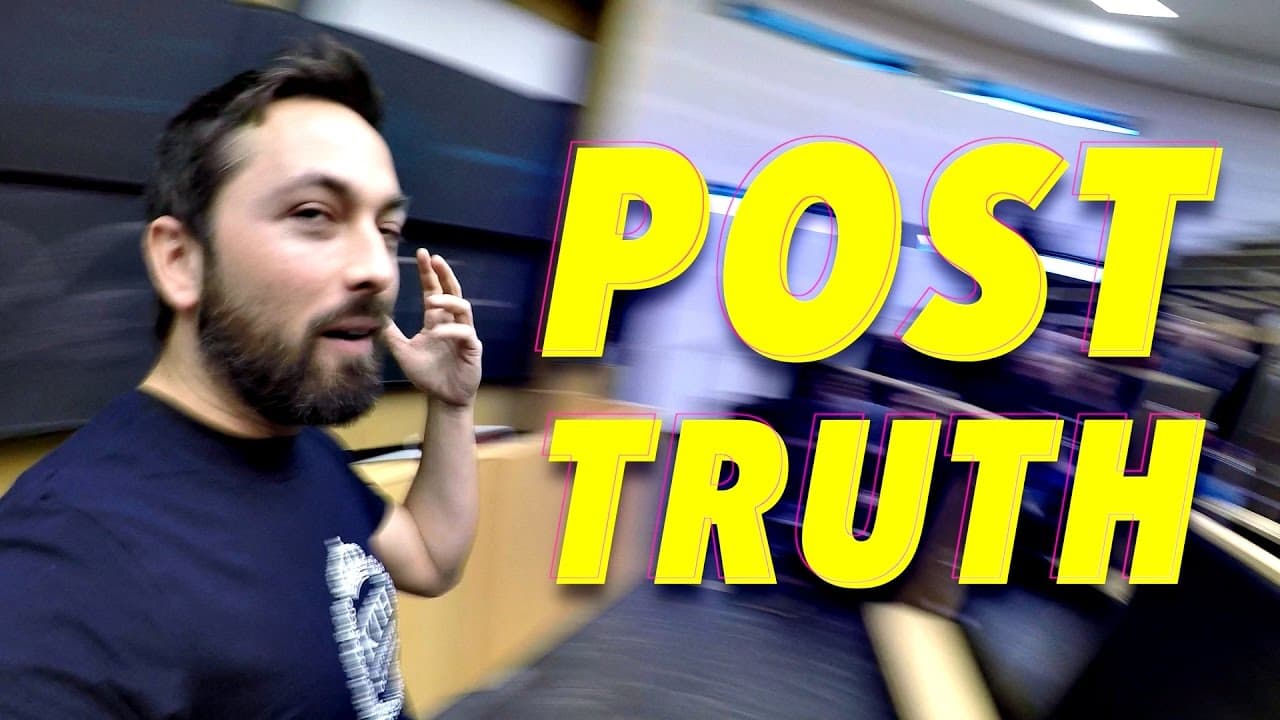
This is the challenge of a YouTuber, which is, you know, pushing the record button and actually filming something. Because you never know: "Are people going to hate it?" Or "Is it good enough?" Have you thought through what you're going to say. I've not thought through what I'm going to say... (Laughter) Ok, so I wanted to talk about the question: ... Read More
Key Insights
- 💁 The internet was initially believed to bring people together, make them more tolerant, and increase access to real information, but this optimism has been challenged.
- 💁 Online communities with extreme biases have formed, enabling the spread of fake news and polarization.
- 🖐️ Algorithms play a significant role in amplifying divisive content, raising concerns about their responsibility in curating feeds.
- 🥹 Swapping out beliefs or having mature discussions may not be enough to overcome polarization, given human tendencies to hold on to existing beliefs.
- 👨🔬 Mechanisms to promote truth and detect fake news, similar to what Google does with search results, could potentially be implemented by platforms like Facebook.
- 💪 Differentiating between controversial and uncontroversial statements when identifying truth can be challenging, but there are places on the internet like Wikipedia that have strong records of truth.
Install to Summarize YouTube Videos and Get Transcripts
Explore YouTube Video Summarizer or Get YouTube Transcript Extractor
Questions & Answers
Q: Why does the speaker believe the internet should bring people together and make them more accepting of facts and diverse opinions?
The speaker's belief stems from the idea that the internet provides a platform for individuals to communicate with people different from them, fostering debate and agreement on what is true.
Q: How does the evolution of ideas on the internet contribute to polarization?
The internet allows communities to form around particular agendas or biases, and these communities evolve arguments to make them more extreme and divisive, pushing people's buttons and spreading them further.
Q: Can algorithms be altered to promote truth over fake news?
While difficult, the speaker believes it is possible for algorithms to be designed to prioritize signals of truth, similar to how Google search results prioritize valuable and linked sites rather than spam sites.
Q: Are traditional news media partly to blame for the spread of fake news?
The speaker acknowledges that there was some fact-checking, but ultimately people seemed to care more about their own narratives and beliefs rather than facts, leading to the spread of fake news.
Summary & Key Takeaways
-
The speaker questions why, with the abundance of easily accessible facts on the internet, fake news spreads and polarization increases.
-
Initially, the internet seemed to make people more connected, tolerant, and educated, with examples like the Arab Spring and approval of gay marriage.
-
However, the speaker highlights the rise of online communities with extreme biases, fueled by algorithms, that contribute to the spread of fake news and polarization.
Read in Other Languages (beta)
Share This Summary 📚
Summarize YouTube Videos and Get Video Transcripts with 1-Click
Try YouTube Summary with ChatGPT & Claude or YouTube Transcript Generator
Explore More Summaries from Veritasium 📚



Summarize YouTube Videos and Get Video Transcripts with 1-Click
Try YouTube Summary with ChatGPT & Claude or YouTube Transcript Generator