What Is Competitive Strategy and Why Is It Important?
TL;DR
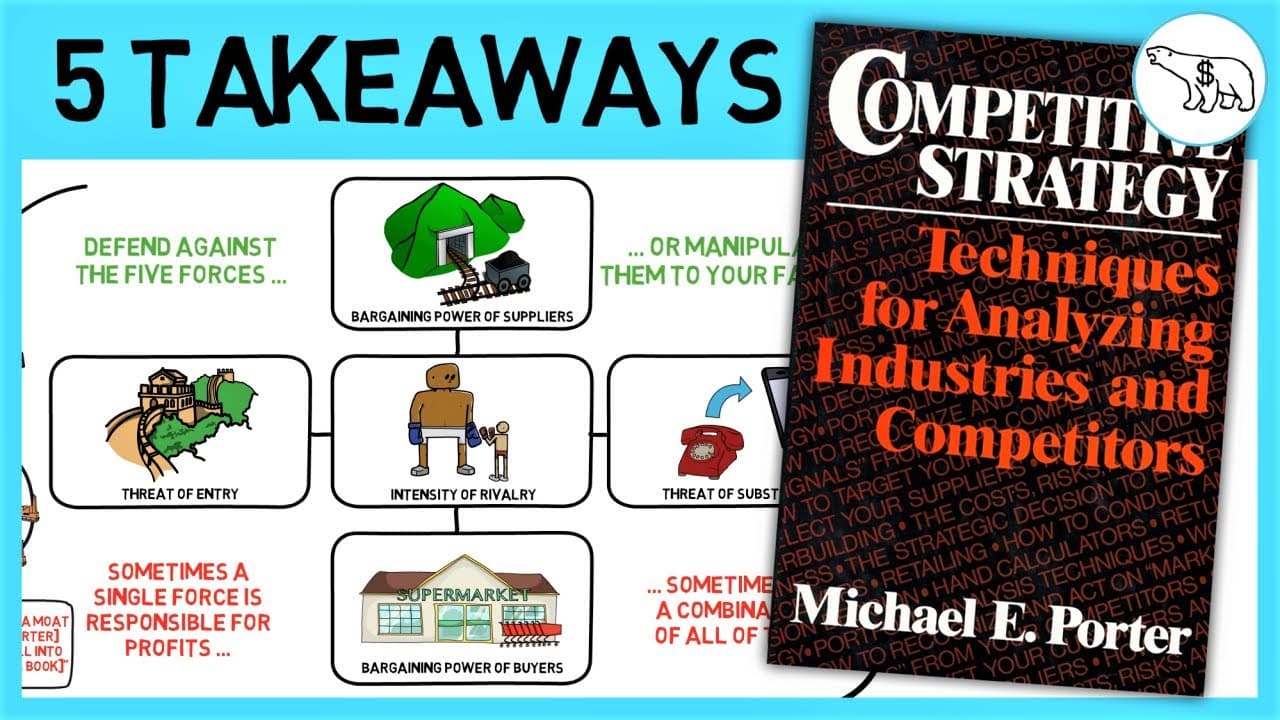
Competitive strategy is essential for long-term stock market success, focusing on firms that maintain a sustainable competitive advantage. Key elements include understanding Porter's Five Forces — the threat of entry, threat of substitution, bargaining power of suppliers/buyers, and intensity of rivalry — which collectively influence an industry's profitability.
Transcript
The most important factor to consider before making a long-term stock market investment isn’t how good the management of the company is, how the company is currently priced, and it’s certainly not what the stock looks like on a Japanese candlestick chart. The most important factor to consider before making a long-term stock market investment is whe... Read More
Key Insights
- 🍉 Sustainable competitive advantage is crucial for long-term stock market investing.
- ❓ Porter's Five Forces provide a framework for understanding industry dynamics and strategic positioning.
- ✊ Threat of entry, threat of substitution, bargaining power of suppliers/buyers, and intensity of rivalry impact industry profitability.
- 🪚 Barriers to entry, economies of scale, and product differentiation are important considerations.
- ✊ Mitigating the power struggle with suppliers and buyers can improve industry prospects.
- 😘 Low competition, high industry growth, and product differentiation contribute to lower rivalry.
- 🍵 Different industries demonstrate varying abilities to handle these competitive forces.
Install to Summarize YouTube Videos and Get Transcripts
Explore YouTube Video Summarizer or Get YouTube Transcript Extractor
Questions & Answers
Q: What is the most important factor to consider before making a long-term stock market investment?
The most important factor is whether the company has a sustainable competitive advantage, which will ensure profitability over the long run.
Q: What is Porter's Five Forces?
Porter's Five Forces is a model used to assess the state of competition within an industry, including factors such as threat of entry, threat of substitution, bargaining power of suppliers/buyers, and intensity of rivalry.
Q: How does threat of entry impact an industry?
The threat of entry refers to how easy it is for new firms to enter an industry. High barriers to entry, such as economies of scale or capital requirements, can deter competitors and protect existing companies.
Q: Why is threat of substitution important?
Substitutes are alternative products or services that fulfill a similar need. Industries with high threat of substitution may face lower prices and increased competition, making it less desirable for long-term investment.
Q: How do bargaining power of suppliers and buyers affect an industry?
The bargaining power of suppliers and buyers reflects the power dynamics between the industry and its suppliers or customers. Industries that can mitigate the power struggle and maintain favorable terms have a better chance of long-term profitability.
Summary & Key Takeaways
-
Sustainable competitive advantage is the most important factor to consider before making a long-term stock market investment.
-
Porter's Five Forces model helps determine the potential returns of an industry and the company's strategic positioning within it.
-
Factors such as threat of entry, threat of substitution, bargaining power of suppliers/buyers, and intensity of rivalry impact an industry's profitability.
Read in Other Languages (beta)
Share This Summary 📚
Summarize YouTube Videos and Get Video Transcripts with 1-Click
Try YouTube Summary with ChatGPT & Claude or YouTube Transcript Generator
Explore More Summaries from The Swedish Investor 📚






Summarize YouTube Videos and Get Video Transcripts with 1-Click
Try YouTube Summary with ChatGPT & Claude or YouTube Transcript Generator