Why Did the US Attack Iran? Three Key Reasons

TL;DR
The US attack on Iran is explained through three key reasons: geopolitical strategy to prevent a grand alliance, eschatological beliefs driving religious motivations, and the symptoms of imperial decline causing irrational actions. These factors, although different, converge to result in similar outcomes, reflecting a complex interplay of historical, religious, and political dynamics.
Transcript
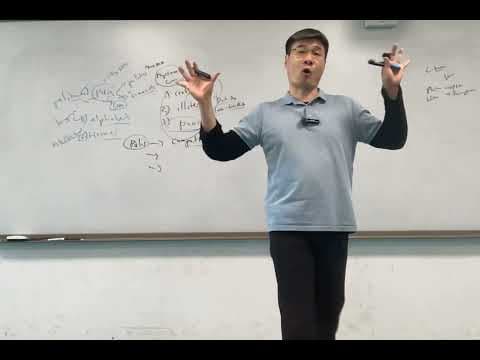
So on Thursday we will do the final examination. This is an opportunity for you to question and challenge my understanding of the world. Um and so today what I'm going to do is review all that we've learned this semester and combine together into a framework of how the world works. Okay. So the main driving question of the semester is why did the U... Read More
Key Insights
- The US fears a grand alliance of Russia, Iran, and China, which could undermine American maritime power and control over global trade routes.
- Attacking Iran forces global reliance on US treasuries by disrupting energy supplies, thereby maintaining the American empire's financial stability.
- Eschatological beliefs among some US elites suggest a Middle East war could trigger events leading to the return of Jesus, aligning with similar beliefs in other involved nations.
- Imperial decline leads to irrational actions as internal fractures manifest externally, including financialization, demographic crises, and elite overproduction.
- The Levant's historical significance as a crossroads of empires makes it a persistent site of geopolitical conflict and religious prophecy.
- Eschatology is an allegorical understanding of geopolitics, condensing complex history into stories passed through generations.
- Secret societies and the occult influence global power dynamics, using eschatology as a script for coordination and control.
- The conflict between existing financial systems and emerging AI technologies represents a shift in global power structures, with AI poised to replace money as the new 'god'.
Install to Summarize YouTube Videos and Get Transcripts
Explore YouTube Video Summarizer or Get YouTube Transcript Extractor
Questions & Answers
Q: Why did the US attack Iran?
The US attacked Iran primarily to prevent a geopolitical shift where Russia, Iran, and China could form a powerful alliance that dominates Eurasian trade routes, undermining American maritime and financial power. This action also aims to maintain global reliance on US treasuries by disrupting energy supplies and ensuring control over strategic trade choke points.
Q: What role does eschatology play in geopolitics?
Eschatology, or religious prophecy, influences geopolitical decisions by framing historical and political events as part of a divine plan. In the context of the US-Iran conflict, some US elites believe that a war in the Middle East could trigger prophetic events like the return of Jesus, aligning with similar beliefs in Iran, Russia, and Israel, thereby driving actions that fulfill these eschatological narratives.
Q: How does imperial decline affect geopolitical actions?
Imperial decline leads to irrational geopolitical actions as internal fractures, such as financialization, demographic crises, and elite overproduction, manifest externally. This results in aggressive foreign policies and conflicts, like the US attack on Iran, as declining empires project their internal turmoil outward in an attempt to maintain control and stability.
Q: What is the significance of the Levant in global history?
The Levant, including modern-day Israel, Syria, and Lebanon, has historically been a crucial crossroads of empires due to its strategic location. It has been the center of wealth, advanced civilizations, and geopolitical importance, making it a persistent site of conflict and religious prophecy. This historical significance continues to influence modern geopolitical and eschatological narratives.
Q: How do secret societies influence global power dynamics?
Secret societies influence global power dynamics by accessing occult knowledge and using eschatology as a script for coordination and control. These societies, composed of power-hungry individuals, form alliances to gain more power and wealth, selecting leaders or agents to propel history forward and achieve their eschatological visions, often shaping geopolitical events and decisions.
Q: What is the conflict between money and AI in global power structures?
The conflict between money and AI in global power structures represents a shift from transnational capital dominance to AI as a new 'god.' While money relies on creating value through human belief and imagination, AI seeks omniscience and religious status, promising technocratic control. This transition reflects a deeper struggle between capitalism's freedom and AI's potential for technocratic control over society.
Q: How does the concept of eschatology relate to human history and storytelling?
Eschatology relates to human history and storytelling by condensing complex historical events into allegorical narratives that are easily passed through generations. These stories, often rooted in religious prophecy, provide frameworks for understanding geopolitical dynamics and influence human actions by aligning historical events with divine plans, thereby shaping cultural and political landscapes over time.
Q: What are the principles of hermetic philosophy and their influence on eschatology?
Hermetic philosophy, originating from Egypt, consists of principles like everything being mind and vibration, the interconnectedness of dimensions, cause and effect, and polarity. These principles influence eschatology by providing a mystical framework for understanding the universe, shaping religious narratives, and driving actions. They underpin secret societies' beliefs and strategies, impacting geopolitical events and decisions.
Summary & Key Takeaways
-
The US attacked Iran to prevent a grand alliance with Russia and China, which could challenge American dominance by controlling Eurasian trade routes. This geopolitical strategy is crucial for maintaining US financial and military power.
-
Religious eschatology influences geopolitical actions, with some US elites believing a Middle East war could lead to prophetic events like the return of Jesus. This belief aligns with similar eschatological views in Iran, Russia, and Israel.
-
Imperial decline drives irrational actions, as seen in the US's attack on Iran. Factors like financialization, demographic issues, and elite competition exacerbate internal fractures, projecting turmoil outward and leading to geopolitical instability.
Read in Other Languages (beta)
Share This Summary 📚
Summarize YouTube Videos and Get Video Transcripts with 1-Click
Try YouTube Summary with ChatGPT & Claude or YouTube Transcript Generator
Explore More Summaries from Predictive History 📚




Summarize YouTube Videos and Get Video Transcripts with 1-Click
Try YouTube Summary with ChatGPT & Claude or YouTube Transcript Generator