How to start learning Kubernetes for DevOps
TL;DR
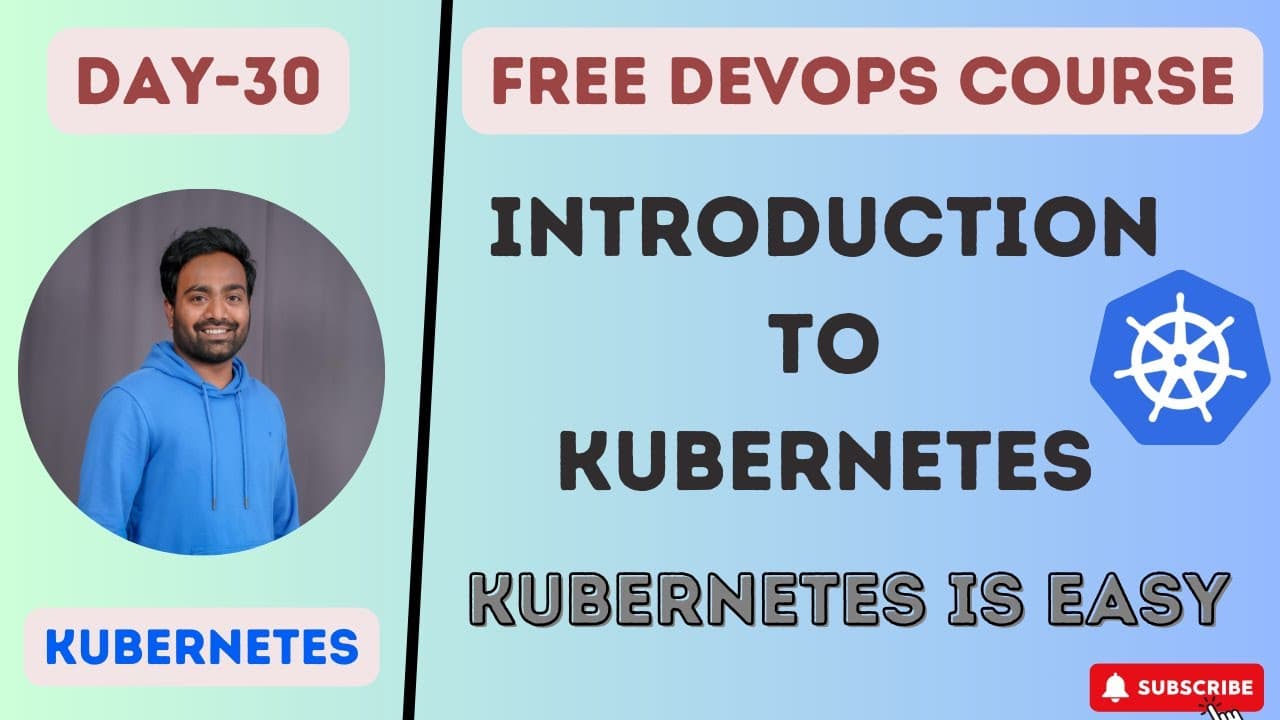
Kubernetes is a container orchestration platform that sits above Docker, enabling multi-host management, auto healing, and auto scaling for containers. The video explains the Docker versus Kubernetes distinction, why Kubernetes matters for DevOps, and outlines the common problems Kubernetes addresses in production, such as single-host limitations and the need for reliability in large container fleets.
Transcript
hello everyone my name is Abhishek and welcome back to my channel so today we are at day 30 of our complete devops course and in this class we will start our journey with kubernetes so firstly kubernetes is easy Yes you heard it right so many people worry about kubernetes and whenever we talk about devops you know people focus most of their time on... Read More
Key Insights
- Kubernetes is a container orchestration platform.
- Docker is a container platform, Kubernetes manages containers across many hosts.
- Containers are ephemeral and can fail, which Kubernetes addresses with auto healing.
- Single host setups limit container operations and reliability, motivating Kubernetes usage.
- Auto healing removes the need for manual intervention to restart failed containers.
- Auto scaling adapts resource use as demand changes, improving efficiency.
- Kubernetes supports running microservices environments more reliably than single hosts.
- Understanding containers basics is a prerequisite before diving into Kubernetes.
- More videos from this channel:
- More from this channel: Abhishek.Veeramalla
Install to Summarize YouTube Videos and Get Transcripts
Explore YouTube Video Summarizer or Get YouTube Transcript Extractor
Questions & Answers
Q: What is Kubernetes in simple terms?
Kubernetes is a container orchestration platform that coordinates and manages containers across multiple hosts. It provides features such as auto healing and auto scaling to keep applications running reliably, especially in environments with many containers. The idea is to move from a single host, manual management model to a scalable, self-healing system.
Q: How does Kubernetes differ from Docker?
Docker is described as a container platform that creates and runs containers, while Kubernetes is a container orchestration platform that schedules, manages, and maintains containers across many hosts. This distinction is emphasized to explain why Kubernetes is needed for scalable, production-grade deployments beyond the capabilities of Docker alone.
Q: Why is Kubernetes considered important for DevOps careers?
Kubernetes is highlighted as a future and essential skill in the DevOps landscape because it enables managing microservices and large container fleets across clusters. The video suggests that Kubernetes appears in many job descriptions, making it a critical area of expertise for long-term career growth in DevOps.
Q: What problems does Kubernetes solve that Docker alone cannot?
Kubernetes addresses limitations of single-host containers by introducing orchestration across multiple machines, enabling auto healing when containers fail and auto scaling to adjust resources with demand. These capabilities reduce manual intervention and improve application availability in production environments.
Q: What does auto healing mean in the context of containers?
Auto healing refers to the ability of the system to automatically restart or replace failed containers without human intervention. In production, this is crucial because manual monitoring of thousands of containers is impractical, and auto healing ensures applications remain available even when individual containers crash.
Q: What role does auto scaling play in Kubernetes?
Auto scaling in Kubernetes adjusts the number of running containers or resources based on demand, helping to maintain performance and efficiency. This capability is presented as a solution to the limitations of a single host setup, where fixed resources can become a bottleneck as load grows.
Q: Why should learners review Docker concepts before Kubernetes?
The video emphasizes that understanding containers and Docker basics is a prerequisite for Kubernetes. Since Kubernetes builds on containers, having a solid grasp of what containers are, how they work, and why they are lightweight is essential to effectively use Kubernetes and avoid confusion when learning orchestration concepts.
Q: What is the practical takeaway from this Day 30 Kubernetes introduction?
The practical takeaway is to recognize Kubernetes as a critical next step after Docker for managing containerized workloads at scale. The video encourages learners to build a strong container foundation first and then explore Kubernetes concepts like pods, replica sets, deployments, and services to enable resilient microservices architectures.
Summary & Key Takeaways
-
Kubernetes is introduced as a container orchestration platform that extends Docker for multi-host environments, enabling reliable management of many containers.
-
The video contrasts Docker with Kubernetes, clarifying that Docker handles containerization while Kubernetes coordinates and automates deployment, scaling, and healing.
-
The presentation highlights practical reasons to learn Kubernetes, including its role in modern microservices and its importance in DevOps career paths.
Read in Other Languages (beta)
Share This Summary 📚
Summarize YouTube Videos and Get Video Transcripts with 1-Click
Try YouTube Summary with ChatGPT & Claude or YouTube Transcript Generator
Explore More Summaries from Abhishek.Veeramalla 📚


Summarize YouTube Videos and Get Video Transcripts with 1-Click
Try YouTube Summary with ChatGPT & Claude or YouTube Transcript Generator