How Does Compassion Challenge Corporate Metrics?
TL;DR
Human value cannot be measured by spreadsheets alone, because practical knowledge, courage, and compassion may remain invisible in performance data. After mechanic and single father Liam Carter rescues an injured stranger during a Montana blizzard, he unknowingly confronts CEO Audrey Sterling with a humane alternative to the efficiency system that has marked him for termination.
Transcript
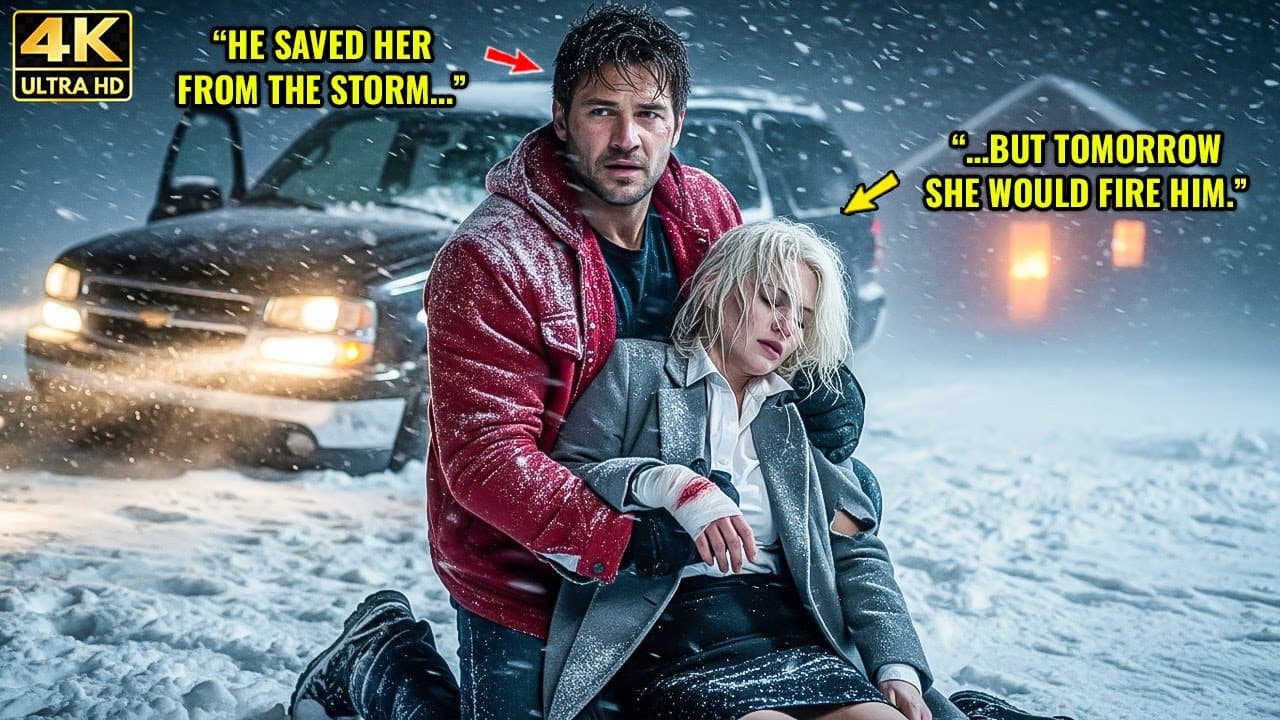
In the heart of a Montana blizzard, tearing across Highway 2, cars buried beneath ice. Everyone fled toward distant gas stations. Liam Carter, a single father in a battered pickup, slammed the brakes before a spinning SUV. Glass shattered. Cold air flooded the cabin. He smashed the door, pulled an unconscious woman out, wrapped her in his coat, and... Read More
Key Insights
- Liam Carter is guided by a personal code that requires doing the right thing even when nobody is watching. His decision to stop during a dangerous blizzard demonstrates that compassion, courage, and responsibility are active commitments rather than abstract values.
- Audrey Sterling is a results-driven CEO who trusts performance metrics because she believes numbers avoid favoritism. Her dependence on spreadsheets leaves her vulnerable to manipulated data and prevents her from seeing experience, judgment, and human worth that formal measurements fail to capture.
- The planned workforce reduction targets 11% of the night shift to satisfy demands for improved profit margins. The proposal treats employees as removable costs, even though experienced plant manager Otis Palmer understands that reducing maintenance personnel could weaken essential safety and operational knowledge.
- Corporate data is presented as vulnerable to human agendas rather than inherently objective. COO Clinton Morris manipulates performance information to identify convenient sacrificial workers, showing that numerical systems can reproduce the motives and biases of the people who design and control them.
- Liam's rescue works because of practical experience, preparation, and decisive improvisation. He pries open Audrey's damaged door, cuts her locked seat belt, checks her pulse, carries her to shelter, starts a fire, and constructs a wrist splint from available materials.
- The cabin temporarily removes the social hierarchy separating a mechanic from a CEO. Without titles, offices, or working technology, Audrey must depend on Liam's competence and generosity, which forces her to encounter a kind of usefulness that cannot be represented adequately by executive reports.
- Bridget Carter is Liam's central motivation and represents hope beyond immediate hardship. Her wind turbine models, made from scrap metal and cardboard, reveal creativity and ambition, while her phrase, "Warm beats storm," captures the story's contrast between compassion and institutional coldness.
- The conflict between efficiency and humanity is expressed through two opposing principles. Audrey says efficiency determines who stays, while Liam says everyone deserves to get home. His response reframes leadership around safety and human dignity rather than financial performance alone.
Install to Summarize YouTube Videos and Get Transcripts
Explore YouTube Video Summarizer or Get YouTube Transcript Extractor
Questions & Answers
Q: Why was Liam Carter marked for termination?
Liam Carter appeared on line 17 of a document titled "Phase 1 Reductions," which was connected to a plan to eliminate 11% of the Montana plant's night shift. The transcript indicates that COO Clinton Morris manipulated data to make selected workers appear expendable. Liam therefore faced termination through a system shaped by cost-cutting pressure and distorted performance information, not through a complete assessment of his practical value.
Q: How did Liam Carter rescue Audrey Sterling?
Liam stopped after seeing weak hazard lights through the blizzard and found Audrey unconscious inside a damaged SUV. Using a pry bar, he forced open the crumpled driver's door, cut through her locked seat belt, checked her pulse, and wrapped her in his coat. He then carried her about 200 yards to an abandoned hunting cabin, started a fire, and treated her injured wrist with an improvised splint.
Q: What does Audrey Sterling believe about employee value?
Audrey initially believes that performance metrics provide the fairest basis for corporate decisions because numbers do not lie or play favorites. In her view, employees should be able to prove their value through measurable results. The story challenges that belief by showing qualities that spreadsheets miss, including Liam's technical judgment, emergency skills, ethical character, accumulated maintenance knowledge, and willingness to protect another person without seeking recognition.
Q: Why is cutting night maintenance presented as dangerous?
Plant floor manager Otis Palmer believes that reducing night maintenance would remove essential support rather than unnecessary expense. The plant uses aging equipment that requires experienced workers, constant observation, and knowledge developed through years of direct work. Safety systems also need vigilant attention. According to his assessment, cutting these employees would not simply reduce costs, it would damage critical operational capacity and increase risks that spreadsheets cannot fully represent.
Q: How does the Montana blizzard change Audrey Sterling?
The blizzard strips Audrey of the tools and status that normally give her control. Her SUV's safety features cannot prevent the crash, her phone has no signal, and her GPS fails. Inside the cabin, she depends entirely on a stranger's competence and care. That experience begins to weaken her emotional armor and exposes her to a form of safety, usefulness, and human connection that wealth and executive authority cannot purchase.
Q: What does the phrase "Warm beats storm" mean in the story?
"Warm beats storm" is Bridget Carter's handwritten message beneath her drawings of fireplaces. It expresses the story's central moral contrast: warmth represents compassion, shelter, family, and human care, while the storm represents physical danger, grief, isolation, and cold corporate systems. Liam proves the phrase through action when his coat, fire, practical care, and moral commitment protect Audrey from the blizzard and challenge her detached leadership philosophy.
Q: Why does Liam not recognize Audrey as his CEO?
Liam has heard a radio report about a female CEO conducting surprise inspections, but he turns down the broadcast and concentrates on reaching his daughter before the worsening storm. After the crash, Audrey identifies herself only by her first name and omits her surname. With no functioning phone, formal introduction, or visible corporate setting, Liam treats her simply as an injured stranger who needs immediate help.
Q: What is the central lesson about leadership and compassion?
The story argues that leadership requires recognizing forms of value that financial reports and performance metrics cannot capture. Audrey has learned to associate strength with emotional coldness and difficult cuts, but Liam demonstrates another model through competence, responsibility, and compassion. His conduct suggests that protecting people, respecting practical knowledge, and ensuring everyone can get home may be stronger leadership principles than pursuing efficiency without understanding its human consequences.
Summary & Key Takeaways
-
Liam Carter is a 36-year-old night shift mechanic and single father who works additional delivery shifts to support his gifted seven-year-old daughter, Bridget. Although he once worked as an aviation maintenance engineer, family tragedy changed his path. He now follows a simple rule: do the right thing without expecting recognition.
-
Audrey Sterling, the 34-year-old CEO of Sterling Dynamics, secretly visits the Montana plant while executives prepare to eliminate 11% of the night shift. COO Clinton Morris has manipulated performance data, while CFO Henry Blake treats workers and safety measures as costs. Liam's name appears on the preliminary termination list.
-
During a severe blizzard on Highway 2, Audrey's rented SUV crashes after losing control on black ice. Liam stops, frees her from the damaged vehicle, and carries her to an abandoned hunting cabin. Without knowing her identity, he starts a fire, splints her injured wrist, and shares his belief that everyone deserves to return home.
Read in Other Languages (beta)
Share This Summary 📚
Summarize YouTube Videos and Get Video Transcripts with 1-Click
Try YouTube Summary with ChatGPT & Claude or YouTube Transcript Generator
Explore More Summaries from NTT Stories 📚





Summarize YouTube Videos and Get Video Transcripts with 1-Click
Try YouTube Summary with ChatGPT & Claude or YouTube Transcript Generator