Can Iodine Sublime and Melt? Debunking the Myths
TL;DR
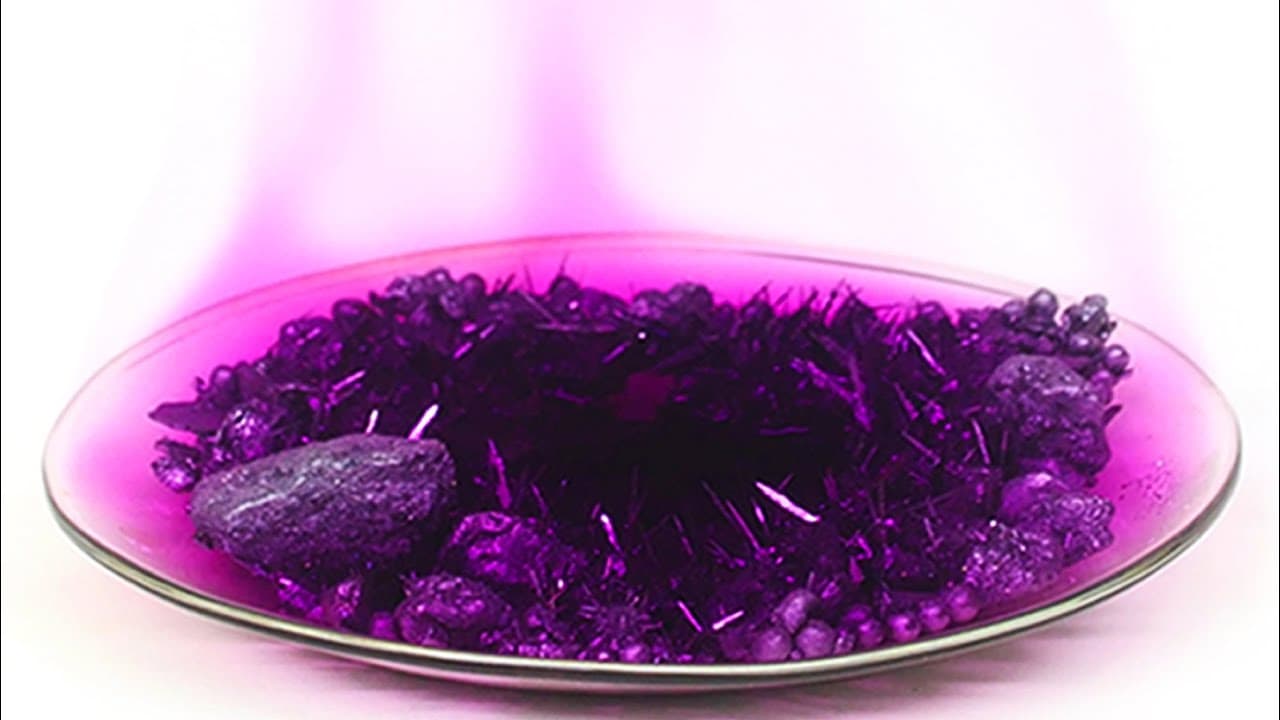
Iodine can both sublime and melt; it does not defy this ability because it undergoes sublimation. This common myth, often taught in schools and even found in textbooks, is false. Increasing temperature can lead iodine to melt, contrary to the belief that sublimation prevents melting.
Transcript
This video has been sponsored by Squarespace Elemental iodine's often used to demonstrate sublimation, which is when something goes directly from the solid to the gas phase without a liquid intermediate There are a few other common examples out there like dry ice or mothballs, but iodine tends to work better for demonstrations because it's so stron... Read More
Key Insights
- ☠️ Iodine is commonly used to demonstrate sublimation due to its distinctive color and slow sublimation rate at room temperature.
- 🫠 The misconception that iodine cannot melt is still prevalent in education despite being incorrect.
- 💦 The phase diagram of a substance, like water or iodine, helps determine the phase it should be in at a specific temperature and pressure.
- ☠️ Sublimation occurs in all solids, but the rate depends on the strength of the forces keeping the solid together.
- 👶 The confusion in the definition of sublimation can be resolved by using a new term to exclusively describe the evaporation of solids.
- 🏛️ Using a website creation tool like Squarespace can simplify the process of building and managing a website.
Install to Summarize YouTube Videos and Get Transcripts
Explore YouTube Video Summarizer or Get YouTube Transcript Extractor
Questions & Answers
Q: Can iodine both sublime and melt?
Yes, iodine can both sublime and melt. It can transition directly from a solid to a gas phase through sublimation and can also melt into a liquid phase.
Q: Why is the myth that iodine can't melt so common?
The misconception stems from the confusion in the definition of sublimation and the lack of a specific term for the evaporation of solids. This misunderstanding is perpetuated in some textbooks and educational resources.
Q: How does temperature affect the sublimation of iodine?
Increasing the temperature of iodine increases the sublimation rate, allowing more molecules to transition from solid to gas. However, if the temperature exceeds the melting point, iodine will melt into a liquid.
Q: How does atmospheric pressure affect the phase change of a substance?
The melting and boiling points of a substance depend on both the substance itself and the atmospheric pressure. If the pressure is below the triple point, the substance may boil before melting.
Summary & Key Takeaways
-
Iodine is commonly used to demonstrate sublimation, where a substance transitions directly from a solid to a gas phase.
-
Contrary to popular belief, iodine can both sublime and melt, disproving the myth that sublimation means a substance can't melt.
-
The misconception that iodine cannot melt is often taught in schools and can even be found in textbooks.
Read in Other Languages (beta)
Share This Summary 📚
Summarize YouTube Videos and Get Video Transcripts with 1-Click
Try YouTube Summary with ChatGPT & Claude or YouTube Transcript Generator
Explore More Summaries from NileRed 📚

Summarize YouTube Videos and Get Video Transcripts with 1-Click
Try YouTube Summary with ChatGPT & Claude or YouTube Transcript Generator