How Did NASA Control the Saturn V Rocket's Flight?
TL;DR
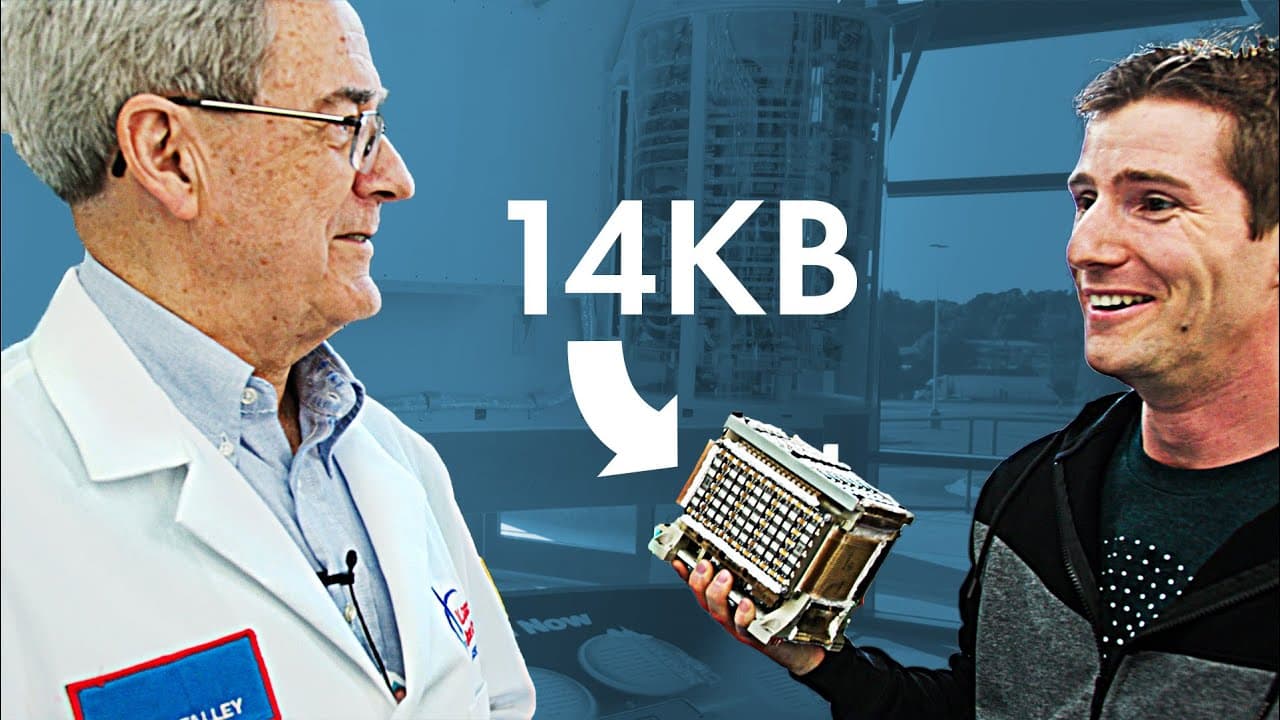
NASA controlled the Saturn V rocket's flight using a digital computer known as the Instrumentation Ring, which relied on a memory module with physical bits made of iron rings that represented ones and zeros. This module allowed for complex navigation and guidance, with meticulous hand-woven components crafted during the 1960s, demonstrating the ingenuity and craftsmanship of early digital technology.
Transcript
- The Saturn V rocket took humans to the moon for the first time, but the humans didn't steer the rocket. It steered itself using a computer. - [Man] Tower, clear. - [Man] Gotta roll program. - A lot of the Saturn V rocket was built here in Huntsville, Alabama, otherwise known as Rocket City. And one of the really cool things about living here is i... Read More
Key Insights
- 💯 The memory module of the Saturn V rocket relied on physical bits, with wires passing through iron cores, showcasing the early stages of digital computing.
- 🤗 The memory module was carefully woven by hand, requiring precision and patience to ensure uniform behavior.
- 👣 The analysis of telemetry data from the Saturn V involved labor-intensive tasks, including decoding printed numbers and correlating them with calibration charts.
- 😥 The memory module's design highlights the trade-off between redundancy and reliability, as more components can introduce more potential points of failure.
- 🪶 The complexity and handcrafted nature of the memory module demonstrate the impressive engineering feat achieved during the 1960s.
- 👻 The preservation and study of the Saturn V's memory module allow for a deeper understanding of the technological advancements of the time.
- 🧑🦽 Telemetry data analysis during the Saturn V missions showcased the role of human calculations and manual processes in absence of advanced computing tools.
Install to Summarize YouTube Videos and Get Transcripts
Explore YouTube Video Summarizer or Get YouTube Transcript Extractor
Questions & Answers
Q: How was the Saturn V rocket able to steer itself to the moon?
The rocket utilized a digital computer system, with a memory module, to autonomously control its trajectory and make important decisions during the flight.
Q: How were the physical bits of the memory module programmed?
The physical bits were programmed by manually magnetizing the iron cores using wires, with specific magnetization directions representing ones and zeros.
Q: What were the challenges faced during the analysis of Saturn V telemetry data?
The analysis of telemetry data was a repetitive and time-consuming process, involving decoding printed octal numbers, converting them to decimal, and correlating them with calibration charts to determine parameters such as temperature.
Q: How reliable was the Saturn V's memory module?
While the handcrafted nature of the memory module introduced potential vulnerabilities, the rocket's redundancy systems ensured high reliability, with only a few failures during the entire flights.
Summary & Key Takeaways
-
The Saturn V rocket, which took humans to the moon, used a computer system to steer it, the memory module of which is explored in this video.
-
The memory module consisted of physical bits, with wires passing through iron cores to represent ones and zeros and enable programming.
-
The video showcases the meticulous handcrafting and detailed analysis that went into the development and monitoring of the memory module.
Read in Other Languages (beta)
Share This Summary 📚
Summarize YouTube Videos and Get Video Transcripts with 1-Click
Try YouTube Summary with ChatGPT & Claude or YouTube Transcript Generator
Explore More Summaries from SmarterEveryDay 📚




Summarize YouTube Videos and Get Video Transcripts with 1-Click
Try YouTube Summary with ChatGPT & Claude or YouTube Transcript Generator