Why Is China Buying So Much Gold Now?
TL;DR
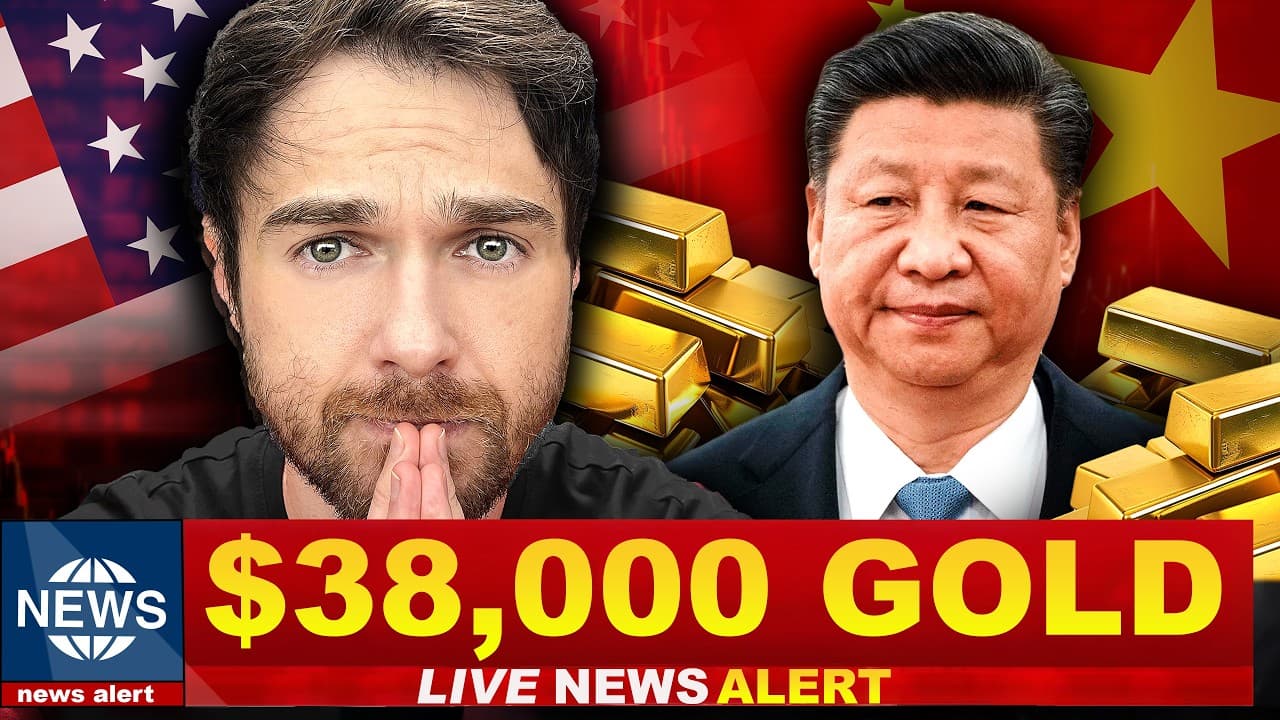
China is significantly increasing its gold reserves, with both the People's Bank of China and retail investors buying gold despite falling prices. This trend is part of a larger global shift towards gold, potentially as a neutral reserve asset. The video explores how this could affect the global economy and gold prices, suggesting a possible future where gold plays a central role in international trade.
Transcript
Last week, something happened in China that has never happened before. The biggest exchange traded fund in the whole country that ordinary Chinese people put their money into is now a gold ETF. So, let me explain. Here in the US, we have something called the S&P 500. That's where most people invest their money, represented by ETFs like VO. Well, Ch... Read More
Key Insights
- China's largest ETF is now a gold ETF, surpassing its equivalent of the S&P 500.
- The People's Bank of China has been purchasing gold for 20 consecutive months, marking its longest streak since at least 2015.
- Global central banks, including those of Poland and Kazakhstan, are also increasing their gold reserves.
- The U.S. is considering a return to Hamiltonian economics, which historically made the country an industrial superpower.
- Gold is being seen as a potential neutral reserve asset, with a theoretical price of $38,000 per ounce balancing global trade surpluses.
- China's gold strategy aligns with a 2009 proposal for a neutral international reserve currency, echoing Keynes' ideas from the 1940s.
- The U.S. is exporting record amounts of gold to China, indicating a possible shift in economic strategy.
- Gold's role in global trade could increase significantly, impacting both the economy and investment portfolios.
Install to Summarize YouTube Videos and Get Transcripts
Explore YouTube Video Summarizer or Get YouTube Transcript Extractor
Questions & Answers
Q: Why is China buying so much gold?
China is increasing its gold reserves as part of a strategic move to potentially use gold as a neutral reserve asset. This aligns with a broader global trend of central banks accumulating gold, possibly in anticipation of a shift in the international monetary system. China's actions suggest a long-term strategy to stabilize its economy and reduce reliance on the U.S. dollar.
Q: What is Hamiltonian economics?
Hamiltonian economics refers to the economic policies proposed by Alexander Hamilton, the first U.S. Treasury Secretary. These policies focused on tariffs and subsidies to protect and grow domestic industries, fostering industrialization and economic independence. The U.S. is considering a return to these principles to rebuild its industrial base and strengthen its economy amidst global economic challenges.
Q: How could gold reach $38,000 per ounce?
The theoretical price of $38,000 per ounce for gold is based on calculations to balance global trade surpluses. If gold were to become a neutral reserve asset, its value would need to increase significantly to settle international trade effectively. This revaluation would reflect gold's role in stabilizing the global economy and addressing trade imbalances, especially with major economies like China.
Q: What are the implications of the U.S. exporting gold to China?
The U.S. exporting record amounts of gold to China suggests a strategic shift in economic policy. This could indicate a move towards a more gold-centric monetary system, potentially reducing reliance on the dollar. It reflects the broader trend of central banks accumulating gold, possibly anticipating changes in the global financial landscape and the role of gold as a stabilizing asset.
Q: Why is gold considered a neutral reserve asset?
Gold is considered a neutral reserve asset because it is not tied to any single country's economy or currency. Historically, gold has been used as a stable store of value and medium of exchange. Its finite supply and intrinsic value make it an attractive option for countries looking to stabilize their economies and balance international trade, especially in times of economic uncertainty.
Q: What is the historical context of the current gold accumulation trend?
The current trend of gold accumulation by central banks echoes historical proposals for a balanced international monetary system, like Keynes' 1940s idea of a neutral reserve currency. China's 2009 call for reforming the international monetary system aligns with this, advocating for a stable reserve asset disconnected from any single nation's currency, potentially addressing trade imbalances and economic stability.
Q: How does Hamiltonian economics relate to current U.S. policy?
Current U.S. policy discussions about returning to Hamiltonian economics involve using tariffs and subsidies to rebuild domestic industries. This approach aims to strengthen the U.S. economy by fostering industrial growth and reducing dependency on foreign goods. However, balancing this with a strong dollar and low consumer prices presents challenges, requiring strategic sacrifices in economic policy.
Q: What are the potential outcomes of the gold strategy discussed?
The potential outcomes of the discussed gold strategy include a significant revaluation of gold as it becomes a central reserve asset in global trade. This could lead to a more balanced international monetary system, reducing reliance on the dollar. However, the transition may take years, with varying impacts on economies and investment portfolios, depending on how quickly and effectively the strategy is implemented.
Summary & Key Takeaways
-
China's largest ETF is now a gold ETF, indicating a major shift in investment trends. Despite gold prices dropping, China, along with other central banks, continues to buy gold. This could be part of a strategy to establish gold as a neutral reserve asset, potentially leading to a significant revaluation.
-
The U.S. is exploring a return to Hamiltonian economics, which historically spurred industrial growth. This involves balancing industrial growth, protecting Main Street, and maintaining a strong dollar, though experts argue that achieving all three simultaneously is impossible without sacrificing one.
-
Gold's potential revaluation to $38,000 per ounce is based on balancing global trade surpluses. This theory suggests a shift towards gold as a neutral reserve asset, aligning with historical proposals for a balanced international monetary system. The transition could take years, with significant implications for global economies and investment strategies.
Read in Other Languages (beta)
Share This Summary 📚
Summarize YouTube Videos and Get Video Transcripts with 1-Click
Try YouTube Summary with ChatGPT & Claude or YouTube Transcript Generator
Explore More Summaries from Andrei Jikh 📚



Summarize YouTube Videos and Get Video Transcripts with 1-Click
Try YouTube Summary with ChatGPT & Claude or YouTube Transcript Generator