How to Beat a Southpaw Boxer with Footwork and Feints
TL;DR
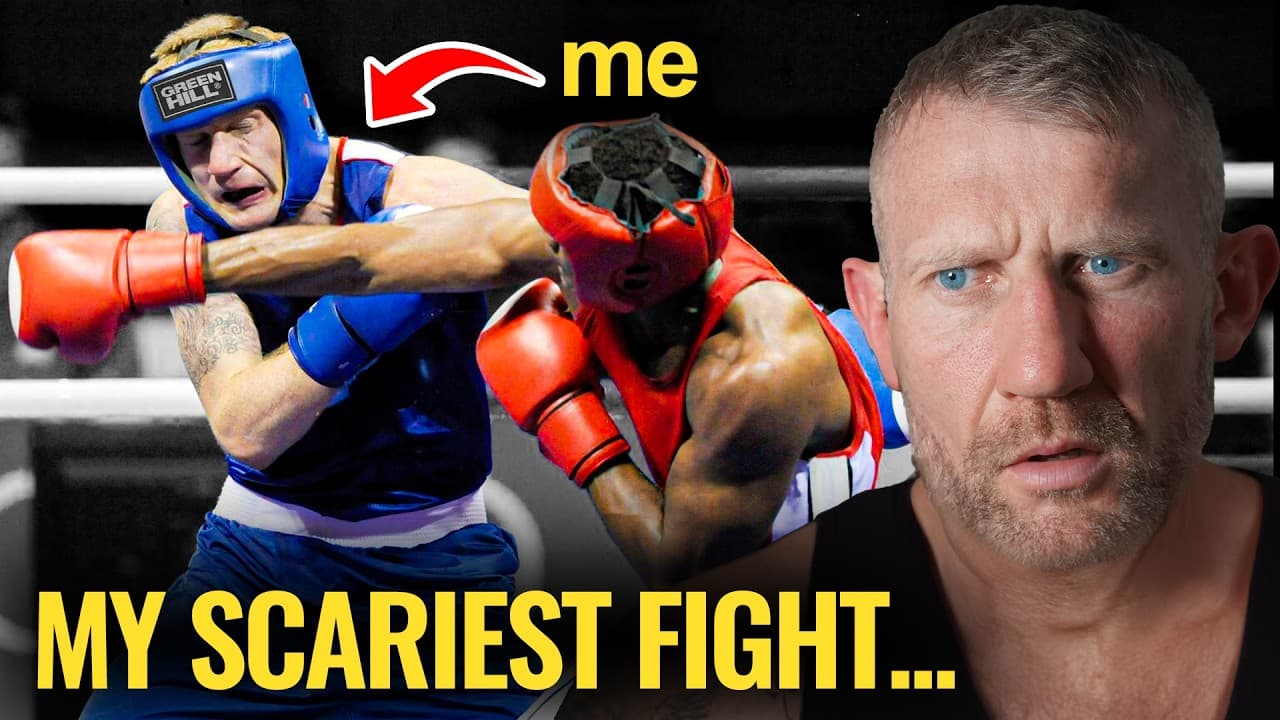
Beating a hard-hitting southpaw comes down to patient footwork, feints, and counter-punching rather than trading blows. Tony Jeffries, who lost to this Nigerian opponent 12 months earlier, controlled the rematch by keeping his lead hand out, feinting constantly, moving back from the left hand while out of range, and pivoting his front foot to land a clean knockdown right hand.
Transcript
I want to tell you a story. I was about to fight in the senior national ABA semi-finals and I was absolutely terrified because the person I was about to step in the ring with beat me 12 months earlier. He was the African champion from Nigeria who came to the UK. This guy has won multiple national African champions. I don't think he'd been beat. He ... Read More
Key Insights
- Footwork is the primary weapon against a southpaw, not power. Tony controlled the entire fight by constantly moving his feet, staying prepared to punch from a wide stance, and refusing to plant and trade with a harder puncher.
- Feinting without throwing punches builds a psychological advantage. By faking jabs and making the opponent hesitate to throw his big left hand, Tony killed the southpaw's confidence and made him fight on emotion and frustration.
- The jab is the most important punch in boxing, even against a southpaw. Tony used a solid jab to the chin to score early points and turned a feinted jab into a lead hook to land the fight's first scoring shot.
- Patient waiting and counter-punching beats aggression against a counter-puncher. Both fighters kept lead hands out waiting, but Tony's willingness to wait longer forced the frustrated opponent to lead off so Tony could counter.
- Moving away from a southpaw's left hand is safe only when out of range. Tony broke the standard rule of moving toward the power hand because his footwork kept him at a distance where the left could not reach him.
- The knockdown came from footwork and positioning, not just power. Tony stepped his front foot around so the opponent was square-on and off balance, then landed a straight right hand down the pipe that dropped him.
- A rematch mindset was fear-driven, not revenge-driven. Unlike most fighters who demand a rematch to prove themselves, Tony hoped to never fight this opponent again after being knocked out and beaten a year earlier.
- Discipline over sloppiness wins close highlevel fights. Tony repeatedly reminded himself to return to the game plan, avoid getting into a brawl, and keep moving his feet even when the action looked boring to spectators.
Install to Summarize YouTube Videos and Get Transcripts
Explore YouTube Video Summarizer or Get YouTube Transcript Extractor
Questions & Answers
Q: How do you beat a southpaw boxer?
Tony Jeffries beat his southpaw opponent by relying on footwork, feints, and patient counter-punching instead of trading power shots. He kept his lead hand extended to apply pressure, faked jabs constantly, and moved his feet to stay out of range. He used the jab as his most important punch and turned feints into lead hooks. Crucially, he only moved away from the southpaw's left hand when he was already out of its range.
Q: Why was Tony terrified to fight this opponent again?
Tony was terrified because the opponent, an African champion from Nigeria, had beaten him 12 months earlier. The man was a fast southpaw who punched hard with both hands, was shredded with massive arms, had won multiple African national titles, and was knocking everyone out. Tony struggled specifically against the southpaw style. Unlike most fighters who want a rematch to prove themselves, Tony hoped he would never have to fight this beast again.
Q: What was at stake in this semi-final fight?
The fight was the senior national ABA semi-finals. Tony knew that if he won the tournament, he would get selected for England to compete at the Commonwealth Games, a huge multi-sport tournament similar to the Olympics but for Commonwealth countries. This selection opportunity added enormous pressure. Tony also carried personal pressure as the golden boy of his gym who had not been beaten by anyone from Great Britain since he was about 13 years old, until this opponent.
Q: How did Tony use feints to control the fight?
Tony feinted constantly without throwing many punches, faking jabs and applying small pressure with his front foot. When the opponent looked ready to throw his big left hand, Tony pushed off his front foot and moved back, making the opponent hesitate to commit because he feared missing. This slowly killed the opponent's confidence, built up his frustration, and eventually forced him to lead off on emotion, giving Tony openings to counter with jabs and hooks.
Q: How did Tony score the knockdown?
The knockdown came in round three and was driven mainly by footwork. As the opponent rushed in and got wild with his left hand, Tony stepped back slightly, threw a lead hook, then landed a straight left and stepped his front foot around. This positioning caught the opponent square-on and off balance. Tony then landed a powerful, clean right hand down the pipe that dropped him. The opponent got straight back up but was now behind on points.
Q: Why is footwork so important against a taller or harder-punching opponent?
Footwork lets a boxer control distance and stay safe from a harder puncher without having to trade blows. Tony kept moving his feet all fight so he could apply pressure, stay in position to throw, and instantly move out of range of the southpaw's power. His footwork allowed him to break normal rules, like moving away from the left hand, because he stayed out of reach. It also set up the pivot that created the knockdown angle.
Q: What did Tony's corner tell him during the fight?
Tony's coach, Jimmy Richardson, whom he calls a legend, was likely telling him to keep it under control, not to get sloppy, not to get his back on the ropes, and not to get into a fight with the opponent. This mattered because Tony had a history of getting drawn into brawls. Tony imagined the opposite corner telling their fighter to get his feet close, throw more punches, keep Tony on the ropes when possible, and keep feinting.
Q: Why does Tony consider this fight a career highlight?
Tony says knocking this opponent down was one of the best moments of his life and one of the highlights of his career, out of the 106 fights he had. He gets goosebumps and feels emotional watching it back because of the happiness it brought, especially after being beaten by the same man a year earlier. He also notes the knockdown likely won the opponent's respect, as the man was probably being knocked down for the first time in his life.
Summary & Key Takeaways
-
Tony Jeffries recalls stepping into the senior national ABA semi-finals against a Nigerian African champion southpaw who had beaten him 12 months earlier. Having won seven national titles in a row and being number one in the country, Tony was terrified because this fast southpaw punched hard with both hands and was knocking everyone out.
-
In the rematch, Tony controlled the fight through footwork, feints, and patience. He kept his lead hand out, faked jabs without committing, and moved back whenever the opponent loaded his left hand. This waiting game frustrated the counter-puncher and drained his confidence while Tony scored with jabs, lead hooks, and pivot hooks.
-
In round three Tony pivoted his front foot to catch the square, off-balance opponent with a clean straight right hand, scoring a knockdown he calls one of the highlights of his 106-fight career. Winning the tournament would earn selection for England at the Commonwealth Games, adding enormous pressure to the bout.
Read in Other Languages (beta)
Share This Summary 📚
Summarize YouTube Videos and Get Video Transcripts with 1-Click
Try YouTube Summary with ChatGPT & Claude or YouTube Transcript Generator
Explore More Summaries from Tony Jeffries 📚



Summarize YouTube Videos and Get Video Transcripts with 1-Click
Try YouTube Summary with ChatGPT & Claude or YouTube Transcript Generator