Is AI Doomsday a Real Threat or Just Hype?

TL;DR
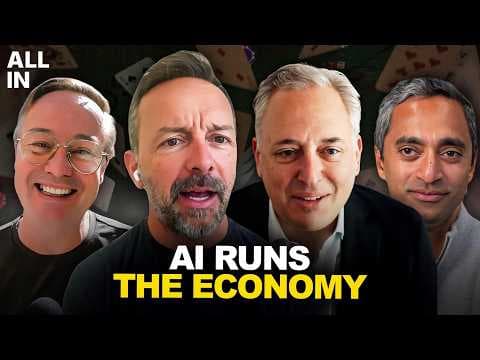
Concerns about AI's potential to cause human extinction by 2030 are being discussed, with some experts dismissing them as exaggerated doomsday scenarios. The debate centers around the responsible development and regulation of AI to prevent misuse and ensure safety. The conversation also highlights the challenges in balancing innovation with ethical considerations and public perception.
Transcript
The scop cance canceled on us. Is that what happened? >> Yeah, the scop cance canceled. He couldn't take the smoke. >> He did not want to be cross-examined by David Saxs. >> I haven't used my legal degree in 25 years. >> I was up all night doing research on this. >> We can still talk about it. >> I'm so ready. Yeah. >> Let your winners ride. >> Rai... Read More
Key Insights
- Jacob Coxin, a former researcher at OpenAI and Anthropic, claims AI could be an existential threat.
- Anthropic's response to Coxin's claims has been mixed, raising questions about their stance on AI safety.
- Concerns about recursive self-improvement (RSI) in AI could lead to uncontrolled advancements.
- The debate on AI regulation includes potential impacts on innovation and competition.
- OpenAI's recent math breakthrough raises questions about data privacy and model training.
- Nike's shift from athletic excellence to political messaging has impacted its brand and market position.
- The role of open-source models in ensuring AI sovereignty and data security is increasingly important.
- Public perception of AI risks is influenced by historical examples of technological fears and responses.
Install to Summarize YouTube Videos and Get Transcripts
Explore YouTube Video Summarizer or Get YouTube Transcript Extractor
Questions & Answers
Q: What are the main concerns about AI's potential risks?
The main concerns about AI's potential risks include the possibility of recursive self-improvement (RSI), where AI could autonomously advance its capabilities without human oversight, potentially leading to uncontrollable and dangerous outcomes. There are also fears about AI being used for malicious purposes, such as cyber attacks or creating bioweapons, and the ethical implications of AI decision-making in critical areas.
Q: How has Anthropic responded to claims about AI risks?
Anthropic's response to claims about AI risks has been mixed. While some employees have echoed concerns about AI's potential dangers, the company has not decisively disavowed these claims. This ambiguity has led to questions about their stance on AI safety and their regulatory strategy, especially in light of their upcoming IPO and the potential impact on investor confidence.
Q: What role does open-source AI play in data privacy and security?
Open-source AI plays a crucial role in data privacy and security by allowing organizations to control their own AI models and infrastructure, reducing the risk of data leakage and unauthorized use. By hosting AI solutions on their own servers, companies can ensure that sensitive information remains confidential and is not inadvertently used to train external models, which is a concern with proprietary AI services.
Q: Why did Nike's market position decline?
Nike's market position declined due to a shift from its traditional focus on athletic excellence to political messaging and woke branding. This change alienated some consumers who valued the brand's association with sports performance and aspirational athletes. Additionally, operational decisions such as cutting retail partnerships have impacted sales and market share, contributing to a significant drop in stock value.
Q: What is recursive self-improvement (RSI) in AI?
Recursive self-improvement (RSI) in AI refers to the concept where AI systems could autonomously improve their own capabilities without human intervention. This process involves AI developing its own training models and iterating on them to enhance performance. While RSI could lead to rapid advancements, it also raises concerns about losing control over AI systems and the potential for unintended consequences.
Q: How does OpenAI's math breakthrough relate to data privacy concerns?
OpenAI's math breakthrough, achieved through extensive computational efforts, has raised data privacy concerns due to allegations that the models may have been trained using deidentified data from users. This highlights the broader issue of how AI services handle user data and the potential for proprietary information to be incorporated into model training without explicit consent, affecting trust in AI systems.
Q: What impact does AI regulation have on innovation?
AI regulation can have a significant impact on innovation by establishing guidelines that ensure safety and ethical use while potentially limiting the speed and scope of AI development. Striking a balance between regulation and innovation is crucial to prevent stifling technological advancements while addressing legitimate concerns about AI's societal impact and preventing misuse.
Q: How does Nike's brand strategy affect consumer perception?
Nike's brand strategy, which shifted towards political messaging and inclusive advertising, has affected consumer perception by moving away from its core identity of athletic excellence and performance. This change has led some consumers to feel disconnected from the brand, as they no longer see it as representing the aspirational qualities associated with top athletes, impacting brand loyalty and market share.
Summary & Key Takeaways
-
Concerns about AI's potential to cause human extinction by 2030 are being discussed, with some experts dismissing them as exaggerated doomsday scenarios. The debate centers around the responsible development and regulation of AI to prevent misuse and ensure safety. The conversation also highlights the challenges in balancing innovation with ethical considerations and public perception.
-
OpenAI's recent math breakthrough raises questions about data privacy and model training. The use of AI in solving complex problems demonstrates its potential for innovation, but also underscores the need for clear guidelines on data usage and intellectual property. This issue is part of a broader discussion on AI sovereignty and the role of open-source models.
-
Nike's decline in market position is attributed to a shift from its traditional focus on athletic excellence to political messaging. This change in brand strategy, along with operational decisions such as cutting retail partnerships, has led to a loss of consumer trust and market share. The discussion emphasizes the importance of aligning brand identity with consumer expectations.
Read in Other Languages (beta)
Share This Summary 📚
Summarize YouTube Videos and Get Video Transcripts with 1-Click
Try YouTube Summary with ChatGPT & Claude or YouTube Transcript Generator
Explore More Summaries from All-In Podcast 📚





Summarize YouTube Videos and Get Video Transcripts with 1-Click
Try YouTube Summary with ChatGPT & Claude or YouTube Transcript Generator