What Are the Economics of AI and Why Are They Important?
TL;DR
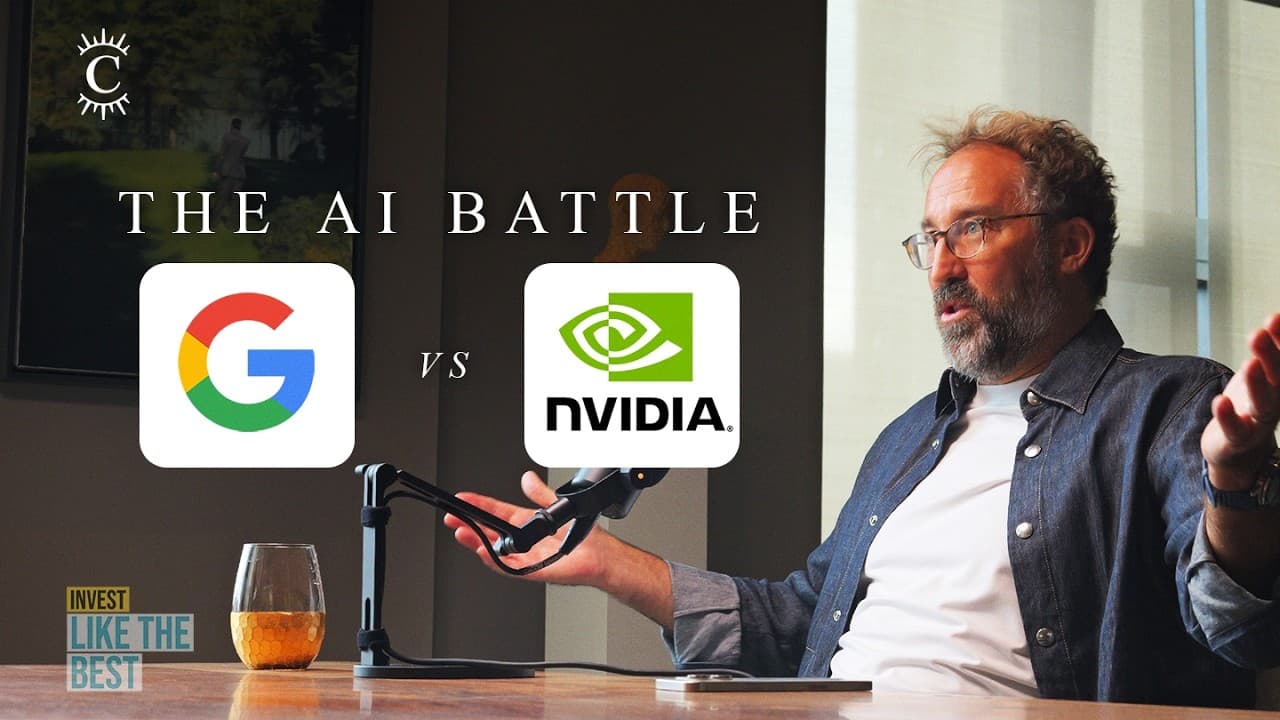
Technology investor Gavin Baker argues that returns on AI investment have been positive and that scaling laws for pre-training remain intact, pointing to Gemini 3 as recent evidence. To judge any new model, he says you have to actually use it yourself and pay for the highest tier rather than drawing conclusions from a free version. He names OpenAI, Gemini, Anthropic, and XAI as the leading labs and even argues that data centers in space are superior from first principles. Read on for how a top investor processes the fast-moving AI landscape.
Transcript
I will never forget when I first [music] met Gavin Baker. It was early days of the podcast and he was one of the first people I talked to about markets outside of my area of expertise which at the time was quantitative investing about the incredible passionate experience that he's had investing [music] in technology across his career. I find his in... Read More
Key Insights
- Gavin Baker emphasizes the importance of understanding scaling laws in AI, which are crucial for the development of advanced models like Gemini 3.
- The conversation highlights the competitive landscape among AI labs, with OpenAI, Anthropic, and XAI vying for dominance in the market.
- Baker suggests that the future of data centers may lie in space, where cooling and power challenges are significantly reduced, leading to more efficient AI operations.
- He points out that the low-cost producer advantage is critical for companies like Google, which can impact their market strategy and pricing.
- The importance of context and task length in AI applications is discussed, indicating that future models will need to hold more information to be truly effective.
- Baker notes that the ROI on AI investments has been positive, contradicting skepticism in the market, and highlights successful examples from Fortune 500 companies.
- The conversation touches on the challenges faced by companies trying to integrate AI, especially those reluctant to lower margins for competitive advantage.
- Baker warns that the semiconductor industry may face a supply-demand imbalance if capacity does not keep pace with the growing need for AI compute power.
Install to Summarize YouTube Videos and Get Transcripts
Explore YouTube Video Summarizer or Get YouTube Transcript Extractor
Questions & Answers
Q: What does Gavin Baker say about the current state of AI progress and scaling laws?
Baker points to Gemini 3 as important because it showed that scaling laws for pre-training are still intact, which the lab stated unequivocally. He stresses that these scaling laws are not really a law but an empirical observation that has been measured very precisely and held for a long time. Notably, he says no one actually knows how or why pre-training scaling laws work, comparing our understanding to ancient peoples measuring the sun without understanding it.
Q: How does Gavin Baker evaluate a new AI model like Gemini 3?
He says the first thing you have to do is use the model yourself rather than reach definitive conclusions from the outside. He is critical of investors who judge a model based on the free tier, which he compares to sizing up a ten-year-old and assuming that is the adult's capability. Instead he recommends paying for the highest tier, roughly the $200-per-month plan, which he likens to dealing with a fully-fledged adult.
Q: Which AI labs does Gavin Baker consider the leaders?
Baker identifies OpenAI, Gemini, Anthropic, and XAI as the four leading labs that matter. He says that anytime someone from one of these labs goes on a podcast, it is very important to listen. He also advises following the researchers at the cutting edge closely and reading everything Andrej Karpathy writes, in his words, at least three times.
Q: Where does Gavin Baker say AI news and signal actually come from?
He argues that a lot of AI happens on X, even citing an insider claim that OpenAI runs to a large degree on Twitter vibes. He describes public exchanges between labs, such as a heated fight between Meta's PyTorch team and Google's Jax team that lab leaders had to step in and calm. Baker believes only a relatively small group of people worldwide truly understand this work at the frontier, a good number of whom are based in China.
Q: Why does Gavin Baker think data centers in space could matter?
Baker makes the case that from a first-principles perspective, data centers in space are superior to data centers on Earth. The interview frames this around the power and cooling challenges that constrain traditional facilities, suggesting orbital data centers could address them. He communicates the idea with what the host describes as his usual passion and logic.
Q: What does Gavin Baker say about the return on AI investments?
According to the discussion, Baker argues that the ROI on AI investments has been positive, contradicting a lot of the skepticism in the market. He highlights successful adoption examples, noting that companies integrating AI into their operations can see meaningful productivity and financial gains. He frames adapting to AI as close to a life-or-death decision for businesses.
Q: How does low-cost production factor into Gavin Baker's view of AI strategy?
Baker emphasizes that being the low-cost producer is a critical advantage in the AI market. The conversation notes that a company able to produce at low cost can use that position to shape its pricing strategy and market share. This advantage is tied to how firms weigh margins against the need to compete with more efficient, AI-native challengers.
Q: What risk does Gavin Baker flag for the semiconductor industry?
Baker warns that the semiconductor industry could face a supply-demand imbalance if capacity does not keep pace with the growing need for AI compute. Because chips supply the hardware for training and running models, any shortfall could constrain progress across the AI sector. This makes semiconductor capacity a key variable for how quickly AI can keep advancing.
Summary & Key Takeaways
-
Gavin Baker discusses the evolving AI landscape, focusing on scaling laws and the competitive dynamics among leading AI labs.
-
He explores the potential of space-based data centers to revolutionize AI operations by addressing power and cooling challenges.
-
The video highlights the positive ROI of AI investments, emphasizing the need for companies to adapt their strategies to remain competitive.
Read in Other Languages (beta)
Share This Summary 📚
Summarize YouTube Videos and Get Video Transcripts with 1-Click
Try YouTube Summary with ChatGPT & Claude or YouTube Transcript Generator
Explore More Summaries from Invest Like The Best 📚



Summarize YouTube Videos and Get Video Transcripts with 1-Click
Try YouTube Summary with ChatGPT & Claude or YouTube Transcript Generator