Brock Pierce on Web3 Timing and Digital Assets
TL;DR
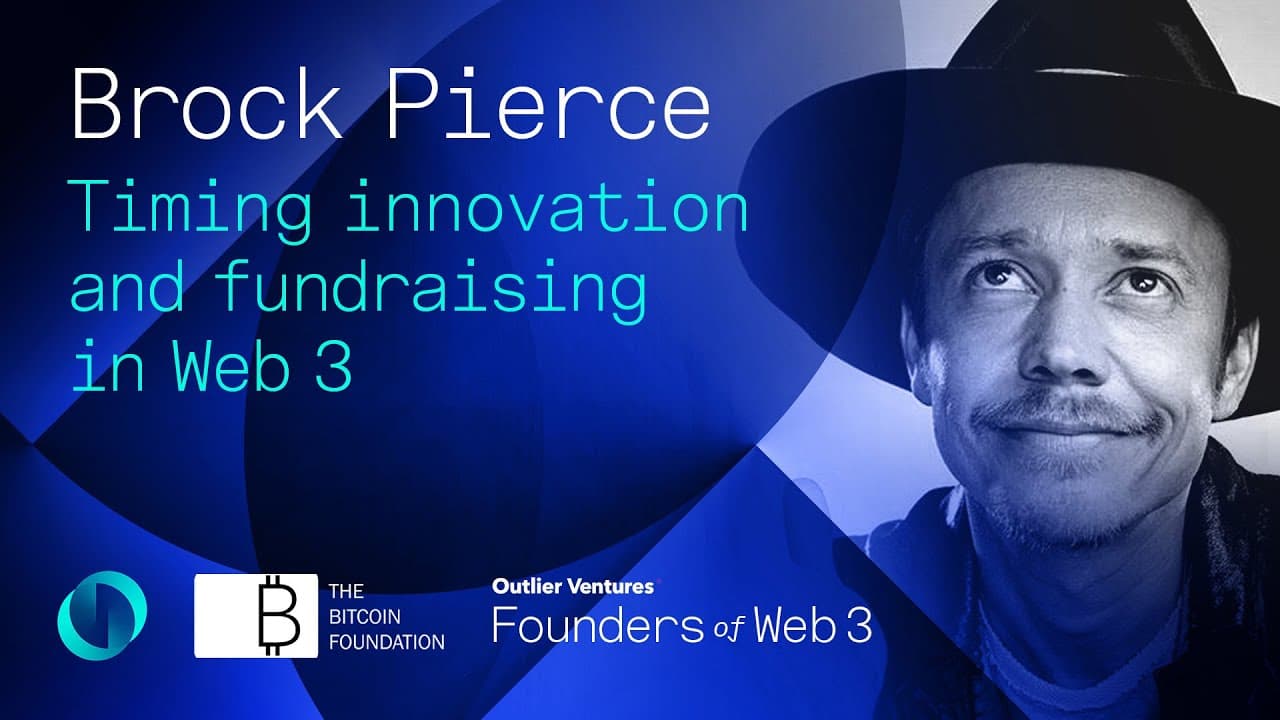
Experience trading collectible cards and virtual game currencies helped Brock Pierce recognize that intangible assets can carry real value. He argues that timing, payment expertise, global market-making, and close founder communities created an edge in Web3, leading from early gaming businesses to blockchain investing, stablecoins, token offerings, and major fundraising experiments.
Transcript
Welcome to the Founders of Web3 series by Outlier Ventures, and me, your host, Jamie Burke. Together we're gonna meet the entrepreneurs, their backers, and the leading policy makers that are shaping Web3. Together we're gonna try to define what is Web3, explore its nuances, and understand the mission and purpose that drive its founders. If you enjo... Read More
Key Insights
- Intangible assets can possess real economic value when users desire, trade, and spend money on them. Pierce formed this view through baseball cards, Magic: The Gathering, and multiplayer games, where digital currency and virtual items attracted demand despite lacking a physical form.
- Early entrepreneurial experience can reveal recurring patterns across technology cycles. Pierce compares the internet bubble with crypto cycles, observing that first-wave and second-wave projects often disappear or persist in a zombie-like state before a later phase of development begins.
- Timing is a decisive factor in technology startups. Digital Entertainment Network pursued an idea resembling later video and streaming platforms, but broadband deployment did not advance at the expected rate, leaving the company too early for the market it anticipated.
- IGE operated as a market maker and exchange for currencies used in games such as World of Warcraft and Second Life. It bought currency from players with excess inventory and sold digital gold to other gamers, turning virtual assets into a substantial commercial market.
- Digital currency supply required deliberate industrial organization. After ordinary gamers could not provide enough inventory, Pierce moved to Hong Kong in 2002 and helped develop a supply chain of 400,000 people, principally in China, who played games professionally to produce virtual currency.
- Payment expertise can emerge from operating in categories that financial providers do not understand. Because processors sometimes confused virtual game currency sales with gambling, IGE faced banking and card-processing difficulties that forced Pierce to learn how payments function in high-risk industries.
- IGE achieved substantial commercial scale through digital goods. Pierce says the company moved hundreds of millions of dollars annually and eventually billions, became PayPal's largest merchant for three years, and was PayPal's second-largest source of new customers after eBay.
- Gaming experience provided a foundation for later Web3 work. The description connects Pierce with Blockchain Capital, the Bitcoin Foundation, Mastercoin, EOS, Ethereum's ICO, Tether, and security token offerings, presenting his career as a progression from virtual economies into blockchain funding and assets.
Install to Summarize YouTube Videos and Get Transcripts
Explore YouTube Video Summarizer or Get YouTube Transcript Extractor
Questions & Answers
Q: How did gaming lead Brock Pierce into Web3?
Gaming showed Brock Pierce that intangible items could have real economic value. His experience with collectible cards, Magic: The Gathering, competitive arcade games, and multiplayer virtual worlds exposed him to scarcity, trading, and arbitrage. When games introduced digital currencies and assets, he recognized that players would exchange real money for them, which became the foundation of his gaming businesses and later Web3 involvement.
Q: Why did Digital Entertainment Network fail?
Digital Entertainment Network pursued broadband entertainment in the Internet 1.0 period and anticipated services comparable to YouTube, Hulu, and Netflix. According to Pierce, the core problem was timing: broadband did not roll out as quickly as expected. When the internet bubble burst in 2000, the company went bankrupt along with most other internet businesses operating during that period.
Q: What business model did IGE use for virtual currency?
IGE acted as a market maker, exchange, and retail website for currencies inside multiplayer games such as World of Warcraft and Second Life. It bought digital currency from players who had more than they needed, then supplied digital gold to gamers willing to pay real money. The company organized both the acquisition of inventory and its sale to worldwide customers.
Q: How did IGE build its virtual currency supply chain?
IGE could not obtain enough virtual currency from ordinary gamers to satisfy global demand, so Pierce moved to Hong Kong in 2002 to expand production. The company developed a supply chain of 400,000 people, principally in China, who played video games professionally to mine or generate digital currency. This industrialized approach gave IGE the inventory needed to support its market-making operation.
Q: Why did selling virtual game currency create payment problems?
Banks, card processors, and other payment providers often did not understand why customers would pay real money for digital gold inside a game. They sometimes classified the activity alongside gambling, a highly regulated and difficult category for merchant processing. These obstacles pushed Pierce and IGE to develop extensive payment expertise while handling a business that eventually moved very large annual transaction volumes.
Q: How large did IGE become in the early 2000s?
Pierce says IGE moved hundreds of millions of dollars per year and eventually billions. It was PayPal's largest merchant for three years and its second-largest originator of new customers after eBay. IGE also became deeply involved with the launch of Alipay in China because its business connected large numbers of Chinese gamers with buyers of virtual currency around the world.
Q: What role did IGE play in the development of online payments?
IGE's scale and customer acquisition made it an important early partner for payment platforms. Pierce says the company helped launch Alipay because it was PayPal's second-largest originator of new customers and its business centered on Chinese gamers. He also says IGE helped launch PayPal's credit card processing division, while its operational difficulties built expertise in banking and high-risk merchant processing.
Q: What Web3 fundraising milestones are associated with Brock Pierce?
The description credits Pierce with pioneering the first initial coin offering through Mastercoin in 2013, co-founding Blockchain Capital as the first blockchain venture capital firm, participating in the first security token offering, and working with EOS on a $4 billion fundraising event. It also identifies him as a major backer of Ethereum's ICO and a co-founder of Tether, an asset-backed stablecoin.
Summary & Key Takeaways
-
Brock Pierce traces his understanding of digital assets to childhood trading, competitive gaming, and collectible cards. Those experiences taught him that scarcity, exchange, and perceived value can exist independently of physical form, preparing him to recognize commercial opportunities when multiplayer games introduced currencies and assets that players wanted to buy and sell.
-
His early ventures also demonstrated the importance of timing. Digital Entertainment Network anticipated services resembling YouTube, Hulu, and Netflix, but broadband adoption was slower than expected, and the business failed after the internet bubble burst. Pierce connects that experience to crypto cycles, where early projects frequently disappear or remain in a diminished state.
-
IGE turned virtual game currencies into a large market-making and exchange business. Its need for reliable inventory led Pierce to Hong Kong and to a supply chain of 400,000 professional players, principally in China. The resulting scale produced expertise in payments, merchant processing, customer acquisition, and operating within misunderstood or high-risk industries.
Read in Other Languages (beta)
Share This Summary 📚
Summarize YouTube Videos and Get Video Transcripts with 1-Click
Try YouTube Summary with ChatGPT & Claude or YouTube Transcript Generator
Explore More Summaries from Outlier Ventures 📚




Summarize YouTube Videos and Get Video Transcripts with 1-Click
Try YouTube Summary with ChatGPT & Claude or YouTube Transcript Generator