Why Is Intel Facing a Crisis?
TL;DR
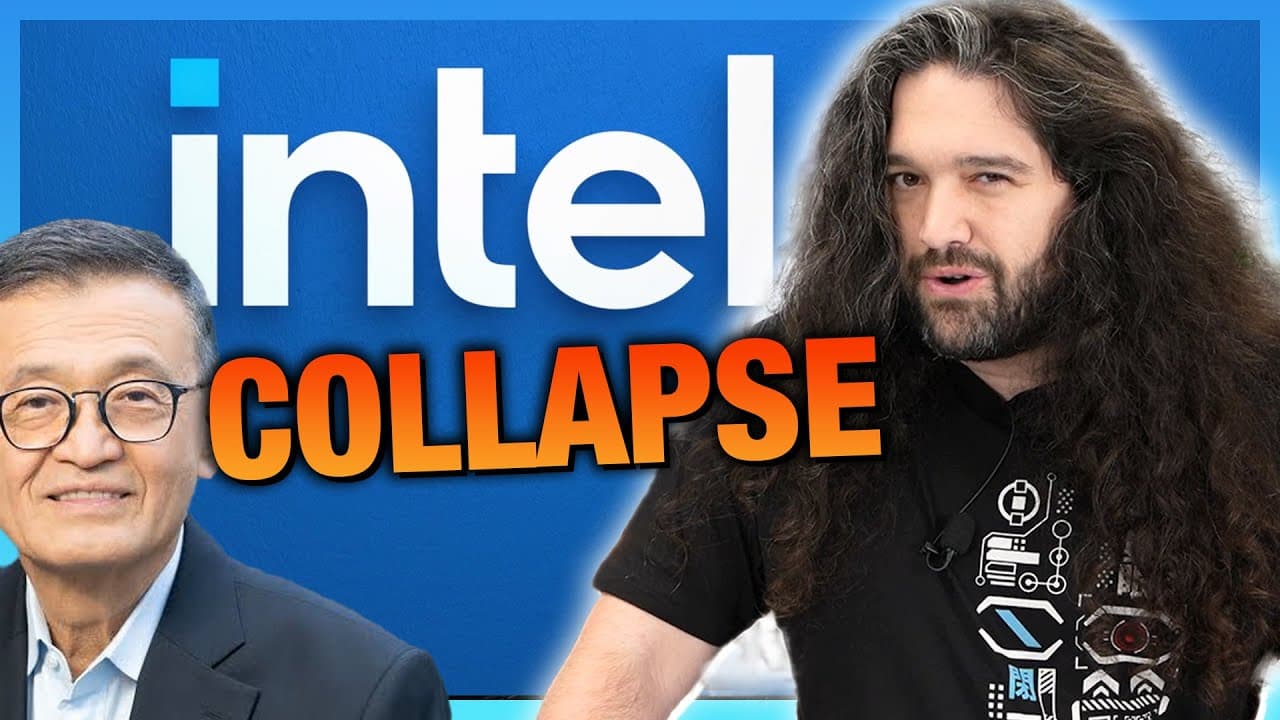
Intel is undergoing a severe crisis, marked by halted fab constructions, massive layoffs, and a lack of competitive products. The company is struggling to find a path forward under new leadership while facing significant financial and operational challenges. Without a clear strategy or customer base for its advanced technology, Intel risks falling further behind its competitors.
Transcript
Intel's in freef fall. It's collapsing. In the last few months, Intel has been very busy for a lot of bad reasons. Intel has floated the idea of stopping node advancement without major customers. It has halted construction of fabs that it's received tens of billions of dollars for and worldwide government funding. It's selling off business groups, ... Read More
Key Insights
- Intel is halting fab construction and selling off business units, indicating financial distress.
- The company is undergoing massive layoffs, cutting 10% of its US workforce recently.
- Intel lacks competitive CPUs in the market, affecting its product sales and reputation.
- New CEO Lip-Bu Tan is reversing previous strategies and focusing on cost-cutting.
- Intel's future hinges on securing new customers for its advanced manufacturing processes.
- The company's financial struggles are compounded by strategic missteps and external pressures.
- Intel's inability to attract foundry customers threatens its technological leadership.
- The US government may have an interest in supporting Intel due to national security concerns.
Install to Summarize YouTube Videos and Get Transcripts
Explore YouTube Video Summarizer or Get YouTube Transcript Extractor
Questions & Answers
Q: Why is Intel halting fab construction?
Intel is halting fab construction due to financial distress and strategic reevaluation under new leadership. The company is focusing on cost-cutting and has paused investments in advanced manufacturing processes until it secures customer commitments, which are crucial for its future operations and competitiveness.
Q: What impact do Intel's layoffs have on the company?
Intel's layoffs, which have affected thousands of employees, are part of a broader cost-cutting strategy aimed at stabilizing the company's finances. However, these layoffs could lead to a loss of key talent and expertise, potentially hindering Intel's ability to innovate and compete effectively in the technology market.
Q: How is Intel's product division performing?
Intel's product division is struggling, with a lack of competitive CPUs significantly affecting its market performance. The company has faced challenges in both fabrication and design, leading to a loss of market share to competitors like AMD, which has been more successful in the current desktop CPU market.
Q: What are Intel's strategic challenges under CEO Lip-Bu Tan?
Under CEO Lip-Bu Tan, Intel faces strategic challenges including reversing previous heavy investments, focusing on cost-cutting, and securing new customers for its advanced manufacturing processes. Tan's approach emphasizes streamlining operations and reducing workforce, but the company's future remains uncertain without a clear path to recovery.
Q: What role does the US government play in Intel's situation?
The US government may have an interest in supporting Intel due to its strategic importance in national security and technological leadership. Intel's fabrication capabilities are rare and critical, and government intervention could play a role in stabilizing the company, although the specifics of such involvement remain unclear.
Q: How does Intel's current crisis compare to AMD's past struggles?
Intel's current crisis bears some resemblance to AMD's past struggles, where AMD faced financial difficulties and nearly went bankrupt. However, AMD managed to recover through strategic innovation and a scrappy, startup mindset. Intel's recovery would require a similar shift in strategy and culture to regain its competitive edge.
Q: What are the risks of Intel pausing its 14A process?
Pausing Intel's 14A process poses significant risks, including losing competitive edge in advanced manufacturing, potential financial losses from unused R&D investments, and reputational damage. Without a significant foundry customer, Intel risks falling further behind competitors like TSMC, impacting its long-term technological leadership.
Q: What is the outlook for Intel's future?
Intel's future is uncertain, hinging on its ability to secure new customers for advanced manufacturing and navigate its financial and strategic challenges. While there is potential for recovery, similar to AMD's past resurgence, Intel needs a clear strategy and cultural shift to regain its market position and technological leadership.
Summary & Key Takeaways
-
Intel is facing a severe crisis with halted fab constructions and massive layoffs affecting its workforce. The company is struggling to maintain its market position due to a lack of competitive products and strategic missteps under new leadership.
-
New CEO Lip-Bu Tan is focusing on cost-cutting and reversing previous strategies, but Intel's future remains uncertain without securing new customers for its advanced manufacturing processes.
-
The company's financial struggles are compounded by external pressures, including potential government intervention, highlighting the precarious state of Intel's operations and market position.
Read in Other Languages (beta)
Share This Summary 📚
Summarize YouTube Videos and Get Video Transcripts with 1-Click
Try YouTube Summary with ChatGPT & Claude or YouTube Transcript Generator
Explore More Summaries from Gamers Nexus 📚




Summarize YouTube Videos and Get Video Transcripts with 1-Click
Try YouTube Summary with ChatGPT & Claude or YouTube Transcript Generator