How to Become an Impactful AI Researcher Fast
TL;DR
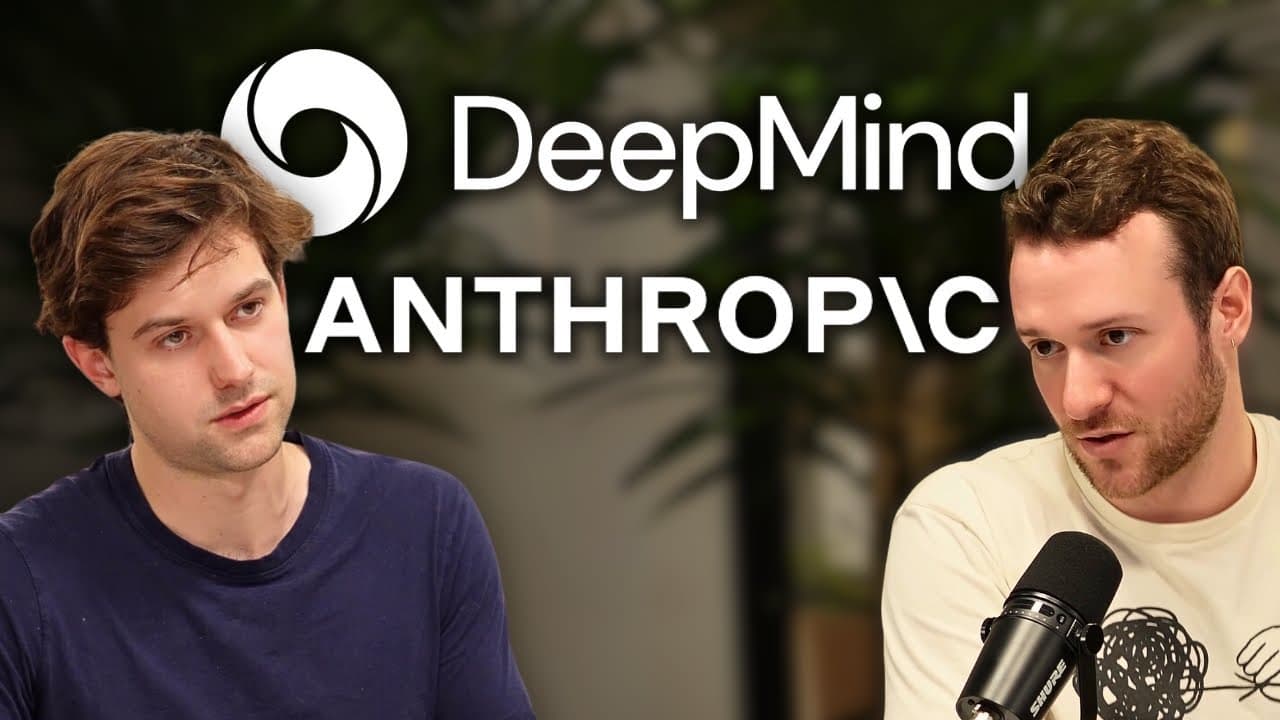
Rapid progress in AI research comes from combining strong agency with careful, fast experimentation and choosing problems where one person can have unusual leverage. Douglas and Bricken also created opportunities by publishing independent work, reading broadly, attending conferences, pursuing obstacles to completion, and aligning their interests with teams that could provide exceptional mentorship and feedback.
Transcript
I'm curious how you explain what's happened like why in a year or a year and a half have you guys been uh you know made important contributions to your field it goes without saying luck obviously and I I feel like I've been very lucky in like the the timing of different progressions has has been just like really good in terms of advancing to the ne... Read More
Key Insights
- Agency is the willingness to pursue an objective through every dependency, including unfamiliar code, organizational barriers, and missing collaborators. Douglas describes rarely accepting blockage as a sufficient excuse, instead fixing, investigating, or temporarily working around whatever prevents an experiment from producing useful results.
- High-leverage problem selection can distinguish an engineer even when many peers have comparable ability on clearly defined tasks. Douglas says his impact came partly from choosing important problems that remained unsolved because of structural frustrations, then taking responsibility for solving the entire chain of requirements.
- Rapid experimentation works when speed is paired with careful investigation. Douglas did not describe execution as coding alone, but as running experiments, forming hunches about failures, inspecting models and weights, identifying what was learned, and changing the next experiment based on that evidence.
- Independent research can make ability visible before a conventional hiring process begins. Douglas spent nights from 10 p.m. to 2 a.m. and six to eight hours each weekend researching and coding, while his public questions and robotics work prompted James Bradbury to contact him.
- Broad reading can reveal patterns that specialized study may obscure. Douglas read work across natural language processing, computer vision, and robotics, which gave him a cross-field perspective and helped him recognize recurring ideas before his daily work reduced the time available for wide reading.
- Mentorship can convert enthusiasm and agency into practical research impact. Douglas says he was hired as an experiment that paired a highly motivated newcomer with outstanding engineers, giving him dedicated guidance while he learned and contributed without arriving through a narrowly specialized graduate-school path.
- Research alignment can turn an informal encounter into a career opportunity. Bricken’s work on sparsity and computational neuroscience closely paralleled an interpretability team’s interests, and sharing drafts with Tristan Hume eventually led to a residency and then a full-time role.
- Luck becomes more likely when researchers create repeated opportunities for discovery. Bricken met Hume by joining an unscheduled conference conversation, while Douglas published visible work and questions. The discussion frames conferences, public output, and applications as additional shots on goal rather than guaranteed pathways.
Install to Summarize YouTube Videos and Get Transcripts
Explore YouTube Video Summarizer or Get YouTube Transcript Extractor
Questions & Answers
Q: How can someone become impactful in AI research quickly?
Someone can accelerate their impact by combining strong agency, careful experimentation, and high-leverage problem selection. Douglas describes moving ideas forward through quick feedback loops, investigating failures, inspecting models and weights, and fixing blockers himself. Independent projects, broad paper reading, public technical work, and contact with capable mentors can also create opportunities to join teams where useful ideas already need execution.
Q: What does agency mean in AI research work?
Agency means taking responsibility for reaching the objective rather than stopping at the first dependency or obstacle. Douglas says he often enters another part of a codebase to fix or temporarily work around a problem so he can obtain results. The broader principle is to pursue the work through technical, organizational, or coordination barriers until the required experiment or solution is complete.
Q: How should an AI researcher choose high-leverage problems?
A high-leverage problem is important, insufficiently solved, and neglected partly because ownership is fragmented or structural barriers discourage action. Douglas contrasts this with completing a well-defined engineering task that many capable engineers could perform. His approach is to notice where progress depends on several unresolved components, then vertically solve the complete chain instead of waiting for separate teams to act.
Q: Why are fast feedback loops important in AI research?
Fast feedback loops let a researcher test many ideas while using each result to improve the next experiment. Douglas pairs speed with careful and thorough investigation: he forms a hunch about why something failed, opens the model or weights, studies what it learned, and changes the approach. The value comes from informed iteration, not simply writing code or running experiments quickly.
Q: How did Sholto Douglas get noticed by AI researchers?
Douglas conducted independent research while studying robotics, working from 10 p.m. to 2 a.m. on many nights and spending six to eight hours each weekend on research and coding projects. He also posted questions online and published robotics work on his blog. James Bradbury noticed the unusual questions, reviewed the visible work, contacted Douglas, and explored bringing him into the organization.
Q: How did Trenton Bricken enter AI interpretability research?
Bricken began in computational neuroscience and wrote his first graduate-school paper about mapping the cerebellum to the attention operation in transformers. He later studied network sparsity inspired by the brain and shared drafts with Tristan Hume, whose team was doing related work. Their aligned research interests led to continued conversations, a residency, and eventually a full-time interpretability position.
Q: Can broad reading help someone contribute to AI research?
Broad reading can help a researcher recognize patterns shared across fields. Douglas says he obsessively read papers and followed work in natural language processing, computer vision, and robotics. Because specialized graduate study often concentrates on one area, reading across several subfields gave him a wider perspective and helped foreshadow ideas relevant to work he later performed, although he read less widely once employed.
Q: How can aspiring AI researchers create more career opportunities?
Aspiring researchers can create more shots on goal by attending conferences, joining technical conversations, publishing projects, asking substantive questions publicly, and applying rather than assuming hiring is entirely mechanical. Bricken’s unscheduled conference conversation with Hume accelerated his path, while Douglas’s online work attracted Bradbury. These actions do not remove luck, but they place useful evidence of agency and ability where others can discover it.
Summary & Key Takeaways
-
Douglas attributes his impact to joining an interpretability team when many promising ideas were available but needed disciplined execution. He contributed by running quick feedback loops, examining why experiments failed, changing implementations, and fixing blockers throughout the codebase instead of waiting for someone else to resolve them.
-
Both researchers describe agency as a major career advantage. Douglas selected high-leverage problems and vertically solved dependencies that crossed team boundaries. Before being hired, he spent nights and weekends conducting research, reading papers, coding projects, and publishing questions and results that attracted the attention of an experienced Google researcher.
-
Bricken entered computational neuroscience, connected cerebellar processing with transformer attention, and studied sparse neural activations. His research interests developed alongside an interpretability team’s agenda. Sharing drafts, meeting Tristan Hume at a conference, and working with sparse-coding researcher Bruno Olshausen helped turn this alignment into a residency and full-time position.
Read in Other Languages (beta)
Share This Summary 📚
Summarize YouTube Videos and Get Video Transcripts with 1-Click
Try YouTube Summary with ChatGPT & Claude or YouTube Transcript Generator
Explore More Summaries from Dwarkesh Patel 📚
Summarize YouTube Videos and Get Video Transcripts with 1-Click
Try YouTube Summary with ChatGPT & Claude or YouTube Transcript Generator